Turning Brands into Experiences That People Remember
In today’s competitive marketplace, consumers are exposed to thousands of marketing messages every day. Digital ads, social media campaigns, email promotions, and traditional advertising all compete for attention. As a result, brands face an increasing challenge: how do you create a meaningful connection with your audience in a world filled with constant distractions?
The answer for many companies is brand activation.
Brand activation is the process of bringing a brand to life through real-world experiences that encourage direct interaction, emotional engagement, and memorable customer experiences. Rather than simply telling people about a product or service, brand activation allows consumers to experience the brand firsthand.
Modern brand activation campaigns are designed to create stronger relationships between brands and audiences by transforming passive viewers into active participants. Whether through experiential marketing events, interactive displays, product launches, promotional tours, retail activations, public installations, or social media-driven experiences, the objective remains the same: create a memorable interaction that strengthens brand awareness and encourages engagement.

Today, brand activations are commonly used for:
- Product launches
- Retail campaigns
- Experiential marketing events
- Corporate promotions
- Trade shows
- Shopping center activations
- Sports sponsorships
- Hospitality campaigns
- Public events
- Community outreach programs
- Social media marketing initiatives
- New market introductions
Unlike traditional advertising, which relies on delivering a message, brand activation focuses on creating an experience. This shift is important because consumers tend to remember experiences far longer than advertisements.
Successful activations are built around engagement. The goal is not simply to attract attention but to encourage participation. When people interact with a brand directly, they develop stronger emotional connections and are more likely to remember the experience, share it with others, and engage with the brand in the future.
One of the most effective ways to achieve this is through custom fabrication.
Large-scale visual elements help transform ordinary spaces into immersive brand environments. Using 1 lb density EPS foam combined with durable polyurea hardcoat construction allows the creation of oversized logos, product replicas, sculptures, themed environments, interactive displays, branded landmarks, and custom experiential features that immediately attract attention.
The design process begins with understanding the campaign objectives. Every successful activation starts with clear answers to key questions:
- What message should visitors remember?
- Who is the target audience?
- How will people interact with the installation?
- What actions should visitors take after the experience?
- How will success be measured?
Once objectives are defined, the activation environment can be engineered around those goals.
Large-scale fabricated elements are particularly effective because they naturally create visual impact. Visitors are drawn to oversized objects, unusual environments, and immersive experiences that break away from everyday surroundings.
Common activation elements include:
- Oversized product replicas
- Dimensional logos
- Branded sculptures
- Interactive displays
- Event props
- Themed environments
- Photo opportunities
- Experiential zones
- Promotional installations
- Custom scenic elements
- Product demonstration areas
- Social media backdrops
The fabrication process typically begins with digital design and engineering. Dimensions, structural requirements, transportation logistics, installation methods, visitor flow, and interaction points are all evaluated before production begins.
Once approved, components are manufactured using CNC fabrication technology capable of producing highly detailed three-dimensional forms with exceptional accuracy. This allows logos, products, mascots, and custom branding elements to be reproduced at virtually any scale.
After fabrication, components receive a polyurea hardcoat that provides durability throughout transportation, installation, and public interaction. Brand activations often involve repeated handling, outdoor exposure, and high visitor engagement, making durability a critical consideration.
The polyurea hardcoat helps protect installations from:
- Surface wear
- UV exposure
- Moisture
- Transportation damage
- Minor impacts
- Repeated use
This allows activation assets to be reused across multiple campaigns, events, or locations when needed.
One of the most important trends in modern marketing is the growing influence of social media. Consumers actively seek visually engaging experiences that can be photographed and shared online. Well-designed activations naturally generate user-created content because visitors want to document and share unique experiences.
As a result, a successful brand activation often extends far beyond the physical event itself. Every photograph, video, and social media post increases campaign reach and amplifies brand exposure.
This is why many activations are intentionally designed around shareability. Large-scale installations, interactive features, and visually striking environments encourage visitors to become active participants in spreading the brand message.
Another major advantage of custom-fabricated brand activations is scalability. Campaigns can range from small promotional installations to large immersive environments occupying thousands of square feet. This flexibility allows brands to adapt activations to different budgets, venues, and marketing goals.
Brand activations are especially effective in environments such as:
- Shopping centers
- Convention centers
- Festivals
- Sporting events
- Tourist destinations
- Corporate campuses
- Public spaces
- Hospitality properties
- Trade shows
- Retail environments
In each case, the objective is to create an experience that captures attention and leaves a lasting impression.
Installation efficiency is also important. Many activations operate under tight schedules and limited setup windows. Lightweight EPS fabrication simplifies transportation and installation while allowing large-scale visual elements to be deployed quickly and efficiently.
From a business perspective, brand activations provide a unique opportunity to combine physical engagement, experiential marketing, social media exposure, and direct consumer interaction within a single campaign. Unlike traditional advertising, which often ends when the message is delivered, activations create experiences that people remember, discuss, and share.
As consumer expectations continue evolving, experiential marketing will remain one of the most powerful tools available to brands seeking meaningful engagement. Companies that create memorable real-world experiences often build stronger relationships, generate greater visibility, and achieve deeper audience connections.
For marketing agencies, event producers, retailers, hospitality operators, corporate brands, and experiential designers, brand activations provide an effective way to transform marketing messages into immersive experiences that drive engagement, increase awareness, and create lasting impressions.

Read more

The Importance of Hard Coating in Outdoor Signage: How Polyurea Coating Transforms Foam Structures into Durable Signage
The Art of Imitation: How Faux Finishes Transform EPS Foam Into Stone, Metal & Wood

Beyond Traditional Materials: Why HDU Foam Is Replacing Wood and Stone in High-End Signage
The Hidden Science Behind High-Quality Foam Lettering & Dimensional Signage
Eco-Friendly Signage Solutions: Is HDU & EPS Foam the Sustainable Choice?

Why Lightweight Foam Monument Signs Are Ideal for Large-Scale Signage

The Importance of Proper Installation for Monument Signs

Foam vs. Metal Signs: Cost, Durability, and Aesthetic Considerations

The Importance of Proper Installation for Monument Signs

From One-Time WOW to Multi-Tour ROI
Recommended Articles
HDU Signs: What High-Density Urethane Foam Is and Why It’s a Premium Sign Choice
Acrylic Signs for Business: Types, Benefits, and How to Choose the Right Style
Industrial 3D Printing: Large-Scale Foam Prototypes, Models & Manufacturing Solutions
Molds for Stone Signs: The Foundation Behind Consistent Architectural Signage
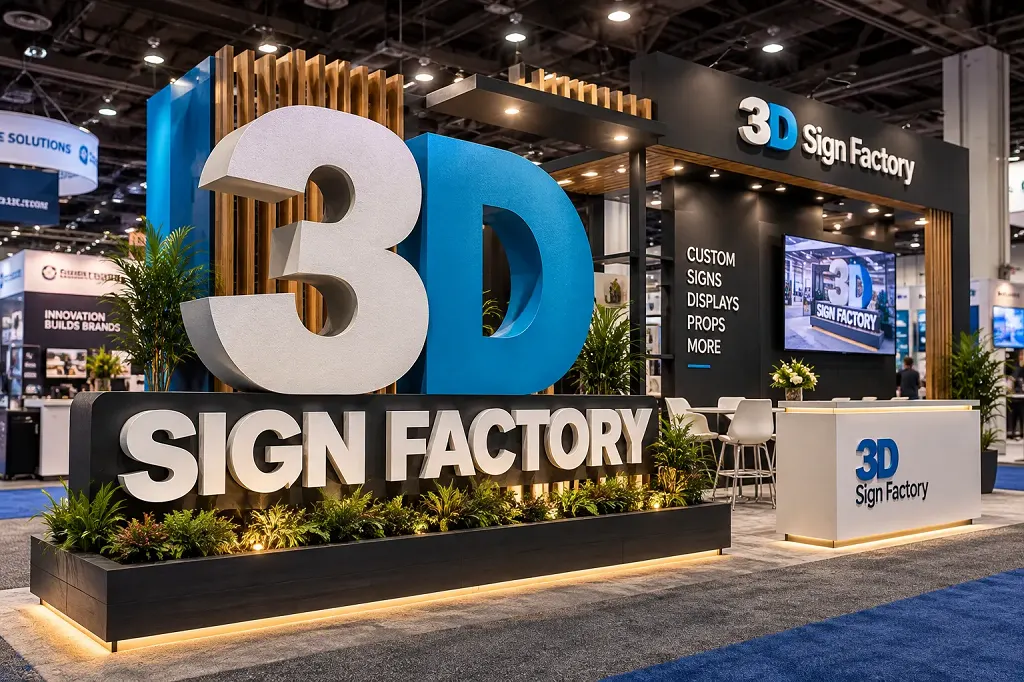
Beyond the Booth: How Custom 3D Displays Make Brands Stand Out at Expos and Events
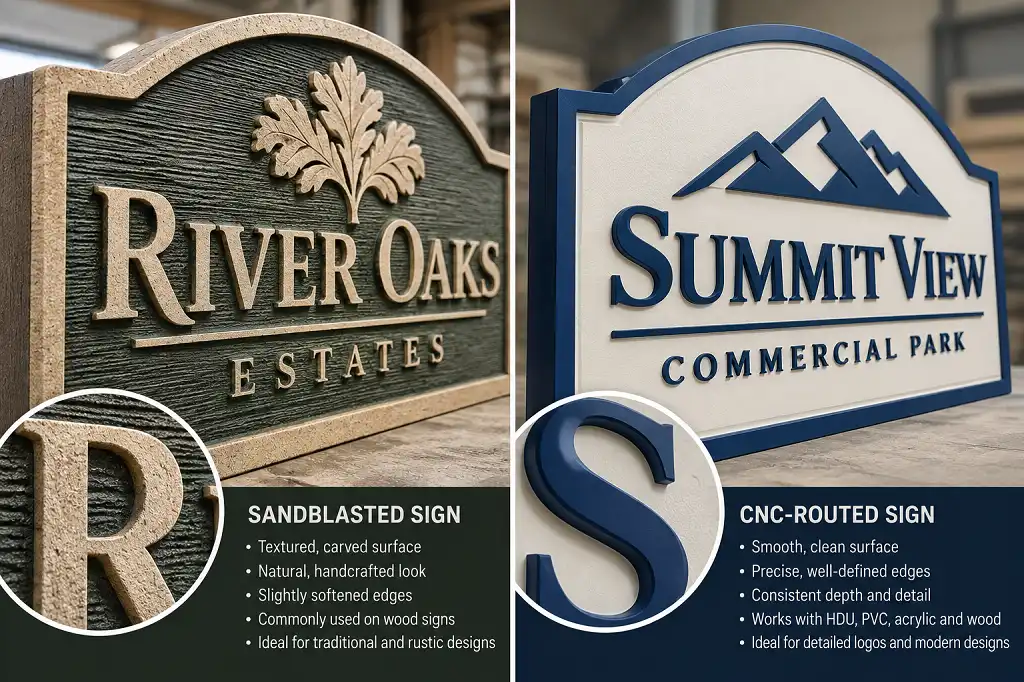
Sandblasted vs. Routed Signs: Which Is Right for Your Project?
Our customer reviews
Read more reviewsRead more reviews