HDU Signs: What High-Density Urethane Foam Is and Why It’s a Premium Sign Choice
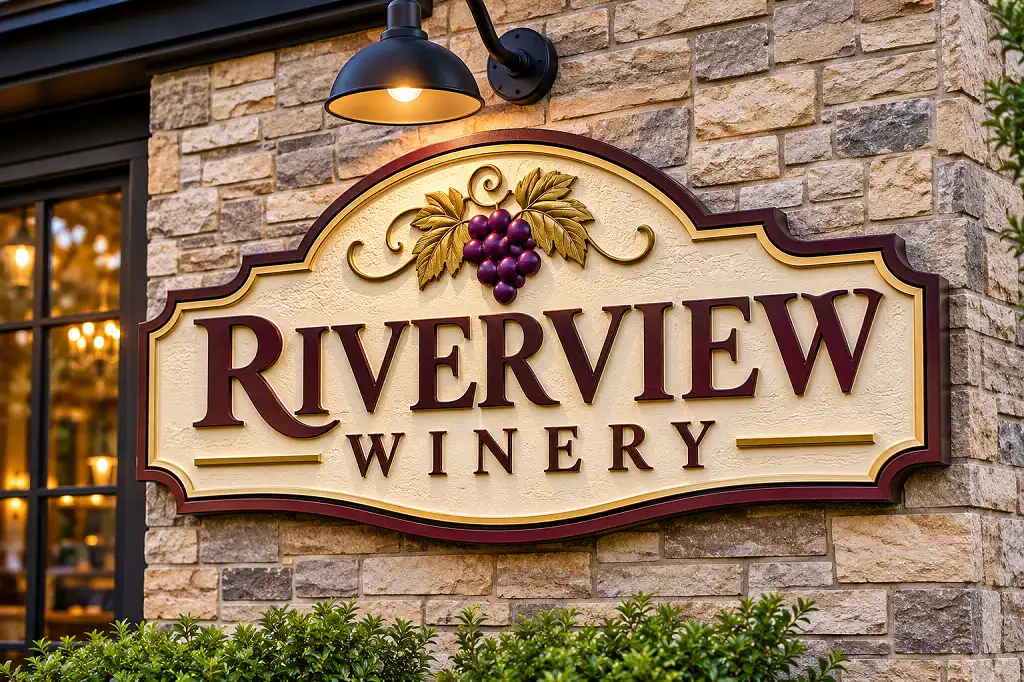
Drive past a winery entrance or a boutique hotel in a historic district and you’ll see a carved sign with deep, crisp lettering and a faint grit-blasted texture. It looks like cedar. A lot of the time it’s an HDU sign, and the reason is rarely cost. It’s that wood on an exterior sign cracks, rots, and needs repainting every couple of years, while this stuff mostly doesn’t.
Density, Grades, and What to Specify
HDU is a rigid, closed-cell foam sold as boards and blocks in a range of densities, usually measured in pounds per cubic foot. Sign makers commonly work with 15 to 30 lb. You’ll see the material called sign board foam, urethane board, or just foam for signs, and the names blur together, which is why a quote that only says “foam sign” needs a follow-up question.
Lower densities, around 15 lb, are economical and suit big signs with bold lettering. Twenty is a good all-rounder for most business signs. Thirty is the densest, with the best fine detail and a harder surface that takes sandblasting well. Standard stock starts around an inch thick, and thicker panels are made by laminating layers; a well-made joint disappears once the sign is primed and painted. Ask how large panels are joined and whether there’s a hidden frame behind them.
None of this is exotic. It’s a spec sheet, and a good shop will answer it in one email.
Grades are where a lot of confusion starts. Sign makers talk about density in pounds per cubic foot, and the numbers usually run from around eight to thirty or more. Lower densities carve quickly and cost less, but fine detail can feel soft and the surface takes more prep before paint. Higher densities hold crisp edges, tiny serifs, and thin borders, and they accept coatings with fewer coats. For a small shop sign with simple lettering, a mid-range grade is plenty. For a large entry monument with fine carving, ask for the heavier stuff.
Thickness matters just as much as density. A sign with raised lettering needs a thick enough blank to carve the letters, the border, and the background at different heights. Ask your supplier what depth they plan to use and how deep the relief will go.
Request a written spec with the density, thickness, coating system, and paint brand. If a quote leaves those out, you can’t compare it with another one.
Finish options deserve a close look at the sample stage. A sandblasted texture mimics weathered cedar and pairs well with a traditional shop. A smooth gloss finish suits a professional office or a medical building. Gold leaf adds a rich edge to raised letters, and it lasts well when it is sealed with a clear coat. Ask the shop to show real finished signs, not only computer renderings.
How an HDU Sign Compares With Wood, PVC, and Aluminum
High-density urethane foam carves cleanly because it has no grain. A router bit cuts the same way in every direction, so serifs stay sharp and small details survive. Moisture doesn’t penetrate closed cells, which means no swelling, no splitting, and nothing for insects to eat.
Against wood, HDU signs win on durability and lose on aging. They won’t develop a natural patina, and if your brand depends on genuine weathered timber, wood is still the answer. Against PVC, HDU carves far better; PVC is stronger for flat-cut letters at a lower price. Against aluminum, HDU is lighter and far more carve-friendly, and it doesn’t corrode, but aluminum is the tougher choice for flat modern panels. The materials often team up: an HDU panel with PVC or acrylic letters mounted on top is common, as is an aluminum frame around a foam face.
Coastal conditions are where HDU earns its keep. It doesn’t absorb water and shrugs off salt air, so marinas and waterfront restaurants use it heavily. Paint is still the weak link, so plan a quality exterior system and recoat every several years, depending on exposure and color.
Weight and wind load matter on freestanding signs. A large wood sign can weigh hundreds of pounds, requiring heavy posts and concrete footings. A foam-core sign with a hard coating weighs a fraction of that, which makes mounting simpler and cheaper, and it reduces the risk if a post is ever hit or a storm brings it down.
Longevity depends on the coating, not just the core. A good system combines a sealed base, durable exterior paint, and a clear topcoat with UV protection. When that system is applied correctly, the sign resists rot, insects, and swelling in damp weather. Repainting every several years keeps the look fresh and costs far less than replacing a failed wood sign.
Don’t forget the look itself. Foam takes gilding, metallic paints, sand textures, and wood-grain effects, and a skilled painter can make a sign look like carved cedar or aged bronze. If you want to see what’s possible, ask to see finished work in your area.
From Artwork to Finished Sign
The process is longer than people expect, and that’s where the price comes from. Artwork arrives as a vector file, and a good studio will adapt a logo so it carves well, which sometimes means simplifying hairlines. A CNC router then cuts the panel to depth, from a quarter inch to over an inch. Sandblasting adds wood grain, stone, or stucco texture to the background, often leaving raised letters. The panel is then sealed with primer, which is mandatory, and painted by hand in several coats, with gold leaf, gloss clear, or other finishes on top.
Design choices change how it reads. Raised letters cast shadow and read well from a distance; recessed letters feel traditional and quiet. Fine detail looks stunning up close and vanishes at forty feet, so think about reading distance before you commit. Contrast does more work than ornament: light on dark generally wins, such as cream on deep red or gold on dark green.
Typical lead times run two to six weeks, depending on size and finish, and approving the design early is the best way to keep that short. A short question list helps at quote time: what density and thickness, how seams are handled, what primer and paint system, how the sign mounts, and what repainting schedule they recommend.
Artwork preparation takes more care than people expect. Vector files carry the cleanest lines, so ask your designer to supply the logo in a format the shop can open. If you have only a scanned image or a low-resolution file, expect to pay for redrawing. Provide Pantone or paint codes for brand colors and tell the shop about any trademarked elements that must stay exact.
Plan the schedule backward from your date. Typical stages include proof approval, machining, sanding and priming, painting, curing, and packing. A sign with gilded letters and multiple paint layers needs extra drying time between steps, and shipping adds days. If your grand opening is fixed, tell the shop up front and ask for a firm ship date in writing.
Mounting hardware should be settled before carving begins, because the shop may need to embed steel plates or wood blocking inside the blank. Ask for a drawing that shows where the fasteners go, and confirm that your sign post, bracket, or wall surface matches.
Plan the hanging system alongside the artwork. A projecting bracket sign needs steel hardware and a wall that can carry the load, and a post sign needs footings below the frost line in cold regions. Ask whether the shop supplies mounting drawings, and have your contractor review them. A sign that is beautiful but poorly attached becomes a liability, so treat the hardware as part of the design.
Where an HDU Sign Isn’t the Right Call
Impact is the first limit. HDU is much tougher than cheap foam, but a hard knock can still dent it, so low placement near vehicles or crowds argues for metal. Very large signs need a structural frame, because the foam itself isn’t a load-bearing material. Fire is the third: foam products must meet local codes, so ask for data rather than assuming.
Cost deserves honesty. These signs usually cost more than flat PVC or vinyl, and often more than wood, because you’re paying for CNC time and hand finishing. If budget is tight and the design is simple, a cut PVC sign may be all you need. Also, some customers expect “real wood” and notice the difference up close, so be upfront about the material.
Maintenance is light. Wash with a soft brush and mild soap, inspect the paint each year, touch up chips quickly to keep water out, and recoat on schedule. Dark colors on a south-facing sign fade faster, so ask the fabricator what paint system they use. Mounting should drain water rather than trap it against the bottom edge.
A bit of vocabulary helps when you’re calling shops. High density urethane foam is the technical name, sign board foam is what suppliers call the sheet stock, and foam for signs is the catch-all term that includes cheaper materials. If a shop says it uses foam for signs, ask whether it’s high density urethane foam with a stated density or something softer. Pricing sign board foam by the pound of density is a quick way to see whether two quotes are comparable.
Not every project needs this approach. A temporary sign for a seasonal event, a pop-up shop, or a short-term promotion doesn’t justify the cost of a carved, multi-layer piece, and a simple printed panel will do the job. Signs that need electronic displays or heavy lighting integration may also be better served by an aluminum cabinet.
Check your local sign code as well. Many cities limit height, area, and setback, and some historic districts require specific materials. Submitting an application with a rendering and a spec sheet makes approval smoother.
Finally, be wary of quotes that look too good. A shop that skips primer, uses a thin coating, or substitutes a cheaper core can undercut the price by half, and the sign will show it within a couple of seasons. Ask how many coats are applied, what the warranty covers, and whether the shop will repair damage after installation. A short phone call usually tells you whether the maker has built signs like yours before.
3dsignfactory.com fabricates routed, sandblasted, and carved foam signs along with PVC, acrylic, and metal lettering, and ships across the US. Request a quote with your logo and site photos, and they can recommend a density and finish for your location.
Frequently Asked Questions
What is HDU and why is it preferred over wood for carved signs?
High-density urethane (HDU) is a rigid closed-cell foam that carves cleanly, does not have wood grain or knots, and resists moisture and insects – making it a superior substrate for routed, carved, and sandblasted sign faces.
How does HDU sign material compare to PVC and aluminum for outdoor use?
HDU is lighter than aluminum and more carve-friendly than PVC sheet; it accepts paint and coatings extremely well and does not corrode, making it ideal for carved exterior signs in coastal or humid environments.
Are HDU signs suitable for coastal and high-humidity environments?
Yes – HDU does not absorb water, resists salt air corrosion, and is a preferred material for coastal businesses and marinas that need long-lasting exterior signage.

Read more

The Importance of Hard Coating in Outdoor Signage: How Polyurea Coating Transforms Foam Structures into Durable Signage
The Art of Imitation: How Faux Finishes Transform EPS Foam Into Stone, Metal & Wood

Beyond Traditional Materials: Why HDU Foam Is Replacing Wood and Stone in High-End Signage

The Hidden Science Behind High-Quality Foam Lettering & Dimensional Signage
Eco-Friendly Signage Solutions: Is HDU & EPS Foam the Sustainable Choice?

Why Lightweight Foam Monument Signs Are Ideal for Large-Scale Signage

The Importance of Proper Installation for Monument Signs

Foam vs. Metal Signs: Cost, Durability, and Aesthetic Considerations

The Importance of Proper Installation for Monument Signs

From One-Time WOW to Multi-Tour ROI
Recommended Articles
Acrylic Signs for Business: Types, Benefits, and How to Choose the Right Style

Industrial 3D Printing: Large-Scale Foam Prototypes, Models & Manufacturing Solutions
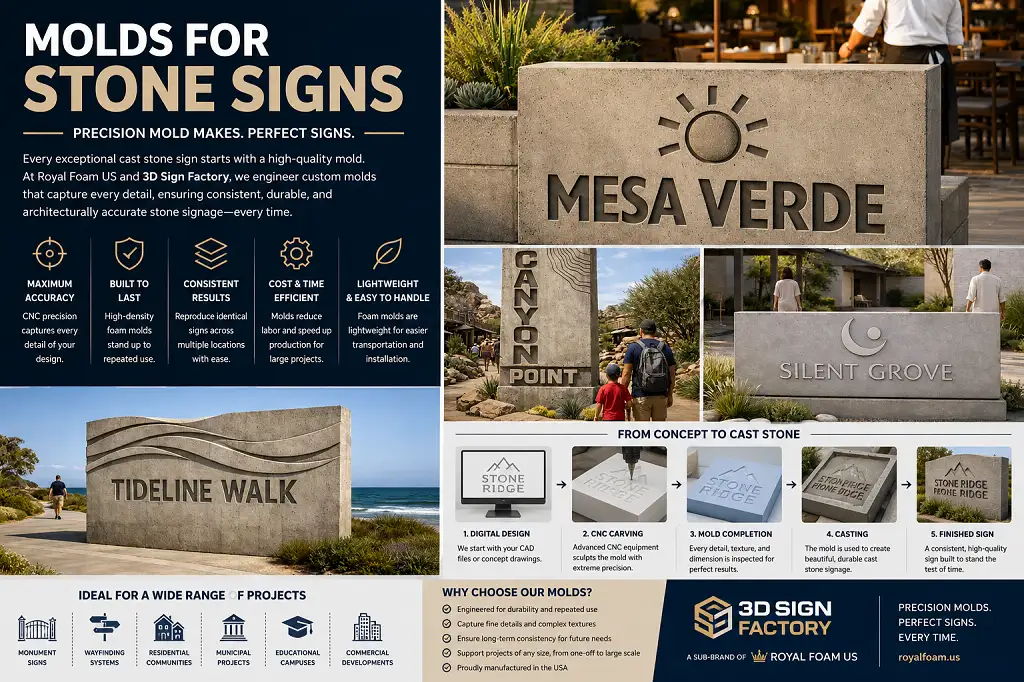
Molds for Stone Signs: The Foundation Behind Consistent Architectural Signage
Beyond the Booth: How Custom 3D Displays Make Brands Stand Out at Expos and Events
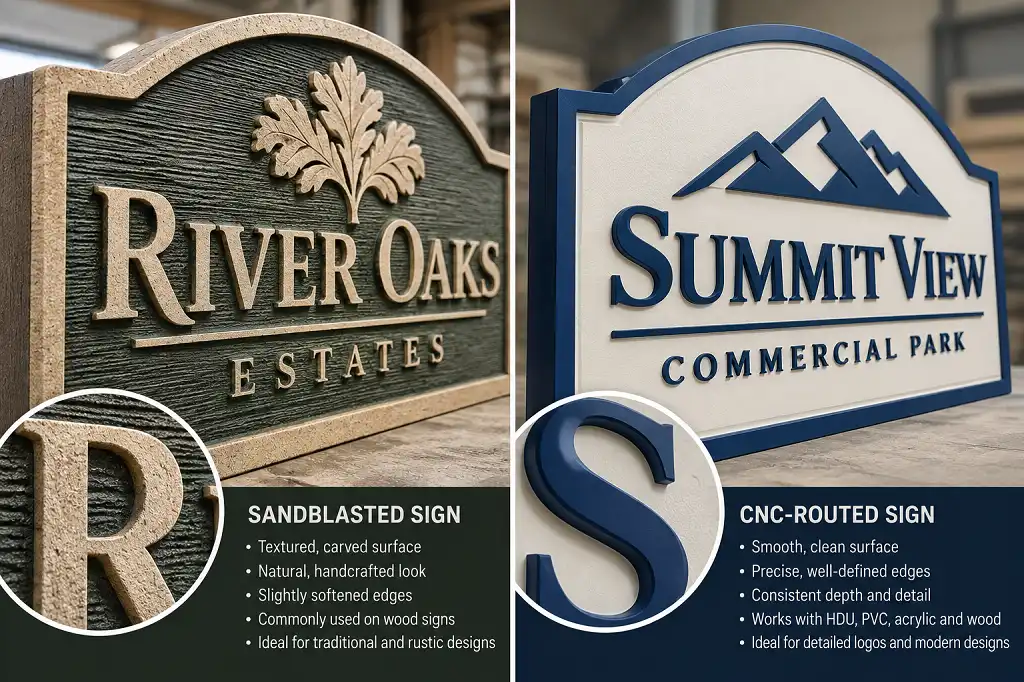
Sandblasted vs. Routed Signs: Which Is Right for Your Project?

Letter Signs: How Dimensional Letter Signage Works for Every Business Type
Our customer reviews
Read more reviewsRead more reviews