The Importance of Hard Coating in Outdoor Signage: How Polyurea Coating Transforms Foam Structures into Durable Signage
Quick Navigation
- What Is Hard Coating in Outdoor Signage?
- Benefits of Polyurea Coating in Monument Signs
- Applications Across Industries
- Foam Types and Why Hard Coating Matters
- Why Sign Fabricators Trust Polyurea
- Installation Considerations
- Final Thoughts: Why Hard Coating is a Must in Modern Signage
- Frequently Asked Questions
Outdoor signage plays a critical role in branding, navigation, and communication across various industries—from real estate developments and business parks to public institutions and community entrances. As sign makers strive for longevity and visual appeal, the materials and protective finishes used in fabrication become increasingly important. Among the most transformative of these techniques is the application of polyurea hard coating, a method that significantly enhances both the durability and appearance of foam-based signage.
At 3D Sign Factory, we specialize in crafting lightweight, detailed monument signs and 3D logos from expanded polystyrene (EPS) and high-density urethane (HDU) foam. EPS Signs are then coated with polyurea to withstand the harshest environmental conditions. In this article, we explore the science behind hard coatings, the benefits of polyurea, and why this process has become a cornerstone in high-quality sign fabrication.
What Is Hard Coating in Outdoor Signage?
Hard coating refers to the application of a protective, weather-resistant layer over a sign structure—usually made of EPS foam —to increase its resistance to impact, UV rays, moisture, and temperature fluctuations. Without this layer, foam signage is vulnerable to chipping, denting, and degradation over time.
Polyurea: The Gold Standard in Protective Coating
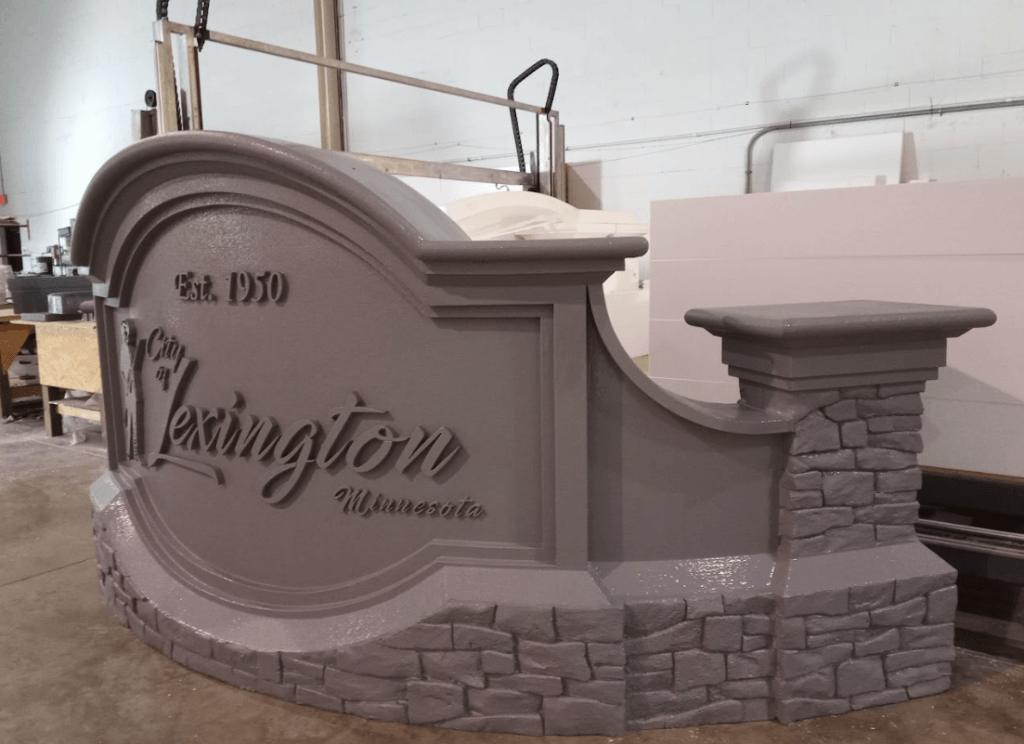
Polyurea is a fast-setting elastomer derived from the reaction of an isocyanate component and a resin blend. It is applied via high-pressure spray and forms a seamless, durable shell that can mimic the look and feel of various architectural finishes. Compared to alternatives like fiberglass or epoxy coatings, polyurea offers superior flexibility, faster curing time, and higher impact resistance.
Benefits of Polyurea Coating in Monument Signs
Durability
When applied correctly, polyurea creates a watertight and UV-resistant shell that prevents cracking, fading, and moisture intrusion. This makes it ideal for signage placed in harsh environments, including coastal areas with high humidity or places with extreme heat or cold.
Weight Efficiency
Traditional materials like stone, brick, or metal are not only expensive but also heavy, making transport and installation cumbersome. Foam structures coated with polyurea provide a lightweight alternative without sacrificing visual impact or durability.
Design Flexibility
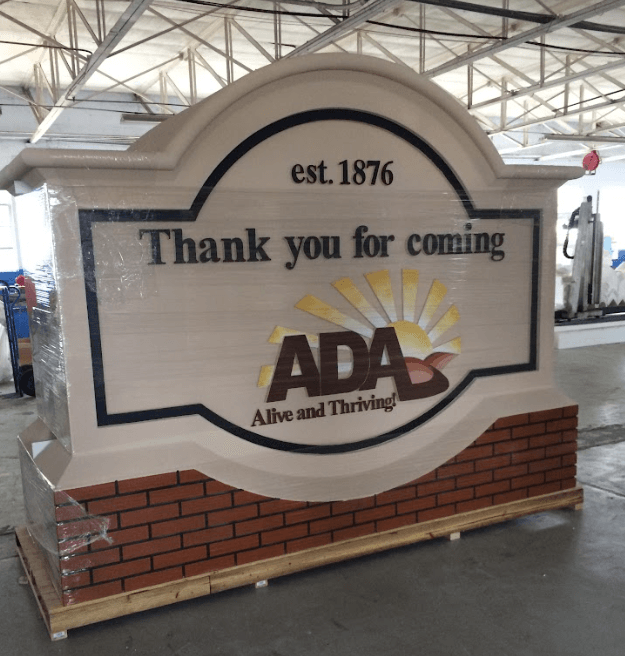
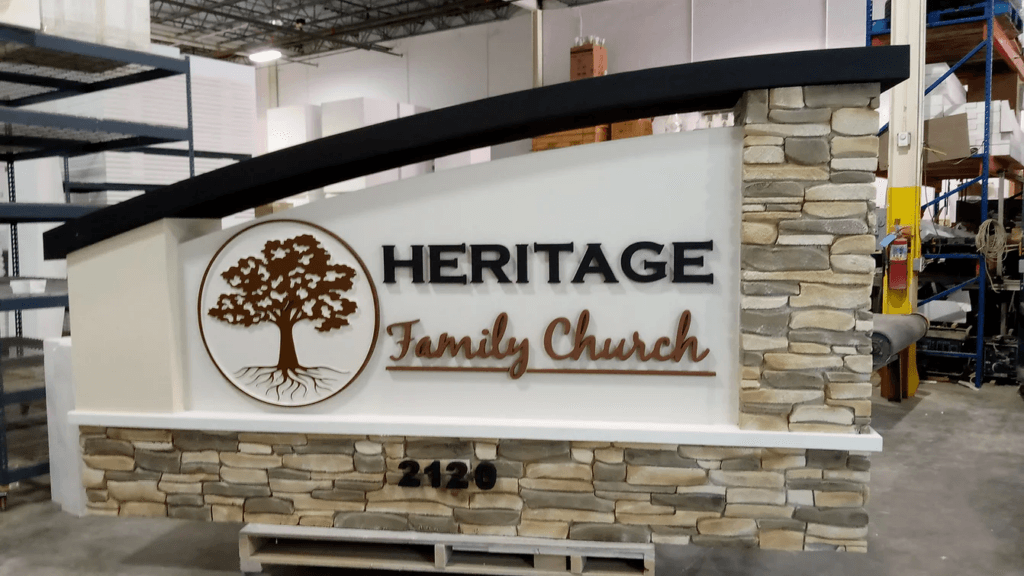
Thanks to polyurea’s adaptability, fabricators can create a variety of architectural finishes, from stone and brick to stucco and wood textures. These finishes are molded or carved into the foam before coating, then painted to match almost any aesthetic requirement.
Applications Across Industries
Hard-coated foam signage is used in a variety of sectors:
- Real Estate & HOAs – Elegant entry signs for subdivisions and housing communities.
- Retail & Shopping Centers – Durable brand signage with custom logos and 3D lettering.
- Educational Institutions – Campus directional signs that withstand student foot traffic and weather.
- Municipalities – Public welcome signs that maintain their appearance over time.
At 3D Sign Factory, we’ve worked with sign companies across the country to provide solutions tailored to these use cases, ensuring that each sign balances form, function, and longevity.
Foam Types and Why Hard Coating Matters
There are two primary types of foam used in signage:
- Expanded Polystyrene (EPS) – Affordable and lightweight, best suited for large shapes and faux masonry textures.
- High-Density Urethane (HDU) – Denser and more rigid, ideal for finer details and lettering.
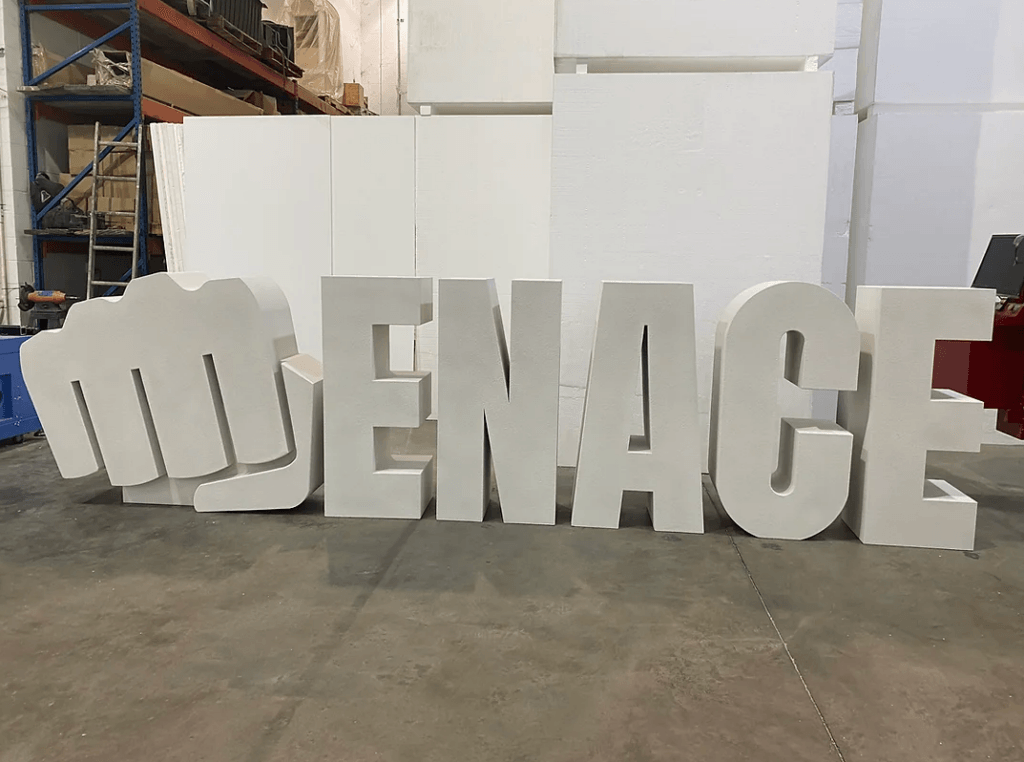
Without hard coating, EPS would deteriorate rapidly in outdoor settings. Polyurea not only protects but also strengthens this substrate, allowing for more complex and longer-lasting designs.
Why Sign Fabricators Trust Polyurea
Compared to other coating systems like epoxy or polyester resin, polyurea offers:
- Rapid curing in seconds, enabling faster project turnaround.
- Seamless coverage over complex shapes.
- Excellent elasticity and crack resistance.
- Strong adhesion to foam and primer surfaces.
These features not only reduce fabrication time but also increase client satisfaction with the final product.
Installation Considerations
While the coating adds rigidity and protection, the core foam remains lightweight. This means installation can often be completed with minimal crew and without the need for cranes or heavy lifting equipment. Many of our clients at Royal Foam appreciate this advantage, especially for projects in remote or suburban areas.
Final Thoughts: Why Hard Coating is a Must in Modern Signage
Hard coating—especially polyurea—has revolutionized the way foam signage is used outdoors. What was once a material reserved for short-term or decorative use is now a viable, long-term signage solution thanks to this innovative protective process.
At 3D Sign Factory, our commitment to precision, durability, and client satisfaction means every sign that leaves our facility is built to last. We invite you to explore our Monument Sign Gallery or contact us for a custom quote.
Whether you’re a design studio, a signage company, or a property manager, hard-coated foam signage offers an unmatched combination of beauty, performance, and value.
Frequently Asked Questions
What exactly is polyurea hard coating and how is it applied to foam signs?
Polyurea is a fast-setting, highly durable elastomer shell applied via a specialized high-pressure spray system directly over raw foam cores. It instantly cures in seconds to form a seamless, watertight barrier that armors the lightweight sign against physical damage and harsh outdoor environments.
Why is a hard coat mandatory for outdoor EPS foam signs?
While Expanded Polystyrene (EPS) foam is an exceptional material for carving large dimensional shapes, it remains highly vulnerable to impact damage, moisture rot, and sun degradation if left raw. A polyurea hard coat completely seals the substrate, turning a fragile foam piece into a long-term, weather-resistant outdoor asset.
How does polyurea compare to traditional sign coatings like fiberglass or epoxy?
Polyurea offers significantly better elasticity, crack resistance, and impact defense compared to rigid alternatives like epoxy or polyester resins. Its lightning-fast curing time also dramatically cuts down manufacturing lead times, allowing signs to move into the painting stage almost immediately.
Can polyurea-coated foam signs realistically match the look of heavy stone masonry?
Yes, before the polyurea is sprayed, intricate textures like brick, limestone, river rock, or rustic stucco are CNC-carved into the foam base. The hard coat perfectly encapsulates these shapes, which are then custom-painted to mimic heavy, expensive architectural stone finishes flawlessly.
What are the logistical advantages of installing a hard-coated foam monument sign?
Because the core of the monument sign is engineered from lightweight foam rather than solid brick or concrete, shipping costs are substantially lower. It also eliminates the need for expensive cranes or heavy digging equipment on-site, allowing a small crew to complete the installation safely and quickly.
In what types of commercial properties perform best with polyurea-coated signage?
This highly durable signage is ideal for high-traffic or environmentally demanding spaces, such as housing community entryways, coastal resorts with high humidity, retail plazas, and school campuses. The shell easily resists physical impacts from foot traffic, high winds, flying debris, and intense seasonal temperature shifts.

Read more
The Art of Imitation: How Faux Finishes Transform EPS Foam Into Stone, Metal & Wood

Beyond Traditional Materials: Why HDU Foam Is Replacing Wood and Stone in High-End Signage
The Hidden Science Behind High-Quality Foam Lettering & Dimensional Signage
Eco-Friendly Signage Solutions: Is HDU & EPS Foam the Sustainable Choice?

Why Lightweight Foam Monument Signs Are Ideal for Large-Scale Signage

The Importance of Proper Installation for Monument Signs

Foam vs. Metal Signs: Cost, Durability, and Aesthetic Considerations

The Importance of Proper Installation for Monument Signs

From One-Time WOW to Multi-Tour ROI

You’re Met by Your Looks, Welcomed by Your Substance
Recommended Articles
HDU Signs: What High-Density Urethane Foam Is and Why It’s a Premium Sign Choice
Acrylic Signs for Business: Types, Benefits, and How to Choose the Right Style
Industrial 3D Printing: Large-Scale Foam Prototypes, Models & Manufacturing Solutions
Molds for Stone Signs: The Foundation Behind Consistent Architectural Signage
Beyond the Booth: How Custom 3D Displays Make Brands Stand Out at Expos and Events
Sandblasted vs. Routed Signs: Which Is Right for Your Project?
Our customer reviews
Read more reviewsRead more reviews