The Art of Imitation: How Faux Finishes Transform EPS Foam Into Stone, Metal & Wood
Quick Navigation
- What Is Faux Finishing in Signage?
- Why Use EPS Foam as a Base Material?
- Step-by-Step: Turning EPS Foam Into High-End Faux Finishes
- Sustainability Advantages of Faux-Finished Foam Signs
- Popular Use Cases for Faux-Finished EPS Signage
- Why Customers Love Faux Finishes
- Ready to Make an Impression?
- Frequently Asked Questions
In the realm of architectural design and signage, looks are everything. Often, a sign is the first impression a person gets of a company, community, or event; that image has to be professional, powerful, and memorable. Traditionally, elite presentations used expensive signpost materials such as hand-chiseled stone, polished metal, and carved wood. These materials, however, have significant disadvantages: they are expensive, labor-intensive to manufacture, and challenging to put in place. When combined with professionally made faux finishes, expanded polystyrene (EPS) foam provides an innovative option.
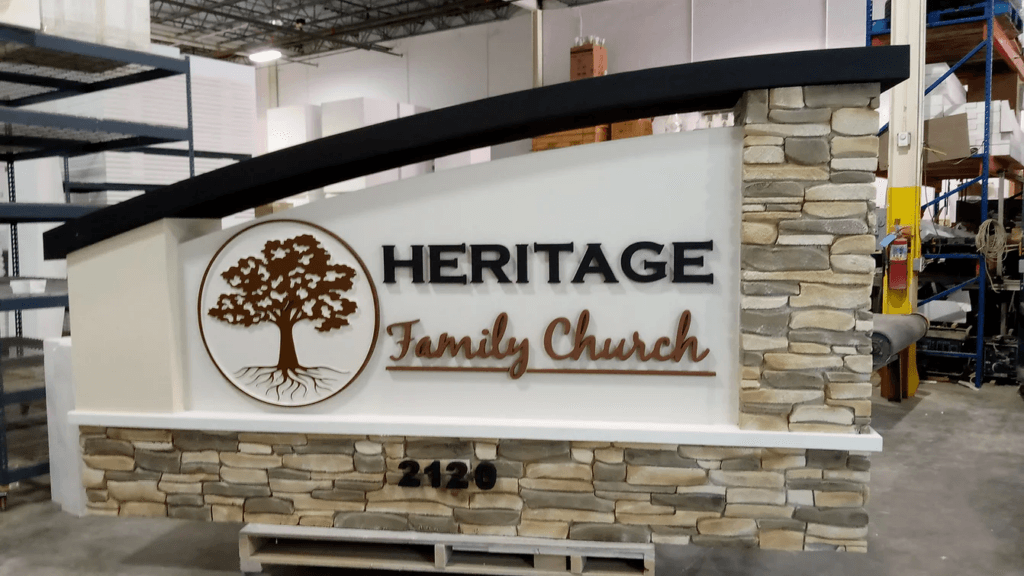
3D Sign Factory specializes in making lightweight, durable EPS foam signage, dimensional lettering, and 3D props that mimic the look and feel of conventional materials, without the high cost, labor, or environmental effect. Our handmade signs may convincingly replicate carved stone, rustic wood, and more by means of the science and art of faux finishing. The change is not only about surface aesthetics; it’s also about enabling our customers to obtain high-end aesthetics in a fraction of the time and money with added advantages such as environmental consciousness, portability, and weather resilience.
Being a sales representative actively engaged in foam signage solutions, I often interact with designers, architects, towns, retail brands, event organizers, and others who are shocked to discover how versatile EPS foam actually is. One of the most typical reactions is “Wait—that’s foam?” Once regarded as a basic material for packaging, with the correct coatings and treatments, it has become a premium option for trade show elements, stage props, indoor displays, and external monument signage. These faux finishes are also rather significant for creating signage solutions that are not only attractive but also sustainable.
Faux-finished foam signs might be the solution you didn’t know existed, whether your goals are to reduce installation costs, accelerate manufacturing schedules, or match your signage with your environmental beliefs.
What Is Faux Finishing in Signage?
Faux finishing in signage is the art and science of using specific coatings and paints on signage materials—especially EPS foam—to mimic the appearance of natural surfaces including wood, stone, or metal. The term “faux” itself comes from the French word for “false,” but in the world of visual display, faux doesn’t mean fake—it means strategic. While reaping the advantages of modern, lightweight, affordable substrates like EPS foam, faux finishing lets sign makers mimic the look and even texture of conventional building materials.
The method combines chemistry with craftsmanship. Our method at 3D Sign Factory begins with exact CNC-cut EPS foam shapes forming the foundation of a monument sign, 3D lettering, or sculpture. From there, a range of hard coatings, primers, and textures prepares the surface to let the faux finish adhere properly and last over time. Often used to harden the surface, polyurea is a strong, environmentally safe spray-on elastomer that offers the resilience and strength required for both indoor and outdoor uses.
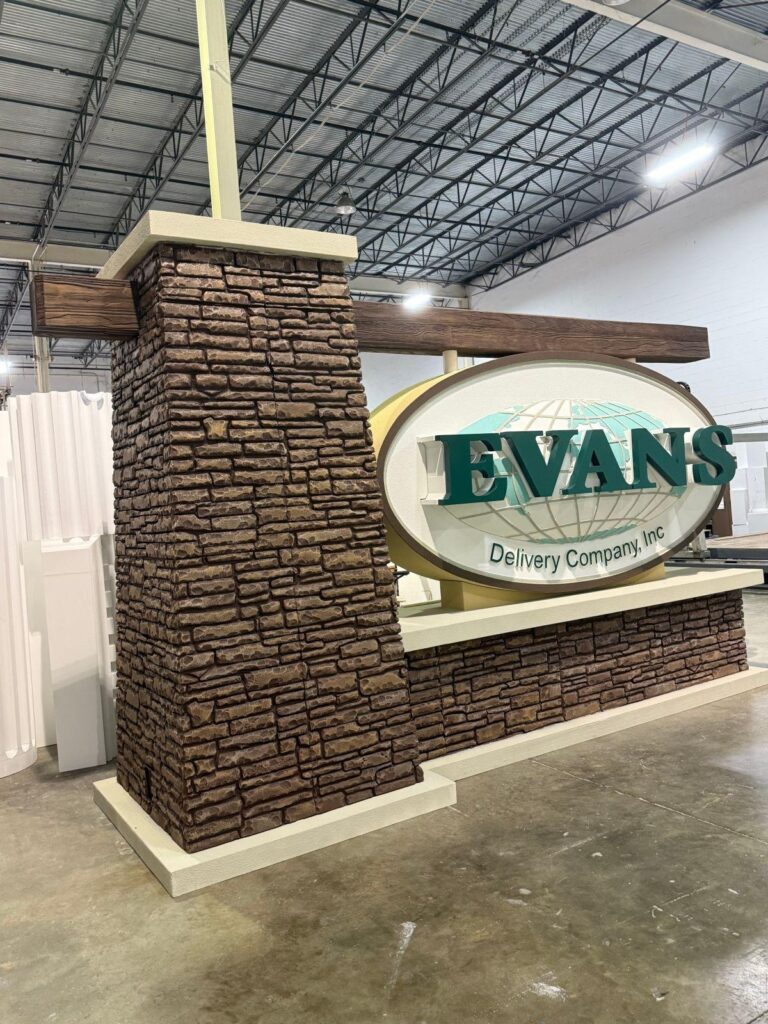
The foam becomes a blank canvas after it is sealed and hardened. Using a mix of hand-painting methods, spray finishes, sponging, brushing, and occasionally even airbrushing, faux finishes are applied. With amazing realism, our talented painters can duplicate woodgrain or get the rough, aged appearance of authentic stone. The faux finishing toolbox includes protective sealers, stains, glazes, oxidizing chemicals, and metallic pigments.
Engineered to work, these finishes are not only cosmetic. The choice of finishing products considers thermal stability, moisture resistance, and UV protection altogether. This guarantees that your faux wood, stone, or metal signage won’t simply look nice on day one—it will keep its appearance for years, even in severe conditions. Whether you’re equipping a corporate office lobby, a rural winery, or a coastal resort, fake finishing provides a very flexible and sustainable signage option.
Next, we will examine more closely the several kinds of faux finishes and what distinguishes each one.
Why Use EPS Foam as a Base Material?
Not merely because of its adaptability, but also because of its unusual physical and environmental qualities, expanded polystyrene (EPS) foam has become a top option for contemporary signs. EPS, as a base material, provides certain performance benefits that qualify it as a perfect substrate for faux finishing.
- Lightweight: This allows for on-site modification, installation, and transportation without the use of cranes, forklifts, or heavy machinery, hence saving time, labor, and fuel. The weight benefit by itself for big-scale installations like monument signs, event props, or large 3D writing can greatly lower total project expenses.
- Customizable: Its cellular structure allows for high precision cutting and shaping utilizing CNC equipment. This lets us create complex, bespoke designs that would be prohibitively expensive with stone, metal, or wood. Once the design is finished, EPS easily takes polyurea and other coatings to produce a robust and durable surface fit for any surroundings.
- Durable with coatings: When paired with polyurea coating, EPS becomes very weather- and impact-resistant
- Low carbon footprint: Less energy use in manufacturing and transportation than stone or metal.
- Recyclable and reusable: It can be made with recycled material, and clean, post-consumer EPS is 100% recyclable. Moreover, it helps to reduce total carbon footprint since it takes less energy to manufacture and move than heavy materials.
When combined with high-performance fake coatings, EPS foam becomes a chameleon-like material that mixes beauty, durability, and sustainability—all at a reasonable price range. EPS foam offers the ideal basis whether your goal is to mimic the beauty of natural wood, the strength of metal, or the refinement of stone.
Step-by-Step: Turning EPS Foam Into High-End Faux Finishes
Creating a realistic faux finish on EPS foam is a highly skilled, multi-phase process that blends industrial fabrication with fine artistry. Whether the desired look is hand-hewn stone or worn barnwood, 3D Sign Factory has developed a system that maximizes efficiency, durability, and aesthetic appeal by customizing each stage to the particular appearance the customer wants to achieve. Here is a step-by-step guide on how we accomplish it:
1. CNC Cutting and Shaping The procedure starts with CAD software digitally rendering the sign or 3D structure. A CNC hot wire or router machine then runs this file, slicing and carving the EPS foam into the required shape with millimeter accuracy. Because EPS is so lightweight and flexible, it’s easy to duplicate even highly complex engravings, beveled edges, and multi-dimensional designs that would be quite expensive or time-consuming with other materials.
2. Sanding and Surface Prep After cutting, the foam is meticulously sanded to eliminate any discrepancies. This guarantees a clean, flat surface ready to take coatings. We might additionally texture the foam surface to mimic the natural irregularities of wood grain or stone, depending on the requested faux finish.
3. Applying a Hard Coating (Polyurea or Polyurethane) The most important stage in durability now is applying a hard coating: polyurea or polyurethane. Given its environmental friendliness, impact resistance, and waterproofing qualities, polyurea is our preferred choice. We coat the foam in a seamless shell that hardens within seconds using a high-pressure spray technique. This stage changes fragile foam into a structure able to resist time, impact, and weather.
4. Priming Once the hard coat has cured, a primer is applied. This guarantees correct paint layer adhesion and correct depth and color consistency of the final finish. A sanded primer for more organic textures or a filler primer for smoother surfaces would be used, depending on the texture and desired final appearance.
5. Base Painting The initial stage in actualizing the faux finish. Usually a solid, neutral color, the base coat reflects the darkest tones in the material being imitated; for example, dark umber for wood, charcoal gray for stone. All the next detail work is set by this basic layer.
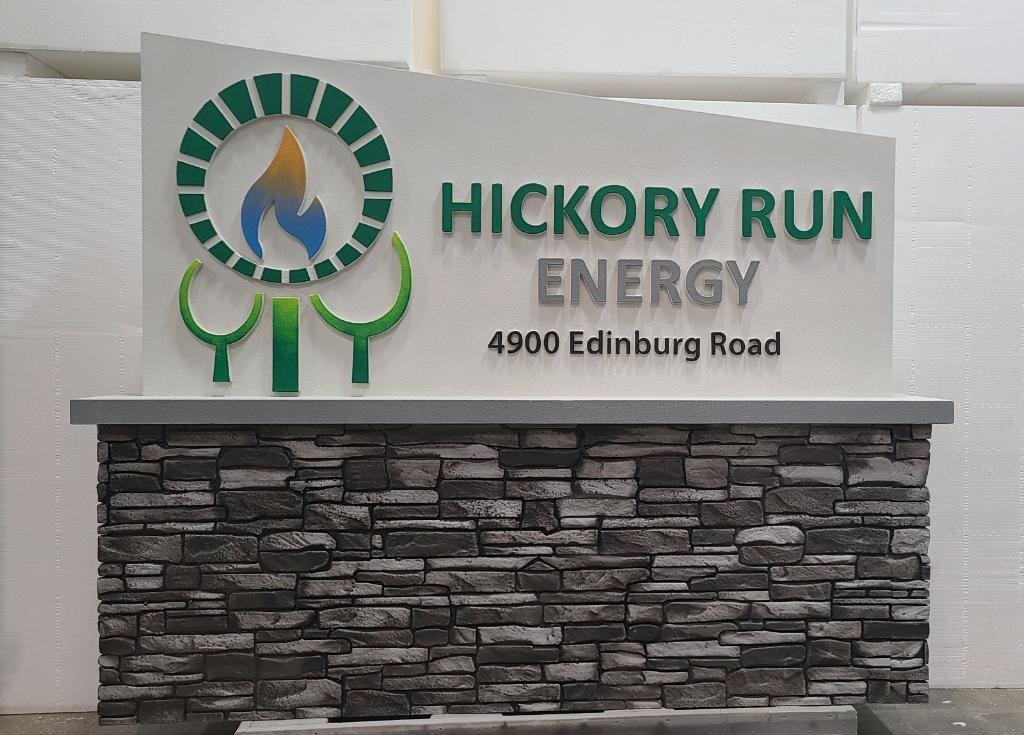
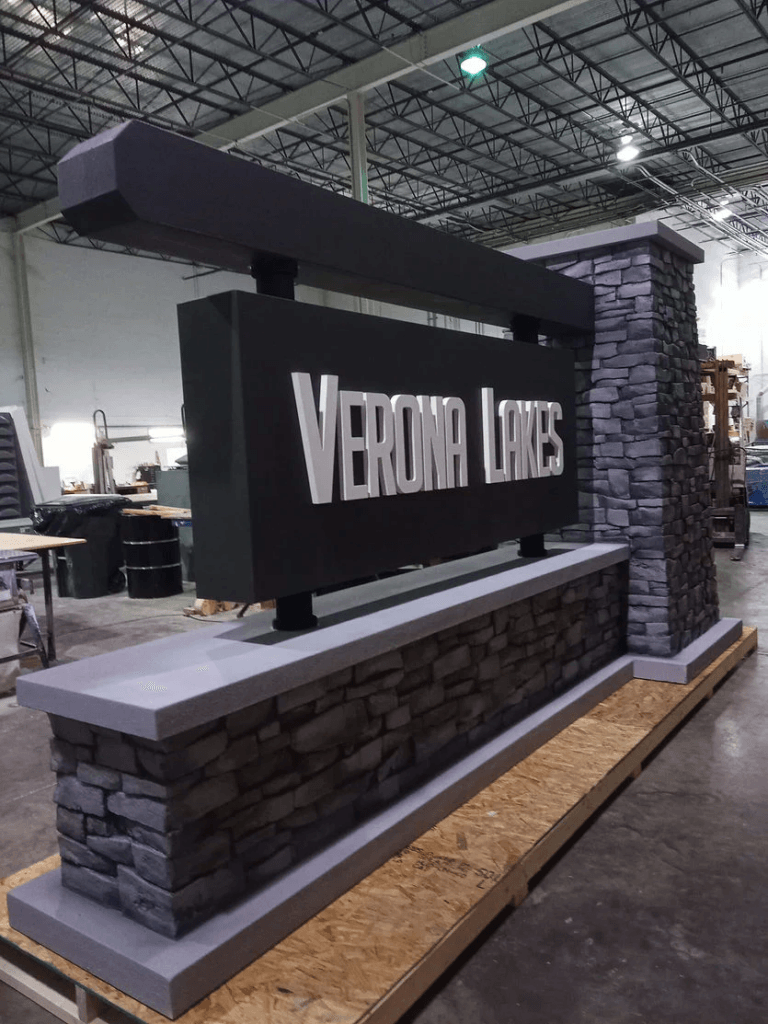
6. Faux Texture Application Our artists create depth by applying layers of color and texture using methods including dry brushing, rag rolling, sponging, and stippling. To simulate natural mineral changes, we can dab on layers of grays, rusts, and browns for stone effects. Using specialist brushes and glazing techniques, we mimic grain patterns and knots for wood. Metallic finishes call for a different strategy: to simulate rust or shine, add thin metallic powders and patinas.
7. Detailing and Weathering We include highlights, shadows, distressing, and oxidation to attain authenticity. This could mean dry brushing edges for a sun-faded appearance, adding streaks of green-blue to mimic aged copper, or even mimicking hairline fractures for a vintage stone effect. Faux finishes go from painted to realistic at this stage.
8. Sealing At last, a UV-stable, weather-resistant clear finish seals the whole item. This guarantees that the faux finish stays bright and shielded from abrasion, rain, snow, and sunshine. In high-touch areas, we might use several coats for more durability.
Every one of these actions is really vital in a procedure transforming basic foam into a high-end sign solution. EPS foam can convincingly mimic some of the most costly and resource-demanding materials on the market with the correct methods, resources, and expertise. The outcome is a lightweight, affordable, environmentally friendly, durable, and attractive item.
Faux-finished EPS foam signage offers limitless creative possibilities from design prototype to final installation; at 3D Sign Factory, we are happy to realize your idea with unmatched knowledge and attention.
Sustainability Advantages of Faux-Finished Foam Signs
Signage materials are changing in an age where environmental awareness is not optional but rather required. Faux-finished EPS foam signage offers a chance to combine beauty with sustainability—a unique combination in an industry traditionally reliant on resource-intensive materials like wood, metal, and stone. Sustainability at Royal Foam is not a trend but rather a value ingrained in every stage of our process. Let’s look at the many sustainable benefits of faux-finished foam signs and why it is rapidly becoming the ideal choice for eco-conscious companies, towns, and developers.
1. Reduced Raw Material Consumption One of the most important environmental benefits of adopting EPS foam is the sheer decrease in natural resource use. Traditional materials like stone and hardwood have to be quarried or logged, which uses a lot of land, energy-intensive processes, and creates a large carbon footprint. In contrast, EPS foam doesn’t depend on harvesting limited natural resources and needs significantly less raw material to manufacture.
Faux finishes mimic the appearance of these expensive materials without the environmental impact. We utilize coatings and colors to replicate the beauty of rare hardwoods or mined granite rather than using them, therefore providing the same visual appeal without harming ecosystems.
2. Lightweight = Lower Carbon Emissions Weight is important for transportation. Transporting a 100-pound stone slab or metal panel calls for significantly more fuel than a 5-pound EPS foam counterpart. Especially when moved over great distances, faux-finished foam signage significantly cuts freight emissions. More units can be put into a single shipment since they are lighter and more compact, therefore reducing the number of trucks on the road.
For major projects like retail chains requiring national rollout or municipal monument markers, this decrease in emissions is significant. Less weight means less fuel, fewer CO₂ emissions, and a smaller total carbon footprint.
3. Extended Lifespan and Durability Unlike inexpensive signage alternatives that deteriorate fast and need regular repair, faux-finished EPS foam signs are made to last. Once coated with robust polyurea and sealed with UV- and weather-resistant treatments, they may survive severe outdoor conditions for years without cracking, fading, or warping.
Over time, this longer lifetime lowers waste. Naturally, more sustainable is a sign that lasts 10–15 years without the need for replacement than one that ends up in the landfill after only two or three.
4. Lower Energy Consumption During Fabrication Producing wood, metal, and stone signs is quite energy-intensive. Metal has to be mined, smelted, and cast; wood has to be logged and milled; stone has to be quarried and sculpted. These procedures use a lot of water, fossil fuels, and electricity.
By contrast, EPS foam needs far less energy to produce. Our finishing techniques are meant to be efficient, and CNC hot wire cutting runs on low-energy electric currents. When you consider the coatings and fake painting, the total energy profile is far lower than that of conventional sign manufacturing.
5. Recyclability and Reusability EPS foam is among the most recyclable plastics now in existence. Clean, uncontaminated EPS can be gathered and manufactured into fresh foam products, insulation panels, or even other signs. More significantly, faux-finished signs are usually made with recycling in mind.
Royal Foam guides customers in planning for flexibility and future repurposing. For example, event signage can be created using changeable faceplates or logos that let the same structure be reused for several events. We also advise customers on appropriate maintenance and storage, hence extending the useful life of their signs.
6. Eco-Friendly Coatings and Finishes In the past, foam signage coatings frequently depended on solvent-based chemicals releasing dangerous VOCs (volatile organic compounds). That is not required now. 3D Sign Factory mostly uses polyurea, a VOC-free, solvent-free elastomer that hardens quickly without emitting hazardous emissions into the environment.
Our fake finishes and paints also use eco-conscious pigments and water-based materials whenever feasible. These developments imply that faux finishing no longer compromises water or air quality. When used with low-waste application techniques, these coatings help to create a more environmentally friendly whole process.
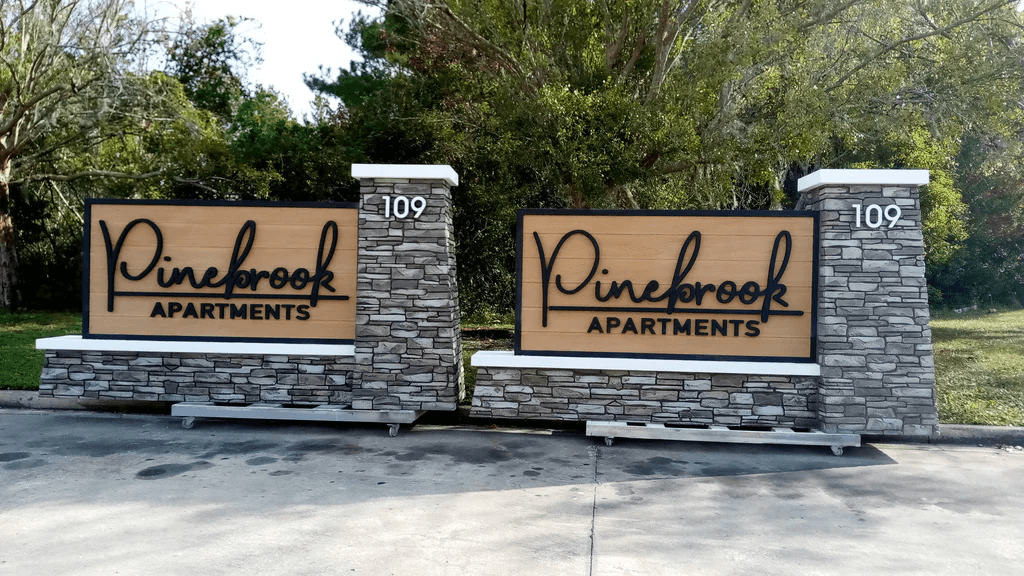
7. Less Construction Waste EPS foam signs are custom-cut to precise specifications, which helps cut down on off-cuts and material waste. Traditional materials can require on-site shaping or trimming, which could produce significant waste in the form of sawdust, stone chips, or metal shavings—all of which are challenging to recycle or reuse. On the other hand, foam signage can be pre-fabricated off-site with little waste.
Minimizing project site trash also helps to lessen the related expenses and emissions connected to landfill use, hauling, and cleanup.
8. Suitable for Green Building Certification Faux-finished EPS foam signage can help developers and municipalities seeking LEED (Leadership in Energy and Environmental Design) or other green building certifications score points in many categories, including:
- Materials & Resources: for recycled content and regional sourcing
- Energy & Atmosphere: due to lower embodied energy
- Innovation in Design: for creative, sustainable material use
Choosing signs that fit green construction ideas helps builders guarantee their projects are not only visually exceptional but also ecologically responsible.
9. Reducing Visual Waste with High-End Aesthetics High-end aesthetics help to reduce visual waste by means of visual clutter and temporary signage. Faux finishes let designers creatively fit architectural, branding, and long-term trends, hence producing signage that stays relevant and appealing for far longer.
Beautiful, well-integrated signage lessens customer desire to replace or upgrade it early, therefore lowering both environmental and financial waste.
10. Aligning with Corporate Sustainability Goals More and more companies are including sustainability into their brand identities, hence complementing corporate sustainability objectives. From carbon neutrality promises to zero-waste objectives, businesses are being held responsible for every aspect of their operations, including signage.
Choosing faux-finished EPS foam signs allows companies to visibly and materially demonstrate their dedication to sustainability. Installed outside a green-certified building, at an eco-conscious resort, or in a public park, these signs support environmentally responsible branding.
Sustainability is not about sacrifice; it’s about smarter decisions. Lower environmental cost makes for a lovely future. Faux-finished EPS foam signage provides a sleek, high-performance, environmentally friendly substitute for conventional materials. From reduced emissions and energy consumption to longer lifespans and aesthetic durability, this signage solution fits exactly with the objectives of contemporary green design.
At 3D Sign Factory, we are creating solutions that respect both your brand and the earth, not only signage. Faux-finished foam could be the most lovely choice you make if you want signage that tells a narrative, has an effect, and leaves a lighter footprint.
Popular Use Cases for Faux-Finished EPS Signage
Faux-finished EPS foam signage’s adaptability has made it possible to use it in many different sectors. EPS foam has been a popular alternative for both temporary and permanent signs because of its lightweight, durable character and capacity to imitate materials including wood, stone, and metal. Here are a few of the most often used and powerful applications for this changing sign material:
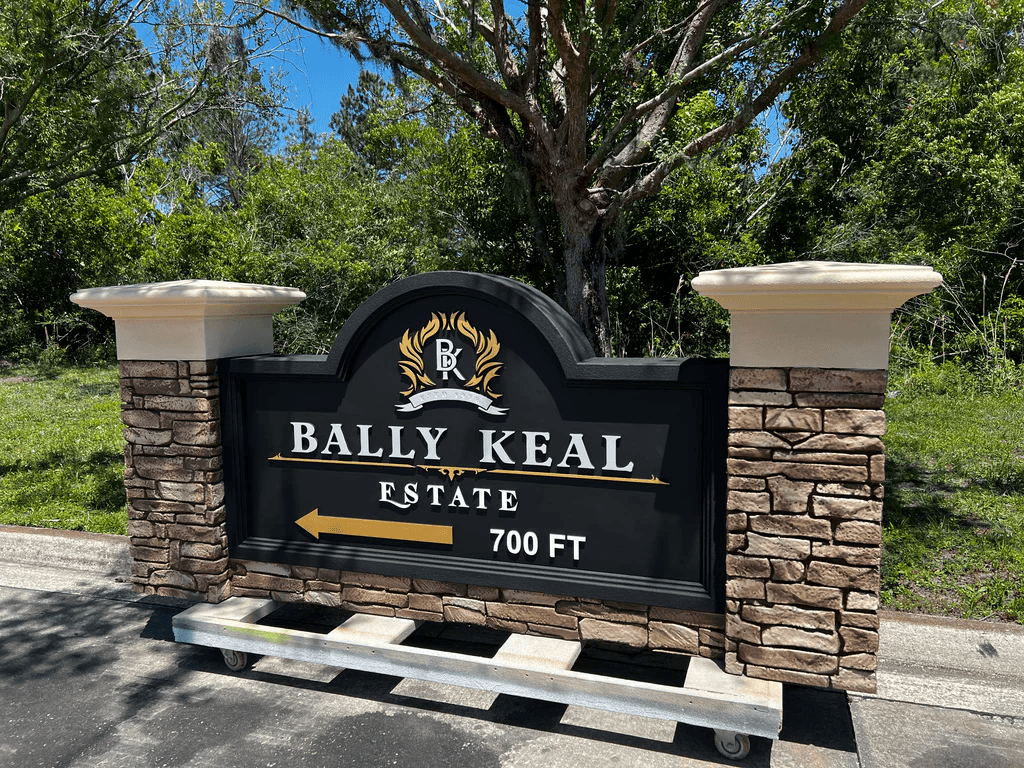
1. Monument Signs for Businesses and Municipalities Large monument signs for shopping centers, office parks, residential neighborhoods, and public institutions are generally made using faux-finished foam. Shaped and textured to mimic hand-carved stone or aged wood, the foam offers the grandeur of classic materials at a fraction of the weight and price. These signs stay bright and readable for years, even in severe weather, since the coatings are UV- and weather-resistant.
2. Architectural and Wayfinding Signage EPS foam is an excellent medium for producing dimensional building markers, address plaques, directional signs, and entrance signage. Designers may effortlessly combine signage with the architecture of the building by finishing the foam to resemble cast copper, brushed aluminium, stone, or redwood. While keeping a premium appearance, wayfinding signs made with fake finishes help improve the visual flow of areas, including hospitals, colleges, and event locations.
3. Event and Experiential Marketing Displays One of the most interesting uses of faux-finished EPS signage is in event branding. From red carpet backdrops to 3D lettering spelling out a brand’s name, this signage can be made to mimic everything from industrial metals to rustic barnwood. Because of its mobility and simple customisation, foam is ideal for this sector. Furthermore, parts can be re-skinned and reused for future events, providing a sustainable choice for marketing teams and agencies.
4. Trade Show Booths and Pop-Up Environments Trade show designers appreciate faux-finished foam signage for producing lightweight, simple-to-install, striking displays. Complex forms may be CNC-cut from the foam or layered to create immersive three-dimensional settings. Faux finishes let these temporary spaces seem permanent and professional, offering the illusion of luxury materials without the difficulty or cost of importing heavy items.
5. Themed Environments in Hospitality and Entertainment Hotels, amusement parks, restaurants, and theaters all utilize faux-finished EPS signage to design immersive experiences. Picture a medieval-themed resort with fake stone wall plaques or a tiki bar with fake bamboo signage. EPS lets you create dramatic, larger-than-life installations that would be impossible with conventional materials because of cost or weight limits. In these environments, the foam is a key component of the decor as well as a practical signage medium.
6. Educational and Institutional Installations Museums, universities, and institutions employ faux-finished EPS foam for exhibitions, donor recognition walls, and interpretative signage. These organizations may celebrate donors or teach guests in a visually interesting manner using the material’s flexibility and professional appearance. Signage without the same investment mimics stone or bronze, which gives it a sense of permanence and significance.
7. Retail and Point-of-Sale Displays Retailers build point-of-purchase signs, in-store branding components, and even themed window displays using faux-finished foam. EPS is the perfect substrate for seasonal promotions and marketing campaigns since it allows for simple graphic changes, surface repainting, and addition of fresh parts. Foam signs help to visually express stories that fit brand identity and grab consumer attention.
8. Film, Television, and Set Design Set designers in the entertainment business use faux-finished EPS foam extensively to mimic everything from ancient ruins to futuristic environments. Often undetectable from the actual materials on camera, these props and signage are safe, inexpensive, and simple to use. Foam signs can look like genuine stone inscriptions or metallic control panels when mixed with expert fake painting methods.
More than just a cheap substitute, faux-finished EPS foam signage is a creative enabler. From creating a one-of-a-kind event activation to developing a monument sign for a city entrance, EPS foam’s capacity to mimic practically any material provides it with unrivaled adaptability in the signage sector. 3D Sign Factory helps its customers dream big and provides signage solutions that are not only physically beautiful but also ecologically friendly and fiscally savvy. Faux treatments turn EPS foam from a basic base into a strong medium for narrative, branding, and architectural expression.
Why Customers Love Faux Finishes
From architects to event planners, our clients choose faux-finished EPS signs for the following reasons:
- Budget-friendly elegance
- Fully customizable sizes, textures, and finishes
- Quick turnaround compared to custom stone or metal work
- Eco-friendly credentials that meet modern sustainability standards
Ready to Make an Impression?
Faux-finished EPS foam signage is the answer if you want signs that grab attention without requiring a large budget or environmental impact.
3D Sign Factory produces outcomes that catch attention and last for years by combining workmanship, creativity, and sustainability.
Reach out to us now to receive a price, set up a consultation, or find out more about our eco-friendly sign choices. From a hand-hewn wood prop to a marble monument sign to a rusted iron logo, we are here to make your vision come true.
Frequently Asked Questions
What is faux finishing in signage?
Faux finishing is the art and science of applying specialized protective coatings and paints to an expanded polystyrene (EPS) foam substrate to replicate the texture and appearance of natural materials. This strategic method allows signs to realistically mimic premium surfaces like hand-chiseled stone, rustic wood, or polished metal at a fraction of the weight and cost.
How durable are faux-finished foam signs when used outdoors?
Once encased in a high-pressure spray-on polyurea armor and sealed with a UV-stable topcoat, these signs become highly impact- and weather-resistant. They will not warp, crack, or rot, allowing them to withstand severe outdoor conditions for 10 to 15 years without losing their vibrant look.
What makes EPS foam a more budget-friendly option than traditional materials?
EPS foam is significantly less expensive to source and shape, but the biggest savings come from its ultra-lightweight nature. Because these signs can be transported and installed without heavy cranes or forklifts, project costs for labor, shipping, and equipment are dramatically reduced.
Are these foam signs environmentally friendly?
Yes, clean post-consumer EPS foam is 100% recyclable, and its production and transport require far less energy than mining stone or smelting metal. Additionally, Royal Foam utilizes eco-conscious, water-based pigments and a solvent-free polyurea coating that emits zero harmful volatile organic compounds (VOCs).
What types of projects are best suited for faux-finished EPS signage?
The material’s extreme versatility makes it perfect for outdoor architectural monument signs, dimensional lobby lettering, and point-of-purchase retail displays. It is also widely used by set designers and event planners to create immersive, large-scale 3D props and lightweight trade show booths.
Can using faux-finished foam signage help a project achieve green building certifications like LEED?
Absolutely. Because of its low embodied energy, reduced transportation emissions, and high recyclability, choosing this signage can contribute valuable points toward LEED certification in categories like Materials & Resources and Innovation in Design.

Read more

The Importance of Hard Coating in Outdoor Signage: How Polyurea Coating Transforms Foam Structures into Durable Signage

Beyond Traditional Materials: Why HDU Foam Is Replacing Wood and Stone in High-End Signage
The Hidden Science Behind High-Quality Foam Lettering & Dimensional Signage
Eco-Friendly Signage Solutions: Is HDU & EPS Foam the Sustainable Choice?

Why Lightweight Foam Monument Signs Are Ideal for Large-Scale Signage

The Importance of Proper Installation for Monument Signs

Foam vs. Metal Signs: Cost, Durability, and Aesthetic Considerations

The Importance of Proper Installation for Monument Signs

From One-Time WOW to Multi-Tour ROI

You’re Met by Your Looks, Welcomed by Your Substance
Recommended Articles
HDU Signs: What High-Density Urethane Foam Is and Why It’s a Premium Sign Choice
Acrylic Signs for Business: Types, Benefits, and How to Choose the Right Style
Industrial 3D Printing: Large-Scale Foam Prototypes, Models & Manufacturing Solutions
Molds for Stone Signs: The Foundation Behind Consistent Architectural Signage
Beyond the Booth: How Custom 3D Displays Make Brands Stand Out at Expos and Events
Sandblasted vs. Routed Signs: Which Is Right for Your Project?
Our customer reviews
Read more reviewsRead more reviews