Eco-Friendly Signage Solutions: Is HDU & EPS Foam the Sustainable Choice?
Quick Navigation
- What Makes Signage Eco-Friendly?
- EPS Foam: Lightweight, Durable & Surprisingly Recyclable
- HDU Foam: The Gold Standard for Long-Term Eco-Signage
- Coatings & Finishes: Are They Sustainable?
- Why Polyurea?
- The Bigger Picture: Why Coatings Matter in Sustainability
- Examining Foam in Light of Conventional Signage Materials
- Carbon Footprint Considerations
- Efficiency in Shipping = Less Environmental Impact
- Reusability in Event & Commercial Signage
- Closing Thoughts: Long-Term Sustainability with Foam & Coatings
The signs industry is coming under increasing pressure to innovate within the framework of today’s world, where environmental responsibility is more important to consumers and companies. Among the products that 3D Sign Factory specializes in making are 3D props and letters, HDU foam signs, and EPS foam signage. These items not only look attractive but also help to reach long-term sustainability goals.
The following is a question I often get from consumers in many sectors, including retail businesses, homeowners organizations, event planners, architects, and builders:
In terms of the environment, are foam signs truly good?
A yes or no answer would be overly simplistic. Not all materials used for signage, much as not all foams are environmentally good by their very nature. Conversely, EPS and HDU foam become strong rivals in the quest for more environmentally responsible substitutes for signage when one takes into account the whole lifecycle of the sign, including the sourcing of raw materials, manufacture, transportation, lifetime, and final disposal.
What Makes Signage “Eco-Friendly”?
Discussing the characteristics of “Eco-Friendly” signage will provide insight into its sustainability aspects.
To assess the environmental value of a signage solution, you should consider criteria such as material sourcing, recyclability, and production impact. When performing an evaluation of potential sign materials, we take into consideration the six sustainability criteria that are as follows:
1. The Origin of Materials and Their Capacity to Be Recycled
In what way did the material come into existence? Does it have a synthetic, artificial, or sustainable quality? After its useful life has come to an end, is it possible to recycle it or find another use for it?
2. Consumption of electric power that is associated with production
The production of particular materials calls for a significant amount of resources to be allocated. Incorporating the carbon footprint of manufacturing is necessary in order to determine whether or not something is truly sustainable.
3. Longevity and toughness of character
The length of time that a sign is displayed is directly related to the amount of time that it is useful. Using materials that are resistant to the elements and do not decompose helps to lessen the impact that they have on the environment over the long term.
4. The Effectiveness of Transportation and the Weight
A lower amount of gasoline is required for the transportation and assembly of lightweight materials. The benefits of this advantage quickly mount when they are used across a large number of sign installations.
5. Emissions of the Volatile Organic Compounds and Off-Gassing of the Environment
It is possible for volatile organic compounds (VOCs) to be released into the atmosphere during the curing and coating processes. The use of paints and varnishes with low volatile organic compounds (VOC) lessens the likelihood of this happening.
6. The Consequences That Come After the End of Life
When the sign will be removed at some point in the future, will it take decades for it to decompose in a landfill, or is there a more environmentally friendly way to dispose of it? When a product reaches the end of its useful life, the importance of being biodegradable or recyclable cannot be overstated.
In this examination, we will compare the recyclability, durability, and environmental impact of EPS and HDU foam with traditional materials like stone, metal, and wood.
EPS Foam: Lightweight, Durable & Surprisingly Recyclable
The term “EPS foam,” which is frequently misunderstood and incorrectly referred to as “Styrofoam” (a trademarked designation for extruded polystyrene), is a terminology that is in usage but lacks precision. However, when used in permanent installations such as signage and three-dimensional props, EPS foam transforms into an environmentally sustainable material, despite the fact that it is criticized for having qualities that are similar to those of single-use plastic.
- One of the benefits of a lightweight design is a reduction in emissions from transportation.
In terms of weight, EPS indicators are an amazing choice. The installation and transportation of this material require a substantially lower amount of gasoline when compared to the transportation of stone, metal, or wood. This is a significant benefit for large-format monument signs or one-of-a-kind three-dimensional creations, all of which generally involve the transportation of freight or the use of heavy gear.
By reducing Scope 3 emissions, environmentally conscientious businesses can reduce their transportation emissions and so minimize their impact on the environment.
- The Frequently Ignored Capability to Recycle
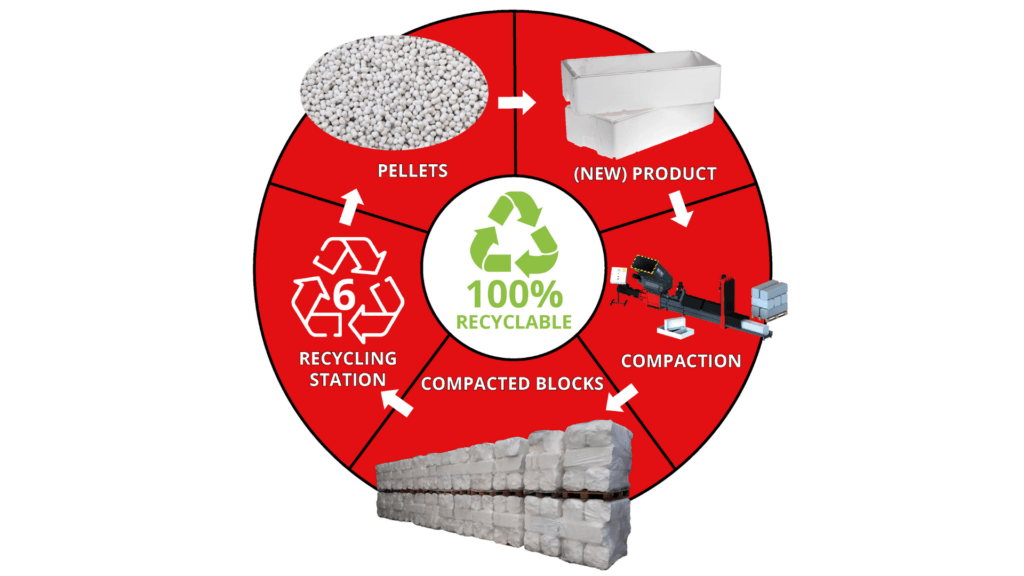
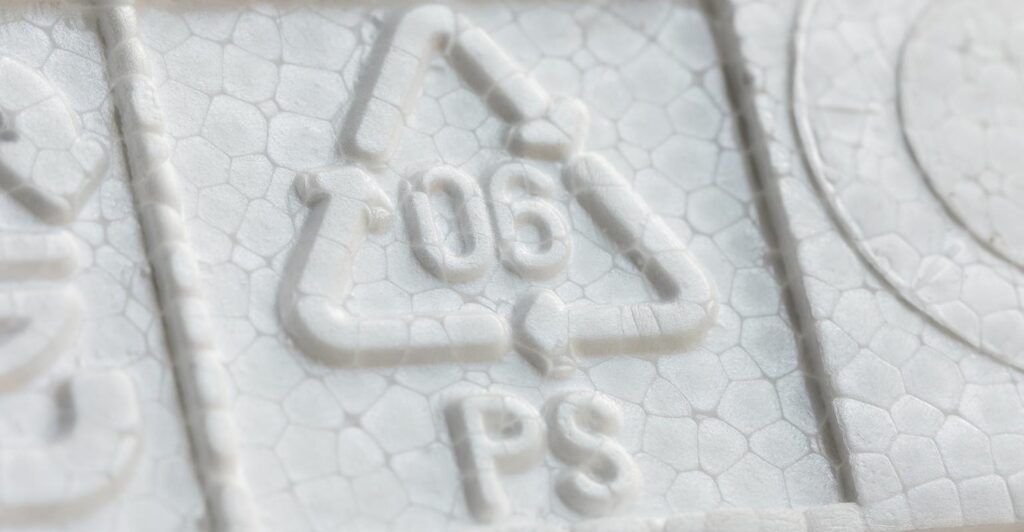
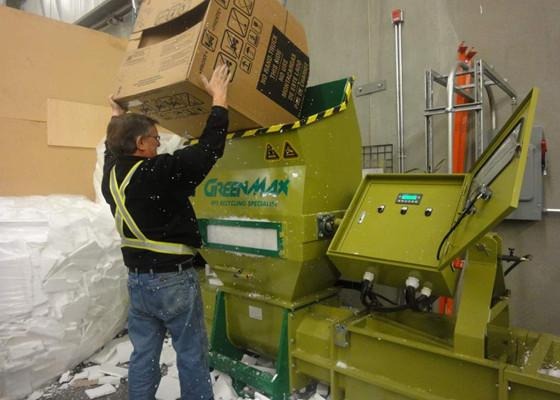
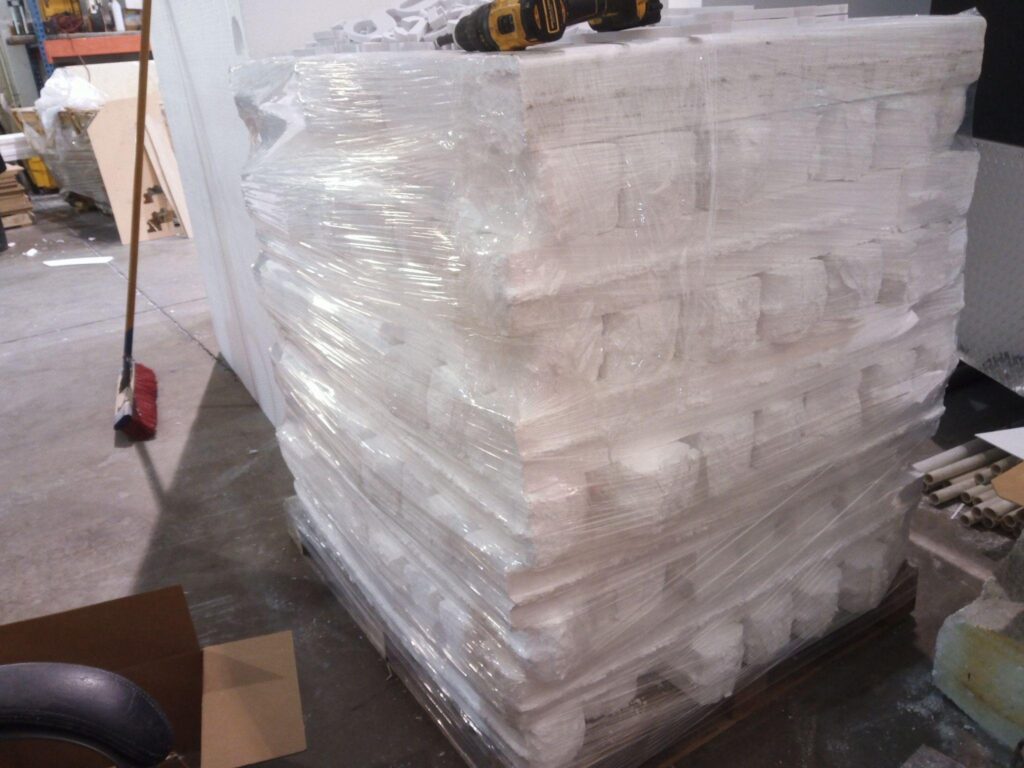
It is a common misconception that EPS can not be recycled, however in reality, this is not the case. Pure EPS foam is guaranteed to be recyclable at a rate of one hundred percent. Resin pellets made from expanded polystyrene (EPS) foam are now accepted and processed at several locations around the United States. Picture frames and surfboards are two examples of the many goods that could potentially benefit from the use of these resin pellets.
Royal Foam has a strong dedication to the concept of recycling. Our ability to provide return logistics and advice on the safe disassembly and recycling of products is made possible through our collaboration with event production firms or retail brands that have rotating displays.
- Reducing the amount of waste produced by manufacturing
CNC machines, which are controlled by computers, make it possible to fabricate EPS foam signage in a manner that is both incredibly accurate and completely waste-free. Repurposing residual shavings or cuts is a common practice that involves regrinding and reusing the material. When compared to resin casting or metal manufacturing, it requires a lower amount of water and chemical usage, which is a significant advantage.
- Manufacturing That Is Efficient With Energy
The expansion of steam results in the formation of EPS, which can then be shaped or molded into blocks. When compared to the fluorocarbons that were previously used in the production of foam, the blowing agent that is utilized, pentane, is not only favorable to the ozone layer but also substantially cleaner.
Furthermore, a number of modern facilities that manufacture EPS have closed-loop steam systems, which eliminates the waste of water and significantly reduces the amount of pollutants that occur during the molding process.
HDU Foam: The Gold Standard for Long-Term Eco-Signage
It is common practice for professionals working in the fields of signs and dimensional design to make use of closed-cell synthetic foams like High-Density Urethane (HDU). As a result of its malleability, homogeneous texture, and durability, it is in extremely high demand.
Because of its consistent performance in both indoor and outdoor environments, 3D Sign Factory uses HDU for a variety of applications, including routed monument sign faces, architectural lettering, logos, and other applications.
1. An alternative to the use of artificial wood
In spite of the fact that they are naturally occurring, the old-growth forests that are the source of traditional carved signs require continuous sealing and maintenance.
In contrast, HDU is entirely synthetic and does not contain any wood fiber, which indicates that:
- Prevention of the cutting down woods
- Decomposition, deformation, and fracturing are not present.
- Sealants for wood that are based on solvents are not required.
It has the same traditional appearance as wood, particularly when it is finished with a simulated finish, and it does not have any negative effects on the environment.
2. A reduced impact on the environment as a consequence of a longer lifespan
The astonishingly extended lifespan of HDU is one of the many environmentally sustainable features that it offers. When protected with the appropriate hard coatings, such as urethane paint or polyurea, HDU signs have the potential to last for twenty years or even longer.
Over time, this results in a reduction in the amount of trash produced and a decrease in the carbon cost of re-manufacturing because fewer replacements are required.
3. Safe and free of damaging effects
Curing HDU results in the formation of a substance that is chemically inert. It does not emit any off-gases, disintegrate into microplastics, or release any volatile organic chemicals when it is subjected to higher temperatures or higher levels of moisture. There is no need to be concerned about its use inside, as it may be utilized in settings such as hospitals, schools, or restaurants.
We use primers and coatings that have a low concentration of volatile organic compounds wherever it is possible to do so in order to reduce the amount of air pollution that occurs at our facilities as well as at yours.
4. Improved machinery contributes to a lower risk of injury in the workplace
Compared to aluminum, MDF, or plywood, HDU is easier to machine than these other materials. Due to its closed-cell structure, it is not susceptible to unanticipated chipping or flaking, and it produces a far lower amount of fine dust in comparison to particle board or hardwoods.
What about coatings and finishes? Do they have a sustainable impact on the environment?
At 3D Sign Factory, we are frequently asked questions about the effects that our paints and treatments have on the environment. The effectiveness of a sign is directly proportional to the level of the surface protection it possesses. When discussing sustainability, the majority of people focus on fundamental components such as wood or foam. However, coatings are of critical importance when considering the environmental impact of a product during its entire life cycle.
Polyurea coatings, which are elastomers that are put on EPS or HDU foam structures, are the primary method that 3D Sign Factory employs in order to provide an exterior that is long-lasting, waterproof, and resistant to impact. Polyurea represents a significant technological leap in terms of both its environmental sustainability and its environmental impact.
Coatings & Finishes: Are They Sustainable?
One of the most common questions I get as a signage professional at 3D Sign Factory is frequently asked questions about the effects that our paints and treatments have on the environment. The effectiveness of a sign is directly proportional to the level of the surface protection it possesses. When discussing sustainability, the majority of people focus on fundamental components such as wood or foam. However, coatings are of critical importance when considering the environmental impact of a product during its entire life cycle.
Polyurea coatings, which are elastomers that are put on EPS or HDU foam structures, are the primary method that 3D Sign Factory employs in order to provide an exterior that is long-lasting, waterproof, and resistant to impact. Polyurea represents a significant technological leap in terms of both its environmental sustainability and its environmental impact.
Why Polyurea?
Polyurea is the preferred coating for environmentally friendly foam signage since numerous polyurea formulations do not contain volatile organic compounds (VOCs). This makes polyurea formulations a more environmentally sustainable and safer option than coatings that are based on solvents.
Enhancement of Product Longevity Polyurea creates a barrier that is both strong and long-lasting, which allows it to considerably extend the lifespan of advertisements. Because of its longer lifespan, the product generates less waste, requires fewer replacements, and leaves a smaller carbon footprint.
Protection of Foam Signs from the Influence of Environmental Factors —In the course of time, foam signage that is not protected from the elements is prone to degradation, cracking, and fading. With the use of polyurea, a surface that is resistant to abrasion and water may be formed that is seamless.
On the other hand, in contrast to other coatings that are used in conventional signs, polyurea does not contain any potentially harmful additives or chemicals that could lead to contamination during the application process or during degradation. Neither solvents nor heavy metals are required for its operation.
Polyurea coatings are environmentally friendly since they have a longer lifespan and require fewer repairs or replacements over the course of their lifetime. Additionally, they manufacture EPS and HDU signs that are of sufficient durability to survive climatic conditions for extended periods of time, even in settings such as ski lodges, amusement parks, and beach resorts.
The Bigger Picture: Why Coatings Matter in Sustainability
The use of modern coatings, such as polyurea, has several fundamental advantages in terms of sustainability.
1. Durability = Reduced Waste
There would be far less waste if signs lasted 10-15 years instead of every 2-3 years. Key reasons for early sign retirement, including surface degradation, color fading, and erosion, can be mitigated with the use of polyurea.
2. Less Recoats Means Less Pollutants
In addition to increasing resource consumption and air pollution, traditional signage may necessitate frequent repainting. Because polyurea’s protection lasts a long time, less recoating is required, which saves time and resources.
3. Minimal Waste = Spray Efficiency
Spraying polyurea with high-precision systems minimizes waste and overspray. Faster turnaround, less cleanup, and fewer containers are further benefits.
4. Compatibility with Water-Based Paints
Applying low-VOC coatings or water-based paints after polyurea has cured is an option. Because of this, both designers and clients can choose environmentally friendly finishes without sacrificing style.
Examining Foam in Light of Conventional Signage Materials
When we compare foam signs to traditional building materials, foam signage checks the boxes across multiple eco-friendly criteria, especially when compared with traditional building materials, which are either too heavy, too hazardous to make, or too slow to deteriorate, we can see that foam signs not only fulfill many of the environmental regulations, but they also meet many of the standard requirements.
Carbon Footprint Considerations
You may begin to lessen the impact that your signage has on the environment by picking materials that are not only lightweight but also long-lasting. While EPS and HDU, particularly when coated with polyurea, offer a number of advantages over more standard signage materials, the following are some of the advantages that they offer:
Foam signs can be up to eighty percent lighter than metal or wood signs, which results in a reduction in the emissions that are produced by transportation. Because of this, there is a large reduction in emissions during the process of moving, setting up, and transporting.
Production as well as distribution The utilization of lightweight materials and effective spray-applied coatings, such as polyurea, results in a reduction in the amount of fuel that need to be consumed.
As a result of the fact that there would be fewer replacements throughout the course of time, there would be less material entering landfills or incinerators, which would result in less waste.
Customers of 3D Sign Factory may be assured that they are picking environmentally responsible signage solutions that are both long-lasting and aesthetically beautiful if they take these characteristics into consideration when making their purchase decisions.
Efficiency in Shipping = Less Environmental Impact
In spite of the fact that signage transportation is frequently disregarded, it actually has a considerable influence on the sustainability profile of your project. It can be deduced from the weight of traditional building materials like stone and steel that the following is true:
- Additional machinery is involved.
- Increased consumption of gasoline
- a worsening of the environmental contamination situation
We are able to ship more products with fewer trips thanks to signage that is constructed of foam, which is then sprayed with polyurea and protected with it. Listed below are some of the pros:
- lower consumption of energy
- Decreased levels of carbon dioxide from emissions
- Lower costs associated with transportation
On account of the absence of the need for heavy machinery or cranes, the installation process is simplified.
There is a distinction between lightweight and fragile. Because of the high impact resistance and weather resilience provided by polyurea coatings, our foam signage is an excellent alternative for customers who are on the lookout for ways to lessen their impact on the environment without sacrificing performance.
Reusability in Event & Commercial Signage
Having the ability to reuse signs for businesses and events simultaneously.
At 3D Sign Factory, we work with a wide variety of clients, some of which include marketing companies, hotel chains, homeowners’ associations, and exhibit builders. Signage made of foam is extremely recyclable when it has been coated properly, which is one of the most appealing characteristics of this material.
Polyurea-coated foam signage is great for large-scale 3D props on film sets or gigantic writing for live performances since it can be stored, painted, reassembled, or restored. This makes it a perfect material for signmaking.
Policies and Procedures for Effective Reuse:
- By ensuring that store signs are kept indoors, in an upright position, and covered, it is possible to lessen their exposure to ultraviolet radiation, moisture, and dust.
- When compared to the cost of standard signage materials, the maintenance cost and total cost of ownership for clients who want to give their signs a facelift for future usage are significantly lower.
- Several of our foam props were designed to be quickly disassembled and reassembled without compromising their structural integrity. This was one of our primary design goals.
- Transferring branding from one event to another can be accomplished by temporarily setting logos or themes.
Customers who adhere to our straightforward maintenance guidelines have the potential to extend the lifespan of their foam signs for a number of years, even when it is transported across international boundaries. The traditional materials used for signage are not capable of achieving this level of longevity and durability.
♻️ Closing Thoughts: Long-Term Sustainability with Foam & Coatings
In addition to being a design decision that is cognizant of the environment, using EPS or HDU foam signage that has been sprayed with polyurea is an excellent move. To put it another way, I mean:
- a reduction in the extraction of natural resources
- Reduce the number of vehicles
- Fewer wastes are being dumped in landfills
- Impact on the environment is reduced, and images are made to last longer.
In addition to lowering their carbon footprints, our customers are able to create displays that are not only memorable but also eye-catching because of the high-performance and environmentally friendly signage that we provide. As a company, 3D Sign Factory takes great pride in this accomplishment.
Whether you need monument signs, routed signs, dimensional lettering, or 3D event props, we are here to help you create them sustainably and beautifully. If you are interested in such products, we are here to help you.
Frequently Asked Questions
Are foam signs truly an environmentally friendly choice?
Yes, when looking at the entire lifecycle of a sign, advanced foam substrates like EPS and HDU are highly sustainable alternatives to traditional materials. Their low manufacturing energy, extreme durability, and unmatched transport efficiency combine to minimize their total environmental impact.
How does the lightweight nature of EPS foam benefit the environment?
Because EPS foam signs are up to 80% lighter than wood, stone, or metal, they require significantly less fuel to transport and install. This drastic weight reduction lowers shipping emissions and completely eliminates the need for heavy, fuel-consuming installation machinery like cranes.
Is EPS foam signage recyclable after it is taken down?
Absolutely. Pure EPS foam is 100% recyclable and can be processed into resin pellets to manufacture entirely new products like picture frames and surfboards. Royal Foam even provides return logistics and disassembly advice to help retail brands and event planners recycle their rotating displays responsibly.
Why is HDU foam considered an eco-friendly alternative to natural wood?
HDU is a synthetic, closed-cell material that provides the classic look of carved wood without contributing to deforestation or requiring harmful, solvent-based wood sealants. Because it never rots, warps, or cracks, an HDU sign can last over 20 years, dramatically reducing waste and the carbon cost of frequent replacements.
What role do polyurea coatings play in the sustainability of foam signs?
Polyurea acts as a zero-VOC, solvent-free protective shield that significantly extends the sign’s lifespan while preventing the core from degrading into microplastics. This ultra-durable shell eliminates the need for toxic repainting over time and creates a seamless, weather-resistant barrier suitable for any climate.
Can foam props and commercial signs be reused for multiple events?
Yes, polyurea-coated foam signage is engineered for exceptional reusability, allowing large 3D props and letters to be stored, repainted, and reconfigured. Many of our signs are specifically designed for quick, damage-free disassembly, letting businesses refresh their branding across multiple venues without purchasing new materials.

Read more

The Importance of Hard Coating in Outdoor Signage: How Polyurea Coating Transforms Foam Structures into Durable Signage
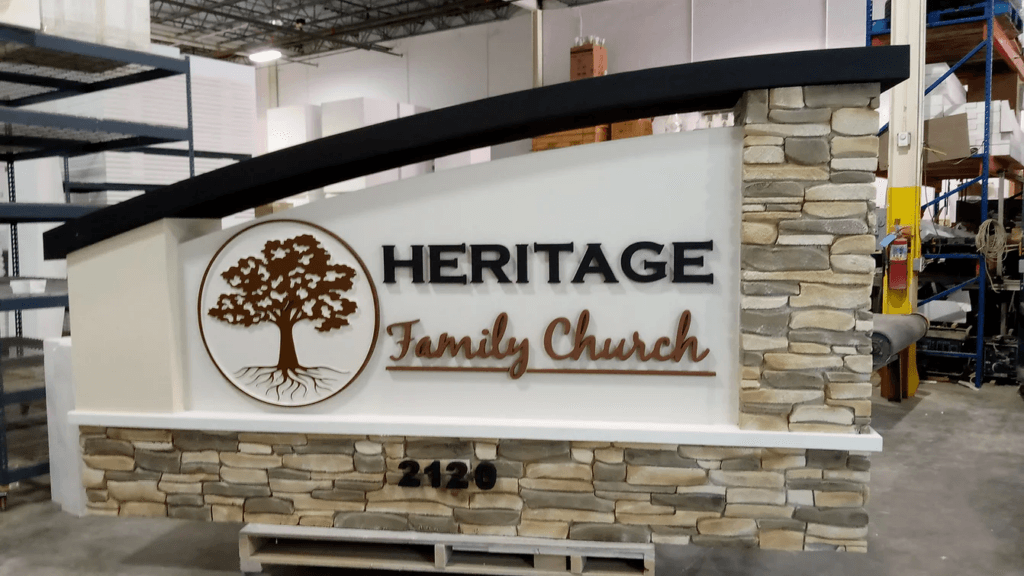
The Art of Imitation: How Faux Finishes Transform EPS Foam Into Stone, Metal & Wood

Beyond Traditional Materials: Why HDU Foam Is Replacing Wood and Stone in High-End Signage
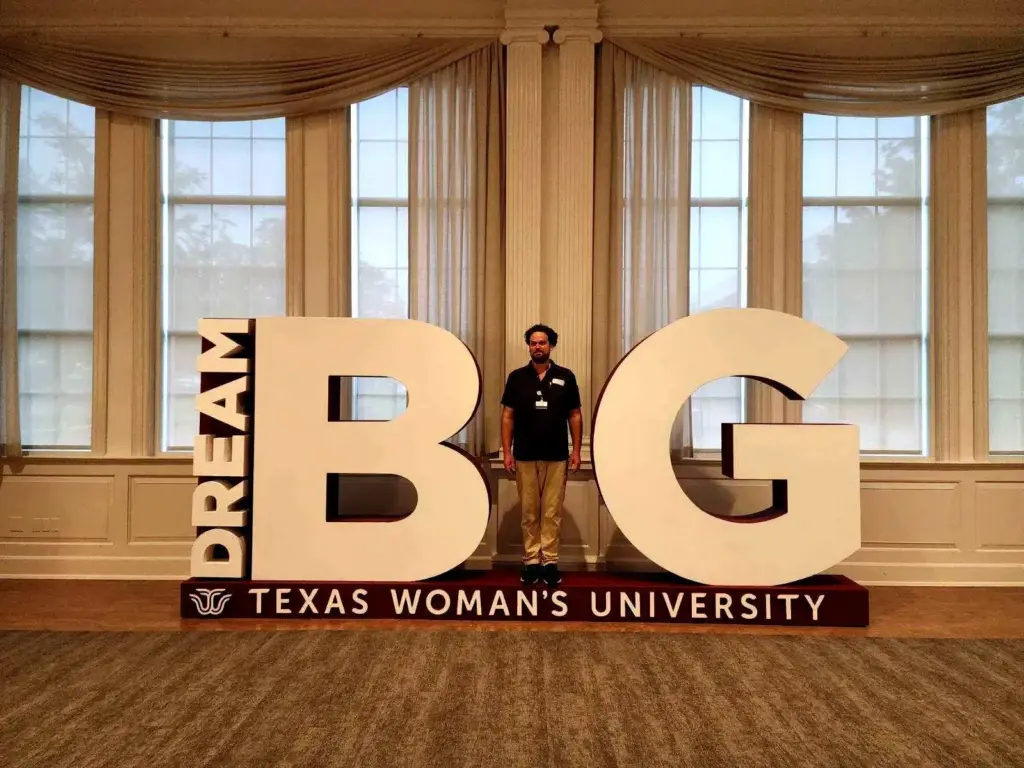
The Hidden Science Behind High-Quality Foam Lettering & Dimensional Signage

Why Lightweight Foam Monument Signs Are Ideal for Large-Scale Signage

The Importance of Proper Installation for Monument Signs

Foam vs. Metal Signs: Cost, Durability, and Aesthetic Considerations

The Importance of Proper Installation for Monument Signs

From One-Time WOW to Multi-Tour ROI

You’re Met by Your Looks, Welcomed by Your Substance
Recommended Articles
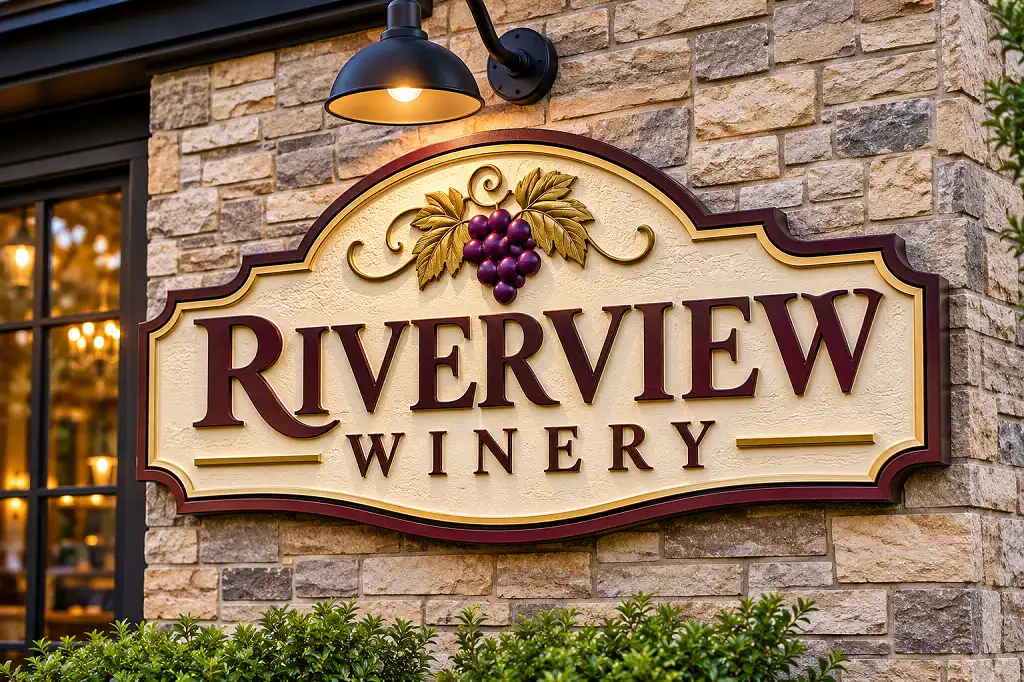
HDU Signs: What High-Density Urethane Foam Is and Why It’s a Premium Sign Choice
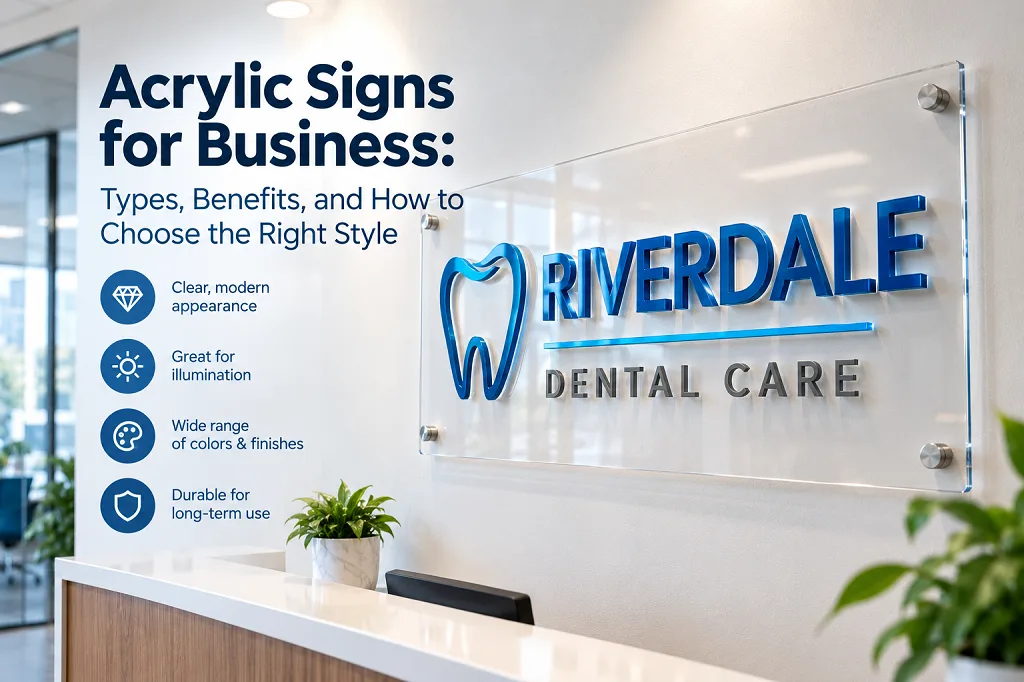
Acrylic Signs for Business: Types, Benefits, and How to Choose the Right Style
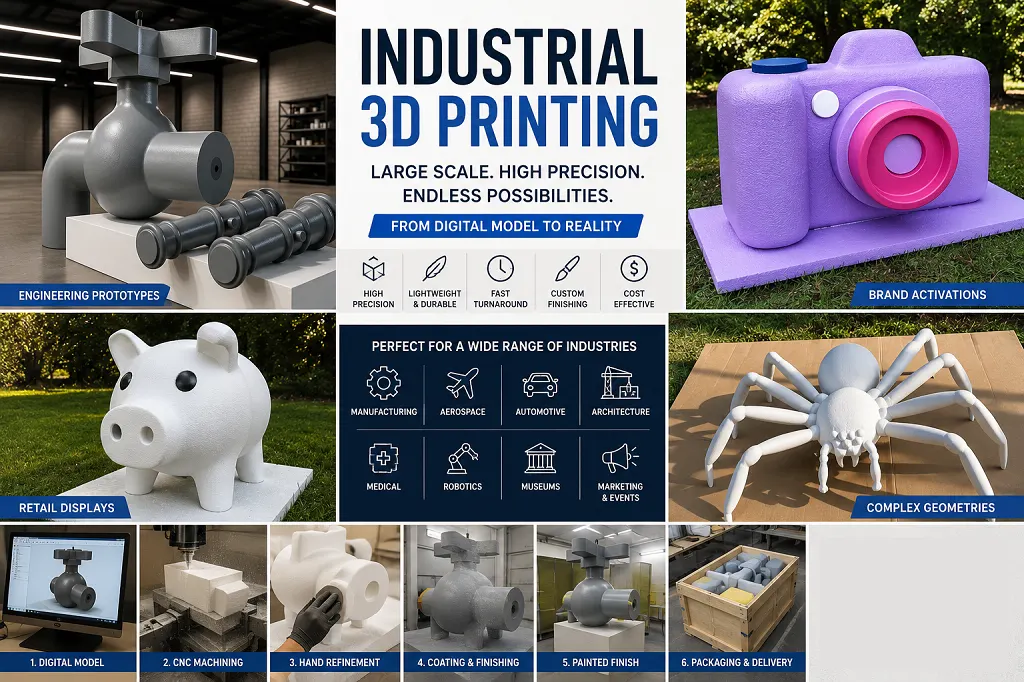
Industrial 3D Printing: Large-Scale Foam Prototypes, Models & Manufacturing Solutions
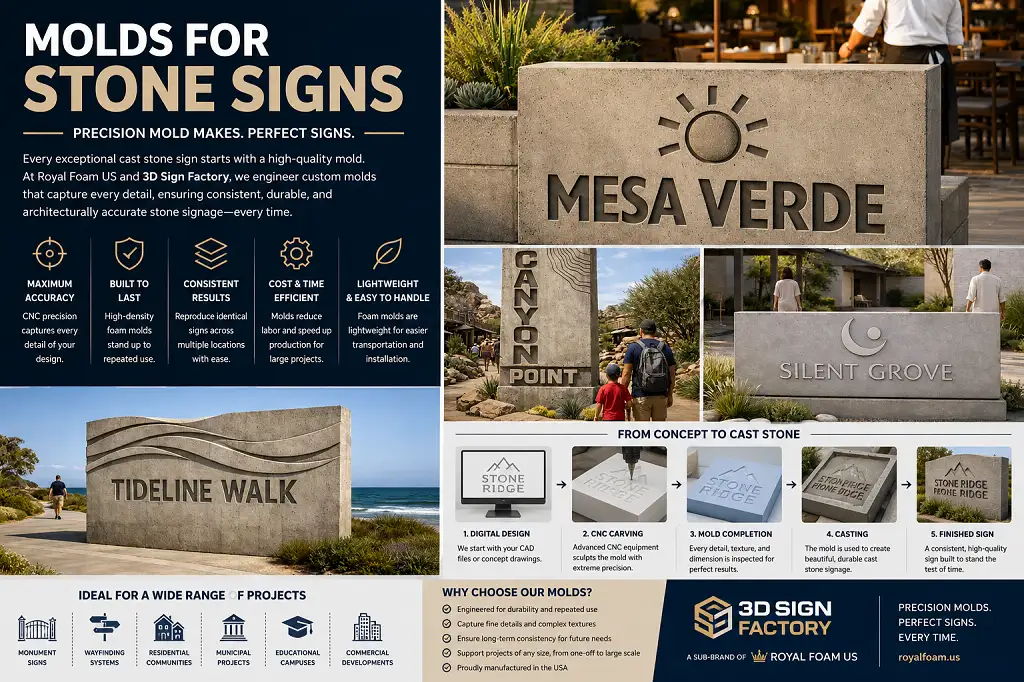
Molds for Stone Signs: The Foundation Behind Consistent Architectural Signage
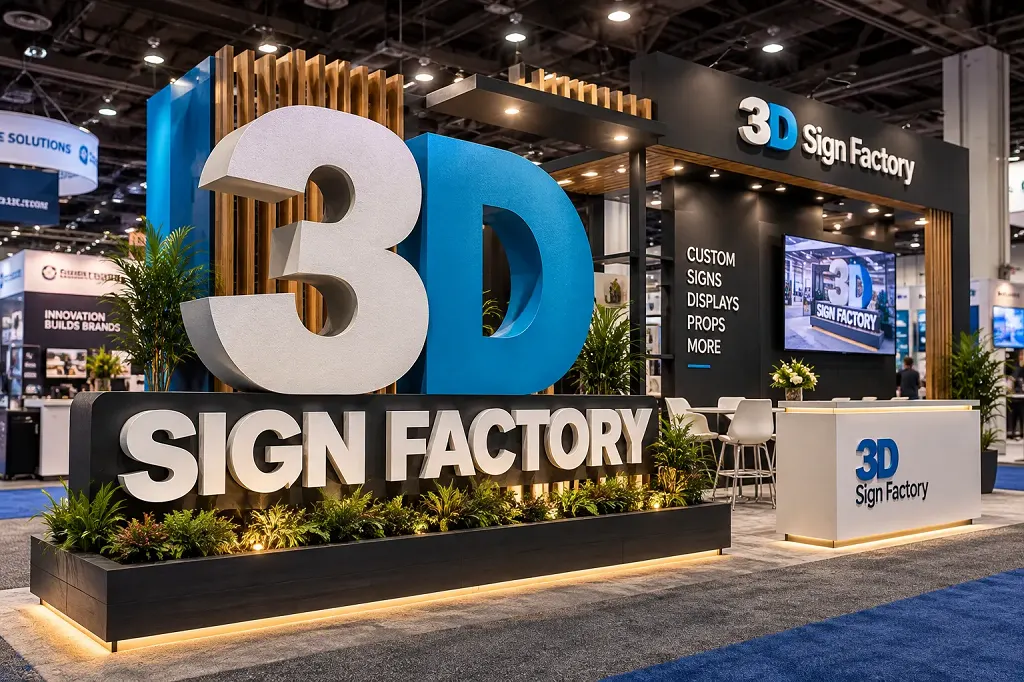
Beyond the Booth: How Custom 3D Displays Make Brands Stand Out at Expos and Events
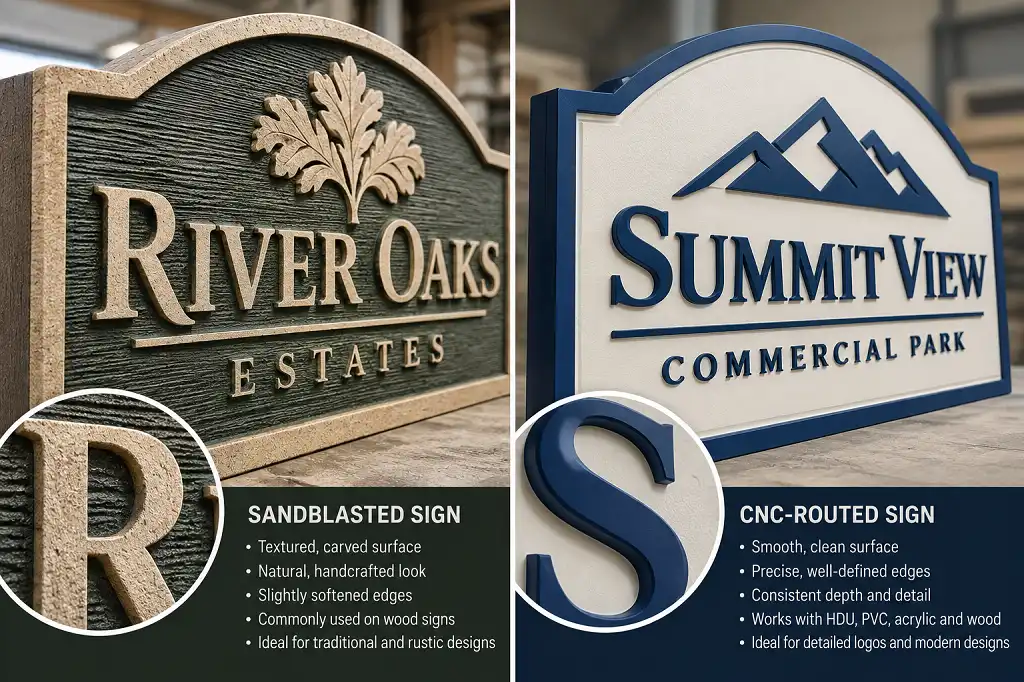
Sandblasted vs. Routed Signs: Which Is Right for Your Project?
Our customer reviews
Read more reviewsRead more reviews