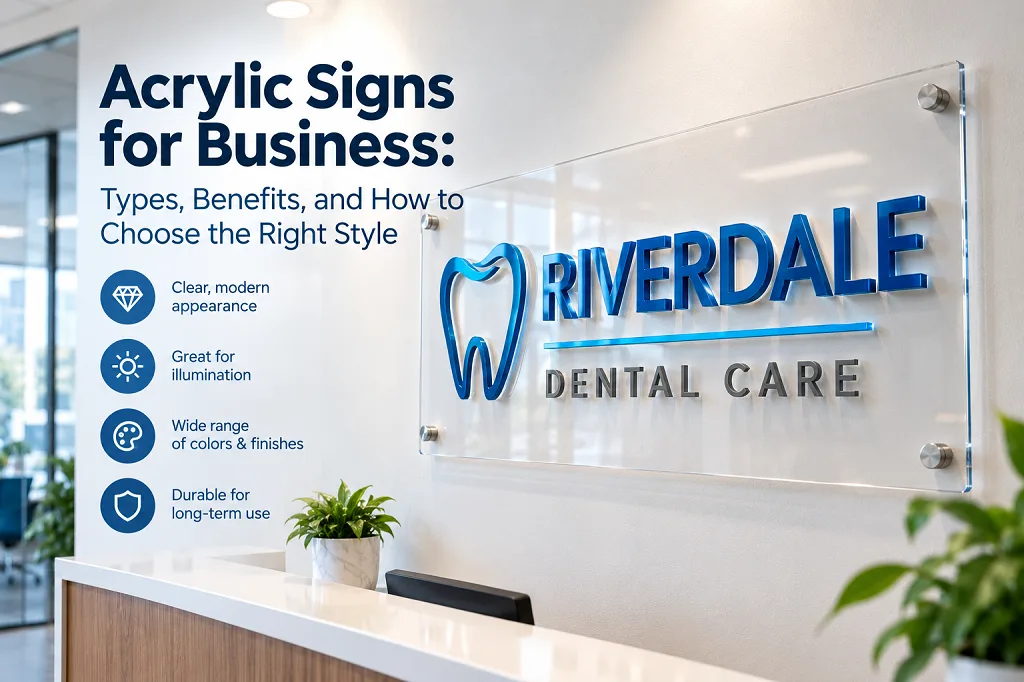
Acrylic Signs for Business: Types, Benefits, and How to Choose the Right Style
A dental practice moves into a new suite, and three weeks later the reception wall is still bare because nobody can agree on the logo. The vinyl lettering from the old office is peeling, the budget is real, and the office manager has a dozen tabs open comparing signage acrylic quotes that look nothing alike. Custom acrylic signs are the usual landing spot for this exact problem, but the category is wide enough that the wrong choice shows up fast.
Cast or Extruded: The Choice Behind the Choice
Most quality differences start with how the sheet was made. Cast acrylic is poured into molds and cured, which gives a bright polished edge, even color, and better long-term UV resistance. It costs more. Extruded acrylic is pushed through rollers, so it’s cheaper and more uniform in thickness, but it tends to melt rather than cut crisply under a laser and holds up less well to chemicals and sun.
For an indoor lobby sign, either can work. For anything outdoors, or anywhere you want a flame-polished edge, ask for cast. UV-stabilized cast acrylic resists yellowing and holds color for years, which is why plexiglass signs and other acrylic panels show up on exterior dimensional letters.
Naming causes confusion here. Acrylic is the generic material, polymethyl methacrylate, and Plexiglas is a brand name that stuck. Whether a quote says acrylic or plexiglass, ask about grade and thickness rather than the label.
Matching the Sign to Its Viewing Distance
Before you pick a format, think about where the piece will hang and who will read it. A reception wall gets studied for minutes by visitors sitting in a chair, so fine detail, small lettering, and a layered look all pay off there. A storefront panel gets a two-second glance from a moving car or a passing sidewalk crowd, so it needs bold shapes, strong contrast, and very little text.
Distance gives you a rule of thumb. Every inch of letter height reads comfortably from roughly ten feet away, and that holds up better than most people expect. A name that needs to be recognized from forty feet wants letters at least four inches tall, and more if the viewer is moving. Print the layout at full size on paper and tape it up before you order. Thirty seconds of squinting at a paper mockup saves a lot of regret later.
Edges are worth a conversation too. A flat-cut edge looks crisp and modern, while a polished edge catches light and gives the panel a glass-like glow. Ask which one the shop includes and whether the other costs extra.
Color deserves a plan of its own. Brand colors printed on paper rarely match colors cut from sheet, so ask your supplier for physical chips and hold them against the wall in the room’s real light. Dark walls favor white or metallic lettering, pale walls favor deep tones, and a mid-tone wall is the hardest background of all because nothing stands out cleanly. When in doubt, pick the color with the greatest contrast and let the logo’s accent color appear in a smaller detail.
A Tour of the Formats
Flat panels are the cheapest and fastest: a single sheet with printed or painted graphics, good for directories, room names, and door plates. Cut letters and logos are laser-cut or CNC-cut from sheet in any font and mount straight to the wall for the dimensional look most businesses want. Layered signs bond two or three colors or thicknesses together, and the depth throws shadow in a way that looks more expensive than it costs.
Lit versions are popular in lobbies. Edge-lit panels light up engraving, while backlit letters create a halo on the wall. UV-printed signs handle gradients and photographs that paint can’t reproduce. Finishes like frosted, brushed metallic, and mirror add texture, though mirror acrylic scratches more easily than the matte kinds.
When you’re comparing quotes for custom acrylic signage, make sure each one specifies the same format. A flat printed panel and a layered cut-letter logo can both be listed as acrylic signs custom made to order, yet they differ by hundreds of dollars for good reasons. A simple flat panel might run a few hundred dollars, and a large lit logo for a lobby can cost several times that.
The choice between clear, tinted, and frosted sheet is as much about the wall as about the message. Clear panels let the wall color show through, so a dark wall behind white lettering makes the text pop, while a busy wall makes it hard to read. Frosted sheet softens what’s behind it and hides small wall flaws, which helps in older buildings. Colored and mirrored sheet bring their own look, and they show fingerprints more than you’d expect, so ask for a sample to handle before you decide.
Think about layering. A thin backer plate in a contrasting color, with a cut-out front on spacers, gives a logo real depth without a big increase in cost. It also protects the lettering from glare that can wash out a flat panel under overhead lights.
Finally, consider the supply chain. Sheet arrives in standard sizes, and a design that fits neatly into those sizes wastes less material, which keeps the price down. A good fabricator will tell you when a small change to the layout saves you money.
Think about cleaning and handling on installation day. Peel protective film only after the last hole is drilled, because drilling dust sticks to a bare face. Wear clean cotton gloves to avoid fingerprints, and lay the pieces on a soft towel while you work. Small details like these keep the finished sign looking new when the doors open.
Thickness and Mounting
Thin sheets feel flimsy; thick ones feel solid. As a rule of thumb, 1/8 inch suits small signs and door plates, 1/4 inch is the standard for lobby signs and mid-size letters, and 1/2 inch and up is for statement logos and large letters. Heavier pieces need stronger mounts, so match the hardware to the weight.
Acrylic elements are typically mounted with standoffs for a floating 3D effect, or adhered with VHB tape and panel adhesive for a flush wall installation. Standoffs are small metal posts in brushed steel, brass, black, or clear finishes, and they create a shadow line that reads as premium. Flush mounting is cleaner and cheaper but doesn’t grip rough surfaces like brick or stucco.
Always request a paper template. Placing thirty letters by eye is a good way to ruin an afternoon. Send photos of the wall before you order, because glass, drywall, and concrete each need different hardware.
Mounting is where a tidy design can be spoiled. Stand-off hardware, the small metal barrels that hold a panel a half inch or so off the wall, is the most common choice for lobbies, since it adds shadow and a floating effect. Choose finishes that match the building, such as brushed steel for modern offices or brass for warm interiors. For outdoor use, stainless hardware resists rust stains, which streak down a wall and can’t be cleaned off easily.
Drilling into the wall calls for a plan. Brick, concrete, drywall, and glass each need a different anchor, and a mistake in a tile or storefront window is costly. Ask whether the shop supplies a paper template, which lets your installer mark holes without measuring from scratch. If you are mounting to glass, use adhesive systems made for the purpose and have a pro handle the install.
Lighting changes the whole look. Edge-lit panels glow from within, and wall washers add soft shadows behind stand-off letters. Plan power early, because hiding a cord after the fact is harder than it sounds.
Order timing is easier than it looks. Most shops need a couple of weeks for cutting and finishing, and shipping adds a few days. Ask for a written proof, approve it in writing, and keep a copy. If a landlord or a building association must sign off, send them the proof the same day. A delayed approval is the most common reason a sign misses its opening date.
Where Acrylic Falls Short
Acrylic scratches. Fine abrasions show on clear and dark surfaces, especially after someone wipes the sign with a paper towel and glass cleaner. Microfiber and mild soapy water are the safe routine, and ammonia can cloud the surface over time. It also builds static, which attracts dust, so an anti-static cleaner earns its place on the shelf.
It expands and contracts with temperature, so large outdoor pieces need hardware that allows slight movement; rigid fixings can crack the sheet. And it isn’t a bargain at size. If a sign is big, thick, and outdoors, PVC or foam may deliver a similar look for less money, and HDU wins when you want carved texture.
Logo design matters too. Hairline details and tiny gaps cut poorly and break easily, so ask the fabricator for a simplified version for the wall. Glossy acrylic also picks up window glare, and matte or frosted finishes handle bright rooms better. If you’re ordering custom acrylic signs for a space with strong daylight, hold a sample up in that light first.
Lead times are reasonable, usually one to three weeks depending on complexity, but add shipping and installation. Cost depends on size, thickness, layers, and finish, so ask what’s included before you compare totals.
One more buying tip. Ask each shop whether it prices signage acrylic by the square inch or by the piece, since that changes how you compare quotes. Custom acrylic signage with edge-lit letters will cost more than flat cut letters, and acrylic signs custom made for a lobby should come with a proof you can approve before cutting begins.
There are cases where acrylic isn’t the best answer. Sheet scratches more easily than glass, and in a place where people brush past or lean on the panel, a hard-coated or thicker version holds up better. Strong heat, such as a panel mounted next to a kitchen vent or a south-facing window with no shade, can soften or warp the edges over time.
Outdoor use is possible, but it needs UV-stable material and room for expansion, since the sheet grows and shrinks with temperature. Large panels that are bolted down tight tend to crack at the holes. A good installer drills slightly oversized holes and leaves a little play.
Cleaning is simple once you know the rule: no glass cleaner with ammonia, and no paper towels. A soft microfiber cloth and mild soapy water keep the surface clear. Rub gently, because grit trapped under the cloth is what creates scratches. If you expect a high-traffic spot, ask your supplier about a protective film that stays on until the opening day.
3dsignfactory.com makes custom dimensional signs in acrylic, PVC, foam, and metal, along with oversized letters and logos for businesses across the US. Request a quote with your logo file and a photo of the wall, and they’ll suggest a thickness and mounting method.
Frequently Asked Questions
What is the difference between acrylic and plexiglass signs?
Acrylic and plexiglass refer to the same material – polymethyl methacrylate (PMMA); “plexiglass” is a common trade name, while “acrylic” is the generic material name used by sign professionals.
Are acrylic signs suitable for outdoor installations?
UV-stabilized cast acrylic resists yellowing and holds color outdoors for years; it is one of the most common materials for exterior dimensional letters and logo signs.
How are acrylic letters and logos mounted on a wall?
Acrylic elements are typically mounted with standoffs for a floating 3D effect, or adhered with VHB tape and panel adhesive for a flush wall installation.
Conclusion
Choosing the right acrylic sign comes down to matching the material grade, format, and mounting method to where the piece will hang and who will see it. Cast acrylic for anything outdoors, physical color chips held against the real wall, a paper template before drilling, and a written proof before cutting begins will prevent most of the regrets businesses run into with custom acrylic signage. 3D Sign Factory in Jacksonville, FL fabricates custom acrylic, PVC, foam, and metal signs and letters for businesses nationwide. Call (904) 869-2668 for a free quote.

Read more
The Importance of Hard Coating in Outdoor Signage: How Polyurea Coating Transforms Foam Structures into Durable Signage
The Art of Imitation: How Faux Finishes Transform EPS Foam Into Stone, Metal & Wood
Beyond Traditional Materials: Why HDU Foam Is Replacing Wood and Stone in High-End Signage
The Hidden Science Behind High-Quality Foam Lettering & Dimensional Signage
Eco-Friendly Signage Solutions: Is HDU & EPS Foam the Sustainable Choice?

Why Lightweight Foam Monument Signs Are Ideal for Large-Scale Signage
The Importance of Proper Installation for Monument Signs

Foam vs. Metal Signs: Cost, Durability, and Aesthetic Considerations

The Importance of Proper Installation for Monument Signs
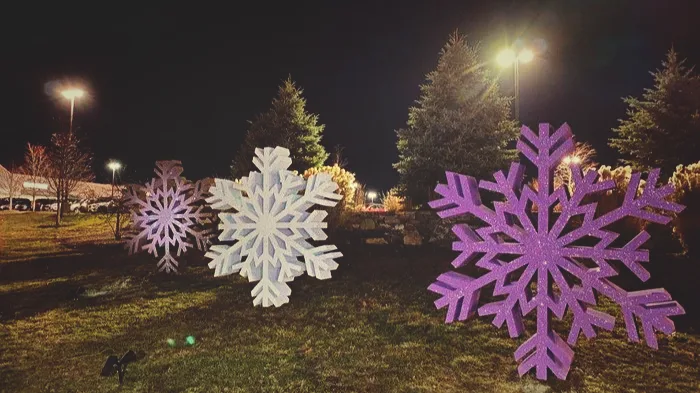
From One-Time WOW to Multi-Tour ROI
Recommended Articles
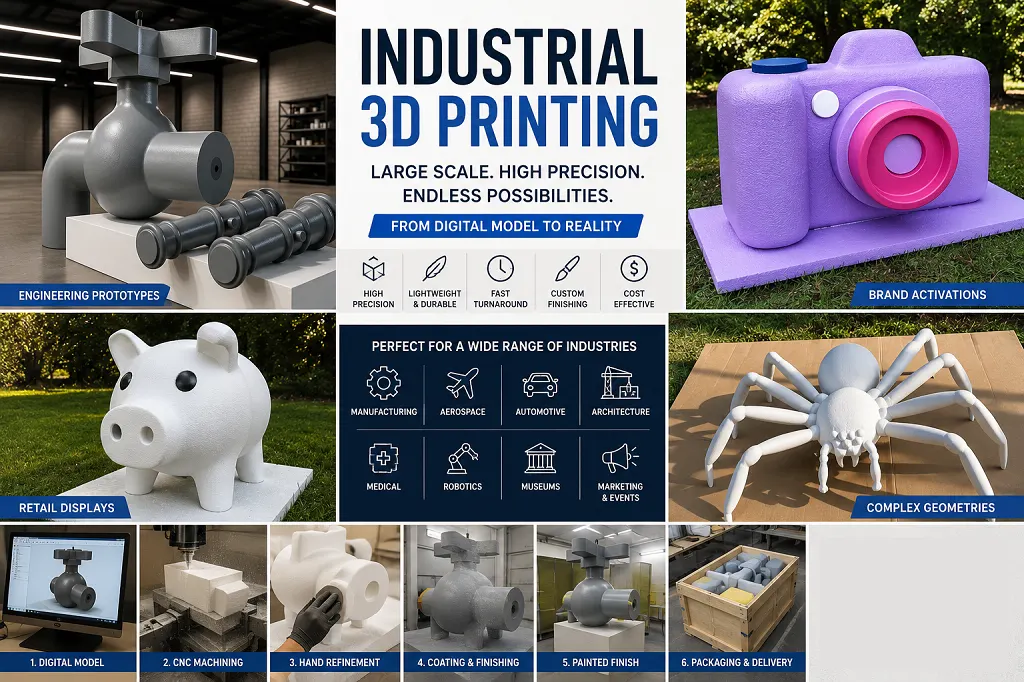
Industrial 3D Printing: Large-Scale Foam Prototypes, Models & Manufacturing Solutions
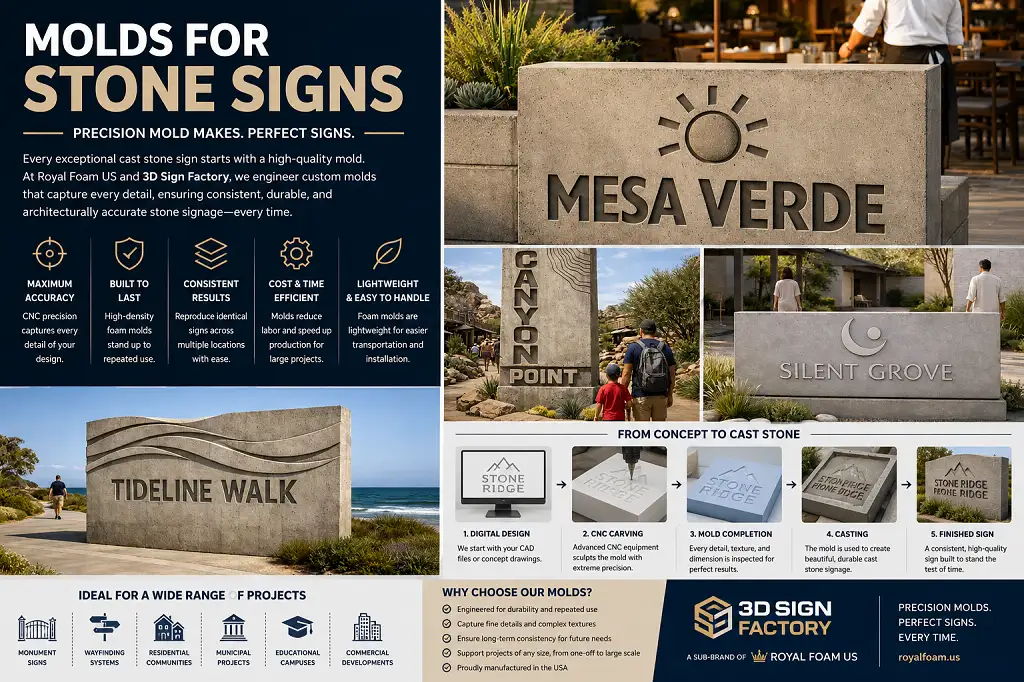
Molds for Stone Signs: The Foundation Behind Consistent Architectural Signage
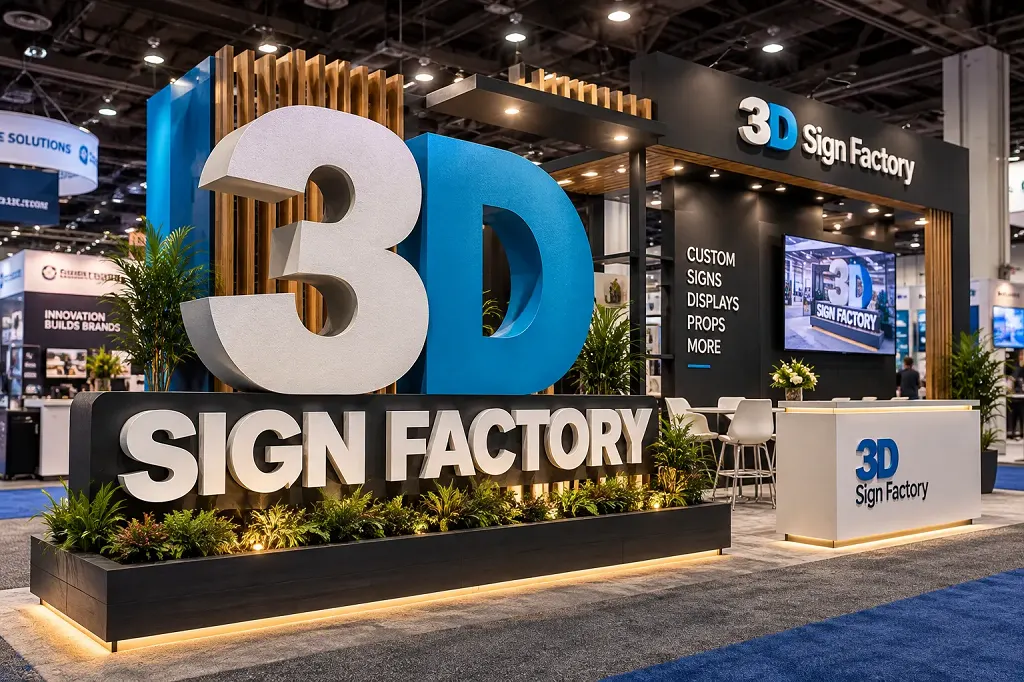
Beyond the Booth: How Custom 3D Displays Make Brands Stand Out at Expos and Events
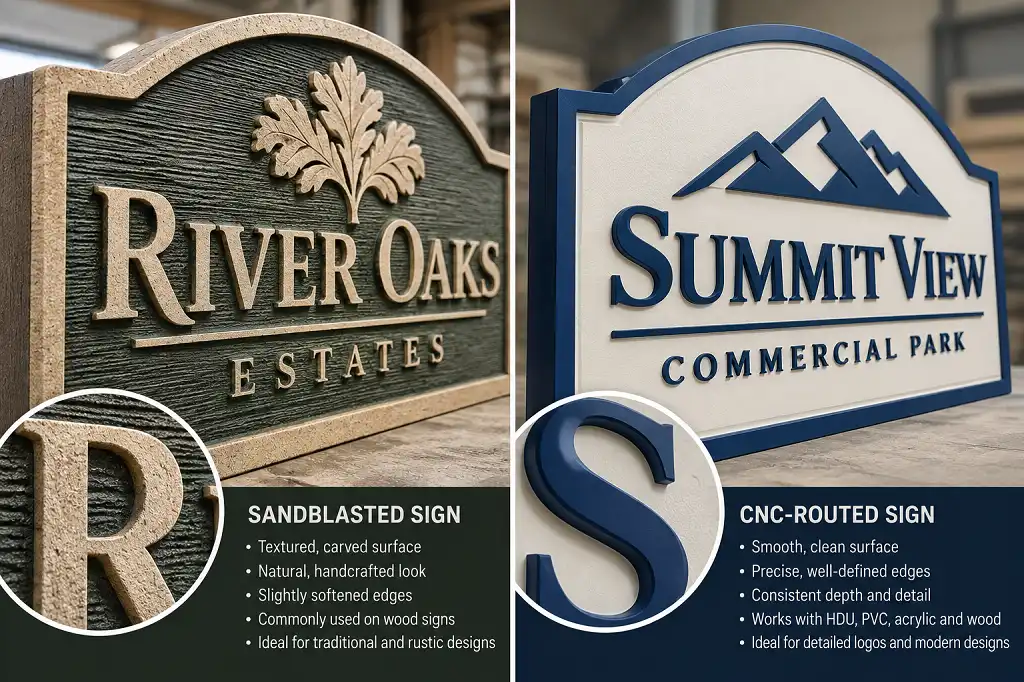
Sandblasted vs. Routed Signs: Which Is Right for Your Project?

Letter Signs: How Dimensional Letter Signage Works for Every Business Type

Restaurant Signs and Menu Boards: How to Brand Your Dining Establishment
Our customer reviews
Read more reviewsRead more reviews