Sandblasted & V-Carved Signs: Balancing Timeless Craftsmanship with Modern Precision
Sandblasted and V-carved signs remain some of the most recognizable and architecturally respected forms of dimensional signage in the industry. Their visual depth, carved textures, shadow lines, and handcrafted appearance create a level of permanence and sophistication that flat signage simply cannot replicate.

These types of signs are widely used for:
- Residential communities
- Golf courses
- Parks and recreation areas
- Schools and universities
- Resorts and hospitality properties
- Churches
- Municipal projects
- Commercial developments
- Historic districts
- Wayfinding and directional signage
What makes sandblasted and V-carved signs especially valuable is their ability to combine traditional craftsmanship aesthetics with modern manufacturing precision. While the visual style often appears handcrafted or historic, today’s fabrication process relies heavily on CNC engineering, digital layout control, and precision carving technologies.
In modern sign manufacturing, sandblasted and V-carved signs are typically produced using HDU (High-Density Urethane) rather than natural wood. HDU has become the preferred material because it allows highly detailed carving while eliminating many of the long-term problems associated with wood signage.
Traditional wood signs may crack, split, absorb moisture, rot, warp, or deteriorate over time, especially in outdoor environments with humidity, rain exposure, freeze-thaw cycles, or strong UV conditions. HDU provides a much more stable substrate while still delivering the carved appearance and texture associated with traditional craftsmanship.
From an engineering perspective, the fabrication process begins with digital design and layout planning. Typography, carving depth, border spacing, viewing distance, logo placement, and overall sign proportions are all carefully developed before production begins. This stage is critical because carved signage relies heavily on depth, shadow, and dimensional hierarchy to achieve readability and visual balance.
The carving process itself is performed using CNC routing equipment capable of extremely precise detail reproduction. Unlike flat graphics, carved signs physically remove material from the panel surface to create dimension and texture.
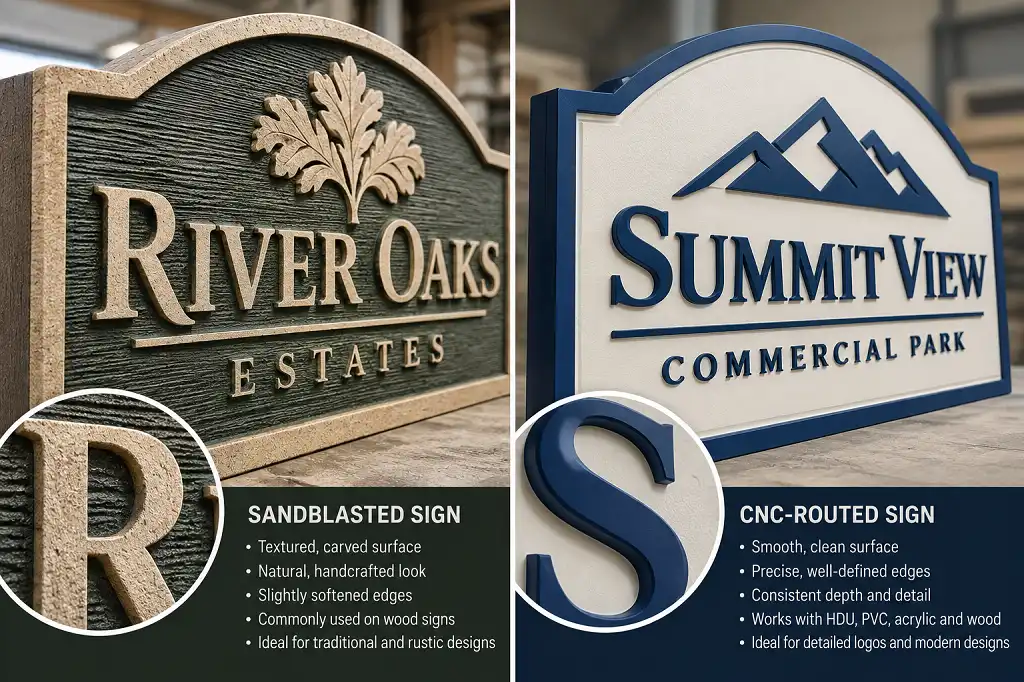
Sandblasted signs are designed to create textured recessed backgrounds that contrast with raised lettering and logos. This creates a classic carved appearance often associated with traditional cedar signs and historic community signage. The textured surface catches light differently throughout the day, producing natural shadow variation and stronger visual depth.
V-carved signs use a different carving approach. Instead of creating broad recessed areas, V-carving uses angled cutting tools to create sharp, clean grooves with tapered edges. This produces elegant lettering and fine detail work that is especially effective for:
- Formal entrances
- Institutional signage
- Luxury residential communities
- Traditional architectural environments
- Decorative directional signage
One of the biggest advantages of V-carving is precision. Fine serif fonts, detailed logos, and ornamental linework can all be carved cleanly while maintaining excellent readability and visual refinement.
From a visual perspective, the combination of recessed backgrounds, raised lettering, and carved detailing creates a dimensional quality that cannot be achieved through printed graphics alone. The sign changes appearance throughout the day as lighting conditions shift, which adds to its architectural character and visual presence.
Texture is another defining characteristic of sandblasted signage. Faux wood grain backgrounds, cedar-style textures, rough recessed surfaces, and carved decorative borders all contribute to a handcrafted appearance while still benefiting from modern CNC consistency.

Color application also plays a major role in the final presentation. Carved signs rely heavily on contrast between recessed and raised surfaces. Proper paint application enhances shadow definition, improves readability, and reinforces dimensional depth.
For directional and wayfinding applications, readability is especially important. Deep carving combined with strong color contrast allows information to remain visible at longer viewing distances and under varying lighting conditions. This is one reason carved signs remain so widely used in parks, campuses, HOA developments, resorts, and pedestrian-focused environments.
Another major advantage is customization flexibility. Sandblasted and V-carved signs can incorporate:
- Raised dimensional lettering
- Recessed backgrounds
- Faux wood textures
- Decorative borders
- Custom logos
- Directional arrows
- Multi-layer construction
- Architectural trim profiles
- Ornamental carving details
Because CNC production is digitally controlled, these elements can be reproduced consistently across multiple signs while still allowing custom variations where needed.
From an installation standpoint, carved signs are also highly versatile. They can be:
- Mounted between posts
- Integrated into monument structures
- Wall mounted
- Suspended
- Installed as freestanding directional signs
- Combined with landscaping and architectural features
This flexibility allows carved signage to function as both a branding element and an architectural feature within the larger property environment.
Durability is another major reason carved HDU signs continue gaining popularity. Properly fabricated HDU signs resist moisture absorption, warping, cracking, and many of the maintenance issues associated with traditional wood signs. This makes them especially practical for long-term outdoor installations where appearance consistency matters.
Economically, carved signs also provide strong long-term value. While dimensional carved signage typically requires more fabrication detail than flat panel graphics, the result is a much more permanent and premium presentation. For property owners, developers, and municipalities, this often translates into improved curb appeal, stronger branding perception, and lower replacement frequency over time.
In today’s signage industry, sandblasted and V-carved signs continue to represent the intersection of traditional craftsmanship and modern fabrication technology. They combine architectural depth, dimensional precision, material stability, and long-term durability into a signage category that remains highly respected across both commercial and institutional markets.
For sign companies, architects, developers, contractors, and property managers, carved signage offers a timeless solution capable of delivering strong visual identity, premium appearance, and long-term outdoor performance.

Read more

The Importance of Hard Coating in Outdoor Signage: How Polyurea Coating Transforms Foam Structures into Durable Signage
The Art of Imitation: How Faux Finishes Transform EPS Foam Into Stone, Metal & Wood

Beyond Traditional Materials: Why HDU Foam Is Replacing Wood and Stone in High-End Signage
The Hidden Science Behind High-Quality Foam Lettering & Dimensional Signage
Eco-Friendly Signage Solutions: Is HDU & EPS Foam the Sustainable Choice?

Why Lightweight Foam Monument Signs Are Ideal for Large-Scale Signage

The Importance of Proper Installation for Monument Signs

Foam vs. Metal Signs: Cost, Durability, and Aesthetic Considerations

The Importance of Proper Installation for Monument Signs

From One-Time WOW to Multi-Tour ROI
Recommended Articles
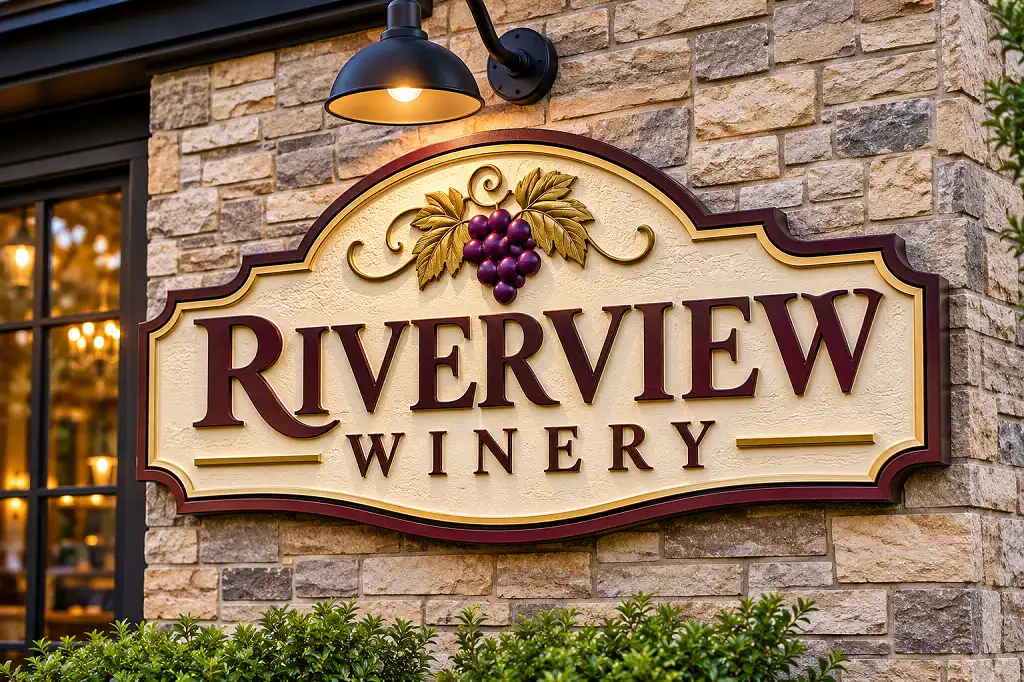
HDU Signs: What High-Density Urethane Foam Is and Why It’s a Premium Sign Choice
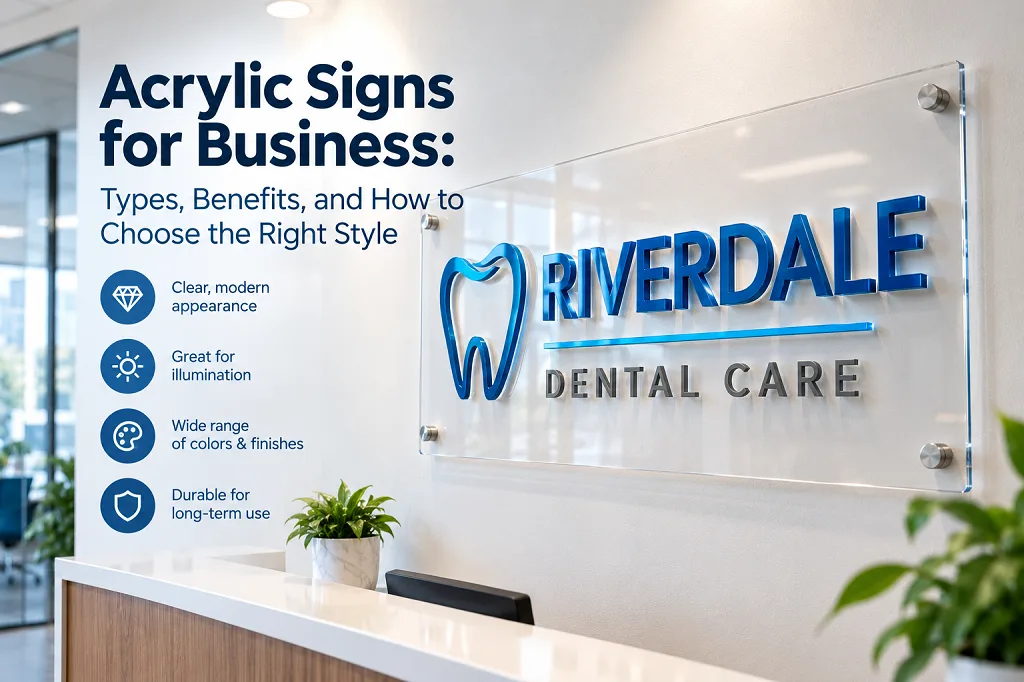
Acrylic Signs for Business: Types, Benefits, and How to Choose the Right Style
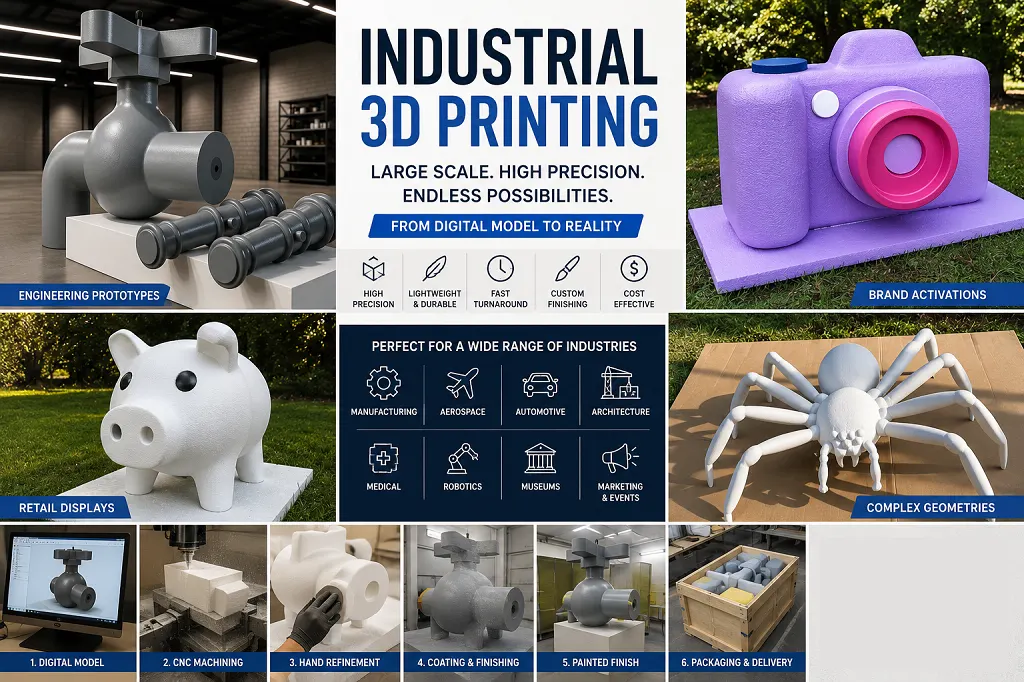
Industrial 3D Printing: Large-Scale Foam Prototypes, Models & Manufacturing Solutions
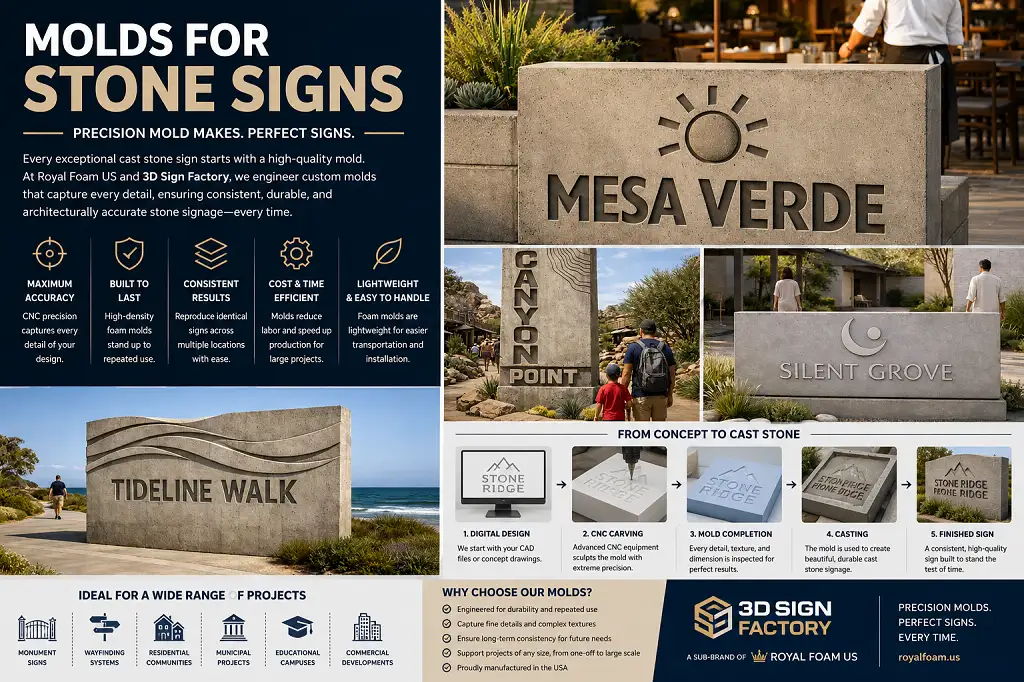
Molds for Stone Signs: The Foundation Behind Consistent Architectural Signage
Beyond the Booth: How Custom 3D Displays Make Brands Stand Out at Expos and Events
Sandblasted vs. Routed Signs: Which Is Right for Your Project?
Our customer reviews
Read more reviewsRead more reviews