Lightweight Fabrication for Entertainment, Events, and Film Production
In the entertainment industry, visual impact often determines whether an audience becomes immersed in an experience. From movie sets and television productions to live events, theater performances, theme parks, concerts, and promotional activations, stage and movie props play a critical role in creating believable environments and memorable visual moments.
While audiences focus on the finished production, significant engineering and fabrication work happens behind the scenes. Props must look realistic, perform reliably, remain safe for actors and crews, and often be transported, assembled, and reused multiple times throughout a production cycle. Achieving all of these objectives requires materials and fabrication methods specifically suited for large-scale creative projects.
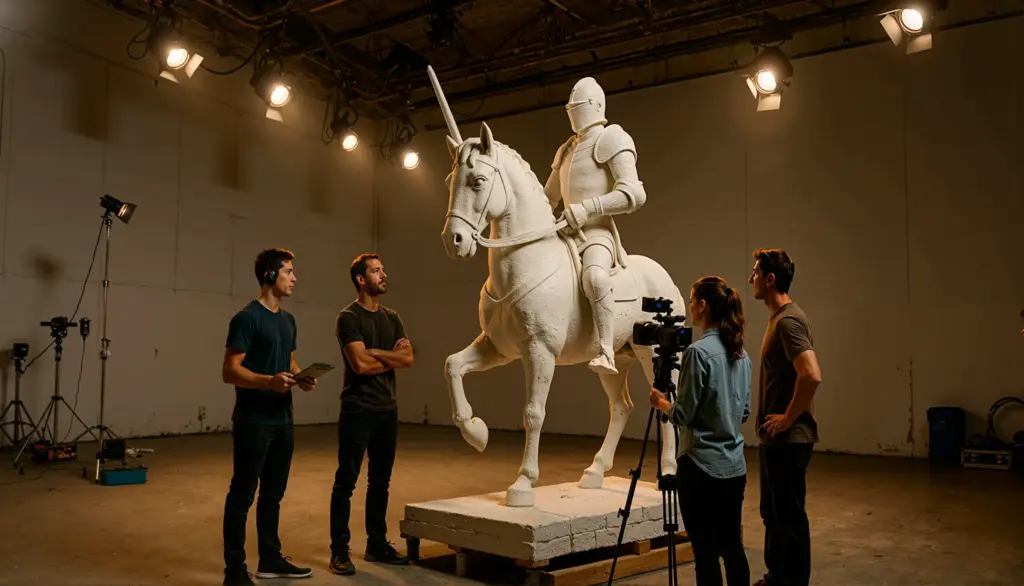
This is where EPS foam has become one of the most valuable materials in modern prop fabrication.
Using 1 lb density EPS foam allows large props, scenic elements, and set pieces to be produced at impressive scales while maintaining lightweight construction. Combined with a durable polyurea hardcoat, foam props can achieve the appearance of stone, metal, concrete, wood, or other materials without the weight and cost associated with those traditional construction methods.
Today, foam stage and movie props are widely used for:
- Film productions
- Television sets
- Theater productions
- Concert stages
- Theme parks
- Museum exhibits
- Trade shows
- Corporate events
- Promotional activations
- Live entertainment venues
- Seasonal attractions
- Experiential marketing campaigns
One of the biggest challenges in entertainment fabrication is balancing realism with practicality. A prop may need to appear as a massive stone monument, ancient artifact, castle wall, vehicle component, or architectural structure while remaining lightweight enough to move safely and efficiently.
Traditional materials such as concrete, steel, or carved stone quickly become impractical for many productions due to transportation costs, installation requirements, and safety concerns. EPS foam provides the volume and scale needed to create convincing visual effects without introducing excessive weight.
The fabrication process begins with design and engineering. Production designers, art directors, scenic artists, and fabricators work together to determine dimensions, proportions, textures, structural requirements, and installation methods before production begins.
Many projects start with digital modeling, allowing complex forms to be engineered accurately before fabrication. This stage is especially important when props must match existing designs, historical references, concept art, or digital assets used within a film or production.
Once approved, components are shaped using CNC fabrication equipment capable of producing highly detailed three-dimensional forms. Precision CNC cutting allows the creation of:
- Architectural elements
- Sculptural objects
- Themed environments
- Product replicas
- Fantasy props
- Historical recreations
- Stage scenery
- Decorative set pieces
- Character elements
The ability to reproduce complex geometry accurately is one of the reasons foam fabrication has become so common throughout the entertainment industry.
After shaping, the foam components receive a polyurea hardcoat. This protective exterior shell significantly improves durability while preserving fine details and surface textures.
The polyurea hardcoat helps protect props from:
- Transportation damage
- Frequent handling
- Surface wear
- Moisture exposure
- Outdoor conditions
- Repeated installations
This durability is especially important for productions that require props to be reused across multiple events, filming locations, or performance schedules.
One of the greatest advantages of foam fabrication is its ability to replicate other materials convincingly. Through sculpting, texturing, finishing, and painting techniques, foam props can achieve the appearance of:
- Stone
- Concrete
- Brick
- Wood
- Metal
- Ice
- Rock formations
- Historic architecture
- Sculptural surfaces
For production teams, this means achieving the desired visual effect without introducing unnecessary weight or logistical complications.
Large-scale fabrication is another area where foam offers significant advantages. Massive scenic pieces that would be extremely difficult to build from traditional materials can often be produced more efficiently using EPS foam construction.
Examples include:
- Castle walls
- Ancient ruins
- Giant books
- Oversized furniture
- Monumental sculptures
- Fantasy environments
- Architectural facades
- Themed landmarks
- Oversized props
Because the material remains lightweight, transportation and installation become far more manageable.
Flexibility during production is equally important. Entertainment schedules frequently change, requiring adjustments, modifications, or last-minute additions. Foam fabrication allows creative teams to adapt designs more efficiently than many traditional construction methods.
Installation versatility is another major benefit. Foam props can be:
- Freestanding
- Mounted to stage structures
- Integrated into scenic environments
- Suspended
- Combined with lighting
- Used indoors or outdoors
- Installed temporarily or permanently
This flexibility supports a wide range of production requirements.

Safety also plays a major role in prop fabrication. Lightweight construction reduces risks associated with moving, lifting, and installing large scenic elements. For productions involving performers, crews, and public interaction, reducing unnecessary weight can significantly improve overall safety during setup and operation.
From an economic perspective, foam fabrication helps control production costs by reducing transportation expenses, simplifying installation, and minimizing structural requirements. This allows production teams to achieve larger visual impact without proportionally increasing budgets.
As entertainment, experiential marketing, and live events continue to evolve, audiences increasingly expect immersive environments and visually impressive experiences. Foam stage and movie props make many of these experiences possible by combining creative freedom, lightweight engineering, large-scale fabrication, and durable performance.
For production companies, scenic fabricators, event designers, theme parks, museums, marketing agencies, and entertainment professionals, foam props provide an efficient way to transform creative concepts into physical environments that capture attention, support storytelling, and deliver memorable experiences.
Frequently Asked Questions
Why is EPS foam preferred over wood or metal for movie props?
Traditional materials are too heavy and expensive to move safely. EPS foam allows for massive, realistic props that remain lightweight, portable, and affordable.
How do foam props achieve a realistic look like stone or metal?
After CNC carving, the foam is coated with a polyurea shell and painted. Specialized texturing techniques can then flawlessly replicate any material, from ancient rock to rusted metal.
Can these foam set pieces withstand rough handling and transport?
Yes. The spray-on polyurea hardcoat creates a rock-hard, impact-resistant exterior that protects props from frequent handling, shipping damage, and outdoor weather.
What are the safety benefits of using foam props on a busy set?
Lightweight construction drastically reduces the risk of injuries during lifting, rigging, and installation. It also creates a much safer environment for actors performing around large structures.
How does foam fabrication help production budgets?
It cuts costs across the board by reducing freight fees, speeding up installation, and eliminating the need for cranes or heavy subframes.
Can foam props be customized for specific, intricate designs?
Absolutely. Using precision 3D digital modeling and CNC machinery, fabricators can replicate complex geometry, historical artifacts, or fantasy environments with millimeter accuracy.

Read more

The Importance of Hard Coating in Outdoor Signage: How Polyurea Coating Transforms Foam Structures into Durable Signage
The Art of Imitation: How Faux Finishes Transform EPS Foam Into Stone, Metal & Wood

Beyond Traditional Materials: Why HDU Foam Is Replacing Wood and Stone in High-End Signage
The Hidden Science Behind High-Quality Foam Lettering & Dimensional Signage
Eco-Friendly Signage Solutions: Is HDU & EPS Foam the Sustainable Choice?

Why Lightweight Foam Monument Signs Are Ideal for Large-Scale Signage

The Importance of Proper Installation for Monument Signs

Foam vs. Metal Signs: Cost, Durability, and Aesthetic Considerations

The Importance of Proper Installation for Monument Signs

From One-Time WOW to Multi-Tour ROI
Recommended Articles
HDU Signs: What High-Density Urethane Foam Is and Why It’s a Premium Sign Choice
Acrylic Signs for Business: Types, Benefits, and How to Choose the Right Style
Industrial 3D Printing: Large-Scale Foam Prototypes, Models & Manufacturing Solutions
Molds for Stone Signs: The Foundation Behind Consistent Architectural Signage
Beyond the Booth: How Custom 3D Displays Make Brands Stand Out at Expos and Events
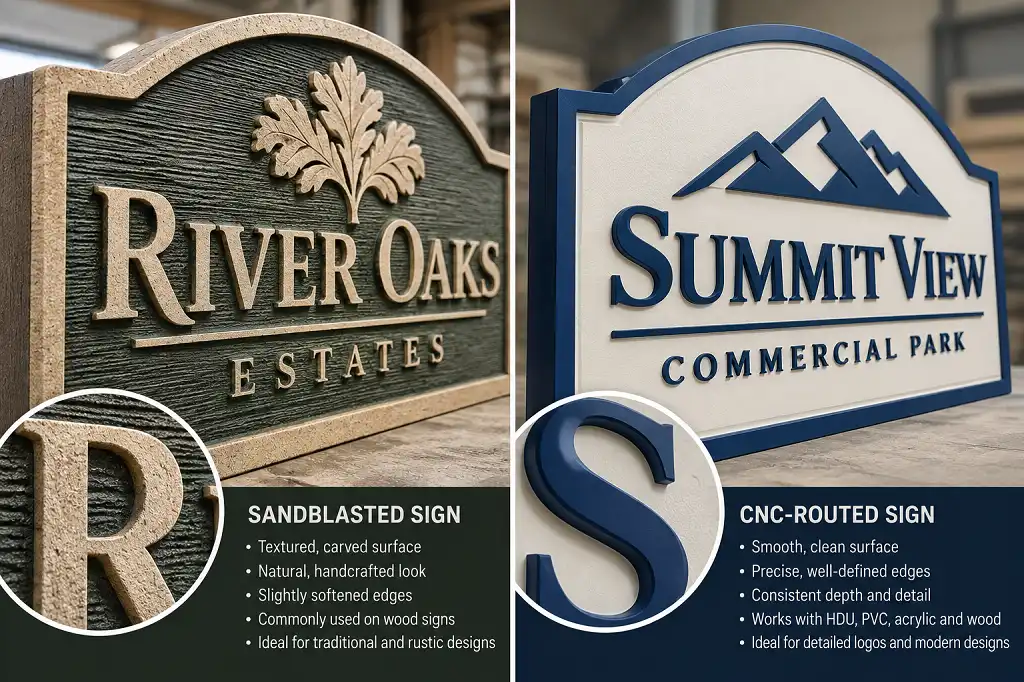
Sandblasted vs. Routed Signs: Which Is Right for Your Project?
Our customer reviews
Read more reviewsRead more reviews