Industrial 3D Printing: Accelerating Manufacturing, Prototyping, and Custom Production
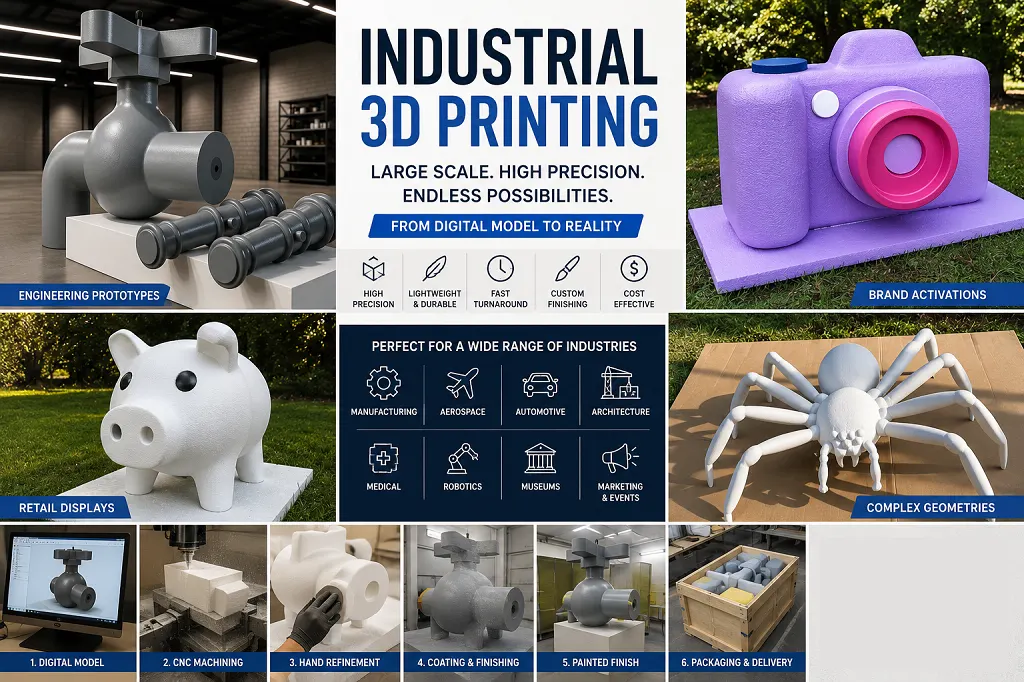
Industrial 3D printing has transformed the way products are designed, engineered, tested, and manufactured. What was once considered a rapid prototyping technology has evolved into a powerful manufacturing solution capable of producing functional components, custom parts, tooling, molds, prototypes, architectural models, and end-use products across a wide range of industries.
Today, industrial 3D printing is used in aerospace, automotive, architecture, construction, healthcare, entertainment, manufacturing, product development, and custom fabrication. Its ability to produce highly complex geometries, reduce development time, and eliminate many traditional manufacturing limitations has made it one of the most important technologies in modern production.
Unlike traditional subtractive manufacturing, where material is removed from a solid block through machining processes, 3D printing is an additive manufacturing technology. Material is deposited layer by layer until the final object is created. This approach allows engineers and designers to produce shapes and internal structures that would be difficult, expensive, or impossible to manufacture using conventional methods.
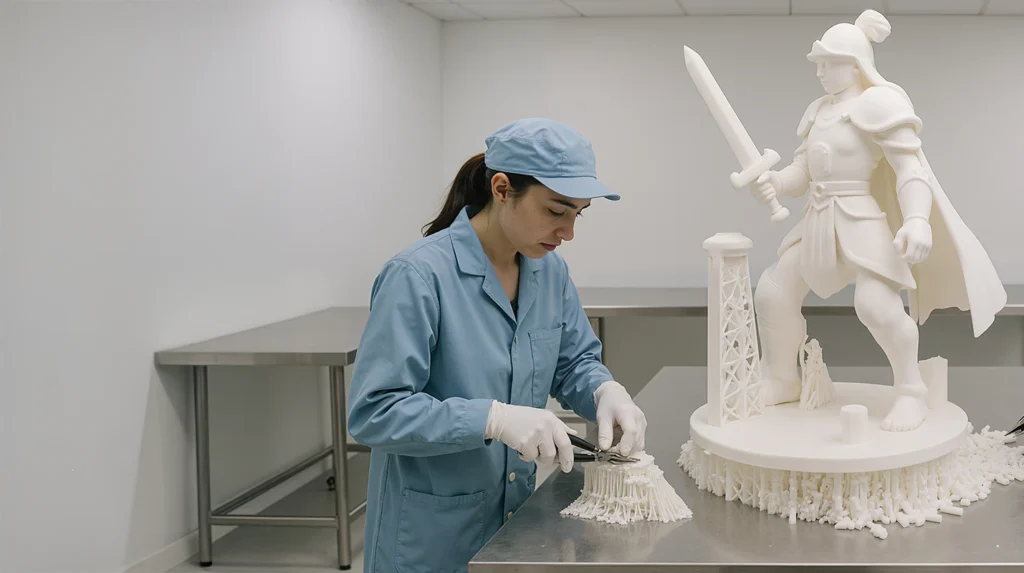
One of the biggest advantages of industrial 3D printing is speed. Traditional manufacturing often requires tooling, molds, fixtures, machining programs, and extensive setup before production can begin. With 3D printing, a digital design can move directly into production with significantly fewer intermediate steps.
This makes industrial 3D printing particularly valuable for:
- Rapid prototyping
- Product development
- Custom manufacturing
- Low-volume production
- Architectural models
- Tooling and fixtures
- Functional testing
- Mold creation
- Engineering validation
- Concept development
- Replacement parts
- Specialty fabrication
The process begins with digital engineering and CAD modeling. Every project starts as a three-dimensional digital file that defines geometry, dimensions, tolerances, wall thicknesses, internal structures, and assembly requirements.
Because production is digitally driven, design revisions can be implemented quickly without the need to modify expensive tooling or manufacturing equipment. This significantly accelerates development cycles and allows engineers to test multiple design iterations before moving into full-scale production.
One of the most important benefits of industrial 3D printing is design freedom. Traditional manufacturing often requires engineers to simplify designs to accommodate machining limitations, mold release requirements, or assembly constraints.
With additive manufacturing, designers can create:
- Complex geometries
- Organic shapes
- Internal channels
- Lightweight structures
- Custom textures
- Integrated assemblies
- Lattice structures
- Hollow components
- Advanced prototypes
This flexibility allows products to be optimized for performance rather than constrained by manufacturing limitations.
Industrial 3D printing is also highly effective for custom production. In many industries, customers increasingly demand products tailored to specific applications, dimensions, or performance requirements. Traditional mass production methods are often inefficient for highly customized products, while 3D printing allows customization without major tooling costs.
For manufacturers, this creates opportunities to produce specialized components economically without committing to large production runs.
Another major advantage is reduced lead time. Traditional manufacturing projects often require weeks or months to develop tooling and prepare production equipment. Industrial 3D printing can dramatically shorten this timeline by eliminating many of those preparation stages.
This is especially valuable when:
- Product development schedules are compressed
- Design revisions are frequent
- Replacement parts are needed quickly
- Prototype testing is required
- Time-to-market is critical
In many cases, engineering teams can move from concept to physical prototype within days rather than weeks.
Material selection also plays an important role in industrial additive manufacturing. Modern systems can process a variety of materials depending on project requirements, including:
- Engineering plastics
- High-performance polymers
- Composite materials
- Flexible materials
- Heat-resistant materials
- Production-grade thermoplastics
- Specialty manufacturing materials
The ability to select materials based on strength, flexibility, temperature resistance, or surface finish allows engineers to match production requirements more closely.
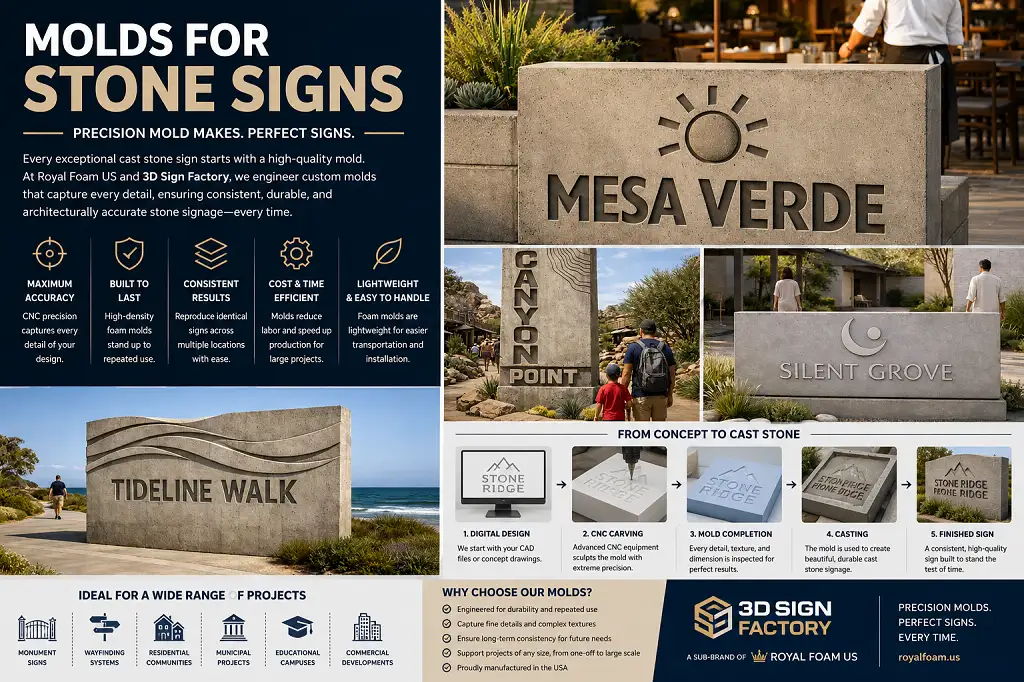
Industrial 3D printing is also widely used in fabrication environments to support other manufacturing processes. One common application is the production of molds, patterns, and tooling used for secondary manufacturing operations.
Custom molds can be produced more efficiently, allowing manufacturers to accelerate production while reducing development costs. This capability is especially valuable for projects involving custom architectural components, themed environments, specialty fabrication, and limited production runs.
From an architectural and fabrication standpoint, 3D printing has opened new opportunities for producing detailed models, presentation pieces, and prototype structures. Designers can evaluate scale, proportions, assembly methods, and visual appearance before committing to full-scale fabrication.
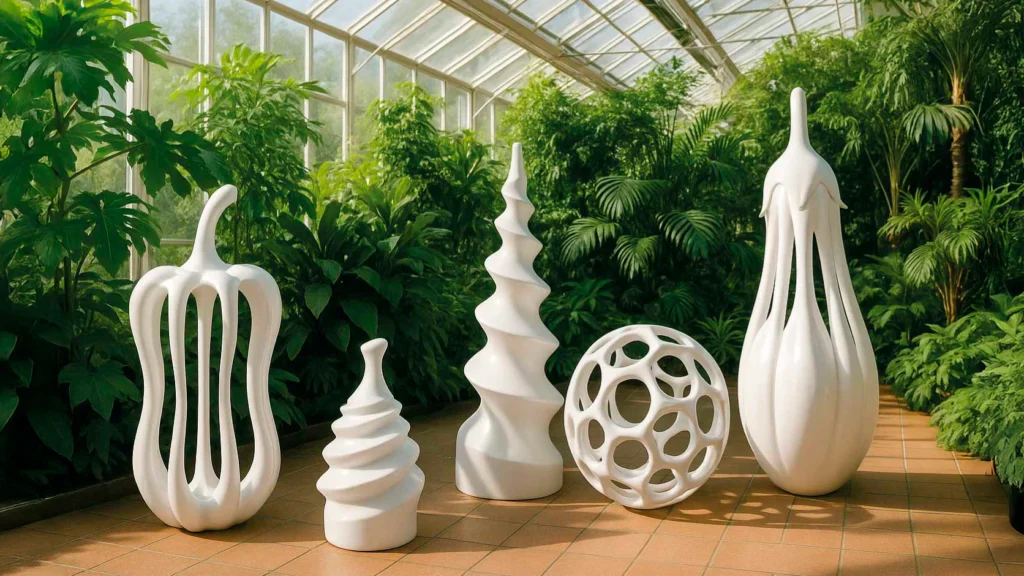
Another significant benefit is material efficiency. Because additive manufacturing only uses material where required, waste is often reduced compared to traditional subtractive processes. This can improve production efficiency while lowering material consumption in certain applications.
Scalability is another reason industrial 3D printing continues to expand across multiple industries. The technology supports everything from small precision components to large-format fabrication projects depending on the equipment and production requirements.
Quality control remains a critical part of the process. Successful industrial printing requires careful attention to:
- Material selection
- Layer resolution
- Structural integrity
- Dimensional accuracy
- Surface finish
- Production consistency
When properly engineered, 3D printed components can achieve excellent accuracy and repeatability while maintaining the flexibility that makes additive manufacturing so valuable.
From a business perspective, industrial 3D printing provides a powerful combination of speed, customization, design freedom, and production efficiency. Companies can reduce development timelines, improve innovation, lower tooling costs, and respond more quickly to changing customer requirements.
As manufacturing continues to evolve, industrial 3D printing is becoming an increasingly important part of modern production strategies. Rather than replacing traditional manufacturing, it complements existing processes by providing solutions for prototyping, custom fabrication, tooling, specialty production, and complex engineering challenges.
For manufacturers, engineers, architects, product developers, fabricators, and industrial designers, industrial 3D printing offers a flexible and efficient approach to transforming digital concepts into physical products while reducing development time and expanding design possibilities.
FAQ
What is industrial 3D printing?
Industrial 3D printing is an additive manufacturing process that builds parts layer by layer from a digital design. It is widely used for prototypes, custom components, tooling, and low-volume production.
What are the main advantages of industrial 3D printing?
Industrial 3D printing offers faster product development, greater design flexibility, reduced tooling costs, and the ability to produce highly complex geometries that are difficult to manufacture using traditional methods.
Which industries use industrial 3D printing?
It is commonly used in aerospace, automotive, healthcare, architecture, construction, manufacturing, product development, and entertainment. The technology supports a wide range of engineering and fabrication applications.
Can industrial 3D printing produce functional end-use parts?
Yes. Depending on the material and printing technology, industrial 3D printing can produce durable, functional components suitable for testing, custom manufacturing, and end-use applications.
What materials are used in industrial 3D printing?
Industrial systems can process engineering plastics, high-performance polymers, composite materials, flexible materials, and other production-grade thermoplastics. The material is selected based on the project’s performance requirements.
Is industrial 3D printing suitable for rapid prototyping?
Absolutely. It allows engineers and designers to quickly produce and test multiple design iterations, helping reduce development time and accelerate the path from concept to production.

Read more

The Importance of Hard Coating in Outdoor Signage: How Polyurea Coating Transforms Foam Structures into Durable Signage
The Art of Imitation: How Faux Finishes Transform EPS Foam Into Stone, Metal & Wood

Beyond Traditional Materials: Why HDU Foam Is Replacing Wood and Stone in High-End Signage

The Hidden Science Behind High-Quality Foam Lettering & Dimensional Signage
Eco-Friendly Signage Solutions: Is HDU & EPS Foam the Sustainable Choice?

Why Lightweight Foam Monument Signs Are Ideal for Large-Scale Signage

The Importance of Proper Installation for Monument Signs

Foam vs. Metal Signs: Cost, Durability, and Aesthetic Considerations

The Importance of Proper Installation for Monument Signs

From One-Time WOW to Multi-Tour ROI
Recommended Articles

HDU Signs: What High-Density Urethane Foam Is and Why It’s a Premium Sign Choice

Acrylic Signs for Business: Types, Benefits, and How to Choose the Right Style
Industrial 3D Printing: Large-Scale Foam Prototypes, Models & Manufacturing Solutions
Molds for Stone Signs: The Foundation Behind Consistent Architectural Signage
Beyond the Booth: How Custom 3D Displays Make Brands Stand Out at Expos and Events
Sandblasted vs. Routed Signs: Which Is Right for Your Project?
Our customer reviews
Read more reviewsRead more reviews