How to Choose Custom 3D Signs for Business – Materials, Types, and Outdoor Use
A dental practice recently relocated to a new medical plaza shared with eleven other tenants, all displaying similar flat, backlit panel signs along the same corridor. Patients regularly walked past the entrance or called asking for directions because nothing distinguished one practice from the next. The fix wasn’t a bigger sign or a brighter one – it was a dimensional one. A custom 3D sign with the practice’s logo raised off the wall in brushed aluminum, mounted just above eye level at the entrance, immediately became the visual landmark patients used to find the right door. Within weeks, front-desk staff stopped fielding “which office is yours” calls. That’s the core value custom 3D signs deliver: depth and shadow make a sign legible and memorable in environments where flat signage simply blends into the background. This guide walks through exactly how to choose the right type, material, and outdoor specification for your business.

What Custom 3D Signs Are and Why Dimension Matters for Business Branding
A 3D sign is any sign element – letters, logos, numerals, or graphic shapes – fabricated with physical depth rather than printed or painted flat against a surface. The defining characteristic of 3d signs business applications is that they project outward from their mounting surface, which means they interact with ambient light differently than flat graphics do. As the sun moves across the sky or as interior lighting changes throughout the day, a dimensional sign casts shifting shadows and catches highlights along its edges and faces. This dynamic visual quality is precisely why dimensional signage reads as more premium, more noticeable, and more memorable than flat alternatives – even when the underlying logo or wordmark is identical.
The practical business case for custom 3d signage rests on a few measurable advantages. First, visibility at distance improves significantly because the shadow cast by a dimensional letter increases its apparent contrast against the mounting surface, making it easier to read from a moving vehicle or across a parking lot than a flat sign of the same size. Second, brand recall improves because three-dimensional objects are processed and remembered differently by human visual perception than flat images – people are more likely to recall and describe a sign that had genuine physical presence. Third, dimensional signage signals investment. A business that has commissioned a properly fabricated 3D logo sign is implicitly communicating permanence and seriousness about its presence in a location, which matters disproportionately in competitive retail corridors, medical and professional office complexes, and hospitality environments.
Custom 3D logo work in particular has become a primary branding tool for businesses that operate across multiple locations. A franchise or multi-location service business can specify a single dimensional logo design and reproduce it with exact consistency at every site, using CNC fabrication to guarantee that the sign at location 14 matches the sign at location 1 down to the millimeter. This consistency reinforces brand recognition for customers who move between locations or who encounter the brand for the first time in an unfamiliar city but recognize the dimensional logo immediately from prior exposure elsewhere.
Understanding this foundation – that dimension itself is the value, independent of the specific material or fabrication method chosen – is the right starting point before getting into the more granular decisions about material, type, and outdoor specification covered in the sections below.
Types of 3D Signs and How to Match Them to Your Business Application
Not all dimensional signage serves the same function, and choosing the right type for your specific application is at least as important as choosing the right material. The major categories of commercial 3d signage each have distinct strengths suited to different placement and visibility requirements.
Dimensional channel letters are the most common type of 3d business signs for storefront and building-mounted applications. These are individually fabricated letters – typically metal-faced with internal LED illumination – that spell out a business name directly on a facade or above an entrance. Channel letters are the standard for retail storefronts, restaurants, and any business that needs strong nighttime visibility, since the illumination is built into the letter form itself rather than relying on external floodlighting. They’re highly legible at distance and are the type most commonly associated with traditional commercial signage, though modern fabrication allows significant customization in typeface, color, and finish.
Halo-lit (backlit) dimensional letters use the same general letterform concept as channel letters but place the light source behind the letters rather than within them, creating a glowing outline effect around each letter’s silhouette against the wall. This type has become extremely popular for upscale retail, corporate lobbies, and hospitality branding because it produces a sophisticated, contemporary visual effect that reads as premium. Halo lighting requires the sign to be mounted on standoffs that create a gap between the letter back and the wall, allowing the light to spill outward around the edges.
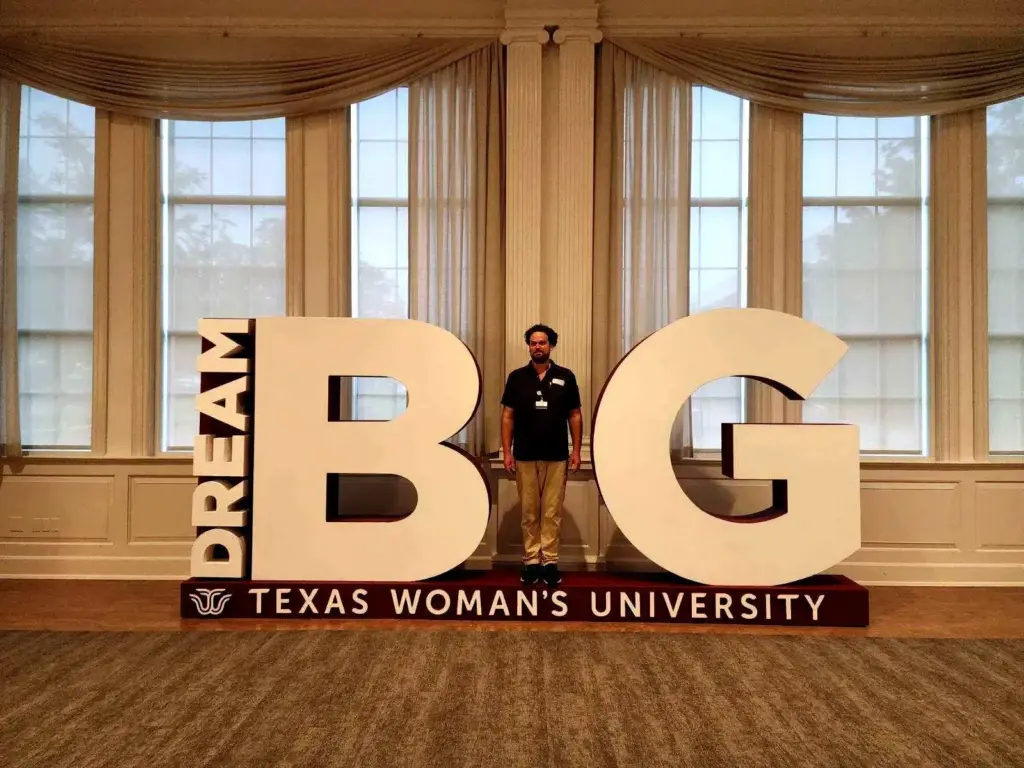
Solid dimensional logos and shapes are non-letter sign elements – a brand mark, icon, or sculptural shape – fabricated as standalone dimensional pieces, often without internal illumination, relying instead on external accent lighting or ambient light to create visual interest. These are common in corporate lobbies, above reception desks, and as freestanding monument elements at building entrances or along roadways. Custom 3d logo pieces in this category often involve more complex sculptural geometry than straightforward letterforms, since logos frequently include curved, organic, or layered design elements that benefit from genuine three-dimensional relief rather than a simple flat-cut silhouette.
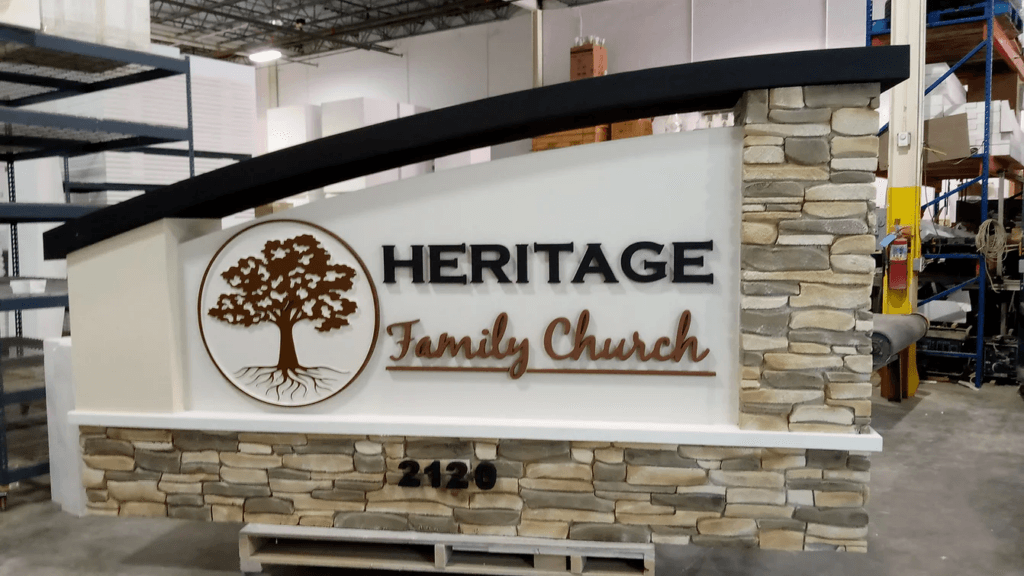
Monument and pylon signs incorporate dimensional letters or logos into a larger freestanding structure, typically near a roadway or parking lot entrance, serving both branding and wayfinding functions for businesses set back from the street or located in larger commercial developments. These large 3d signs are engineered for outdoor exposure from the ground up and frequently combine multiple materials – a masonry or metal base structure with dimensional lettering or an illuminated panel as the focal branding element.
Interior dimensional signage – including reception wall logos, directional wayfinding elements, and donor or recognition walls – uses the same fabrication principles as exterior signage but without the weatherproofing requirements, which generally allows for lower-cost materials and finishes since UV and moisture resistance aren’t primary concerns. This category covers a significant share of total 3d sign fabrication volume for office buildings, healthcare facilities, and educational institutions.
Matching the right type to your situation starts with two questions: where will the sign be viewed from (close interior viewing versus distant exterior viewing), and does it need to function at night. Those two answers eliminate most of the wrong-type mistakes before material selection even enters the conversation.
Materials for Custom 3D Signs: Comparing Foam, Acrylic, Aluminum, and Steel
Material selection for 3d sign fabrication determines weight, cost, surface finish quality, and outdoor longevity – and the right choice depends heavily on the type of sign you’ve selected and where it will be installed.
Coated foam (high-density EPS or HDU) is the material of choice for large-scale dimensional logos and sculptural sign elements where weight, fabrication cost, and design complexity are the dominant considerations. Foam can be CNC-routed into virtually any three-dimensional form, including curved, layered, and relief geometry that would be expensive or impossible to fabricate economically in metal. When finished with a professional hard coat and UV-stabilized exterior topcoat, foam signs outdoor performance is genuinely reliable, with properly fabricated installations performing well for a decade or longer. Foam’s primary advantage in commercial 3d signs applications is enabling large-scale, visually complex dimensional branding at a fraction of the weight and cost of metal fabrication – a critical factor for big logo installations on building facades where structural mounting capacity is limited.
Acrylic is widely used for illuminated dimensional letters and logos, particularly in halo-lit and channel letter applications, because the material transmits and diffuses light beautifully. Acrylic faces on channel letters produce the even, glowing illumination customers associate with traditional storefront signage. It’s available in an extensive range of colors, including translucent options specifically designed for backlighting, and machines cleanly for crisp letterforms. Acrylic is more brittle than foam or metal at thin cross-sections and is generally used for letter faces and smaller dimensional elements rather than large sculptural forms.
Aluminum is the standard metal substrate for professional dimensional signage, valued for being lightweight relative to other metals, highly corrosion-resistant without ongoing maintenance, and well-suited to both painted and powder-coated finishes. Aluminum is the preferred material for channel letter returns (the side walls of illuminated letters), for premium dimensional logos where authentic metal appearance matters to brand positioning, and for any 3d signs outdoor installation where minimal long-term maintenance is a priority. Brushed or anodized aluminum finishes are especially popular for corporate and professional services branding, where the material itself communicates quality and permanence.
Stainless steel is reserved for the highest-end commercial 3d signage applications where maximum durability and a premium material aesthetic are both priorities – flagship retail, luxury hospitality, and corporate headquarters signage. Stainless resists corrosion exceptionally well, holds a polished or brushed finish for decades with minimal maintenance, and carries an inherent material prestige that no coating can fully replicate. The tradeoffs are weight and cost: stainless fabrication is significantly more expensive than aluminum or foam, and the added weight requires more robust mounting infrastructure.
Choosing among these materials is rarely about finding the single “best” option – it’s about matching material properties to your specific sign type, scale, illumination requirements, and budget. A 3d signage company with genuine fabrication breadth across all four materials can guide this decision based on your specific project rather than defaulting to whichever material they happen to specialize in.

Specifying 3D Signs Outdoor: Durability, Illumination, and Visibility Requirements
Outdoor installations introduce specification requirements that don’t apply to interior signage, and getting these details right at the design stage prevents costly problems after installation. Whether you’re commissioning a single dimensional logo or a full storefront letter set, the following considerations apply broadly to any 3d sign fabrication intended for exterior use.
Weather and UV durability starts with material and finish selection, as outlined in the materials section above, but extends to specific fabrication details that matter for longevity. For foam and acrylic sign elements, every surface and edge needs full encapsulation in weather-resistant coating or material – any exposed substrate becomes a point of moisture ingress or UV degradation. For metal elements, all welds, fasteners, and joints need corrosion-resistant treatment, and dissimilar metal contact points (where aluminum meets steel hardware, for example) need isolation to prevent galvanic corrosion. Ask your 3d sign company directly what warranty they offer against fade, coating failure, and corrosion – a fabricator confident in their materials and process will put meaningful warranty terms in writing.
Illumination requirements depend heavily on your specific visibility needs and local sign ordinances. Channel letters with internal LED illumination provide strong nighttime legibility and are the standard choice for retail storefronts that need to remain visible to evening foot and vehicle traffic. Halo-lit signage produces a more subtle, ambient glow suited to upscale branding where dramatic nighttime brightness isn’t the goal. External floodlighting or accent lighting aimed at non-illuminated dimensional logos is a lower-cost illumination option, though it depends on consistent fixture maintenance and doesn’t provide the same even illumination as internally lit letters. Before finalizing your sign design, check local signage ordinances – many municipalities regulate illumination type, brightness, and operating hours for commercial signage, and these regulations vary significantly between jurisdictions.
Visibility and scale for outdoor 3d business signs should be calculated based on actual viewing distance and traffic speed, not aesthetic preference alone. A sign meant to be read by pedestrians at a storefront entrance can be modestly sized; a sign meant to be read by drivers on an adjacent roadway at 35 mph needs to be substantially larger and benefits from higher contrast and simpler letterforms. As a general guideline, letter height should increase by roughly one inch for every ten feet of intended primary viewing distance, and this calculation should drive the scale decision for any large 3d signs project before material or illumination choices are finalized.
Structural mounting for exterior conditions needs to account for wind load, particularly for large dimensional logos or letter sets on exposed facades. Outdoor installations should use corrosion-resistant mounting hardware throughout – stainless steel or hot-dip galvanized fasteners rather than standard zinc-plated hardware – and for large installations, a structural review of the mounting design relative to local wind load requirements is worth the modest additional cost. A sign that performs well under normal conditions but fails in a significant wind event represents both a financial loss and a liability exposure that proper engineering review avoids.
When searching for “3d signs near me” or evaluating local fabricators, prioritize companies who ask detailed questions about your specific outdoor conditions, illumination goals, and viewing distance requirements over those who simply quote a price based on size and material. The quality of the specification conversation upfront is one of the most reliable indicators of fabrication quality you’ll receive.
Frequently Asked Questions
What are custom 3D signs?
Custom 3D signs are dimensional signs that add depth to logos and lettering, making business branding more visible and attractive than flat printed or painted alternatives. They are commonly used on storefronts, offices, and commercial buildings to improve recognition and create a strong visual impact, since the depth and shadow of dimensional forms catch the eye and read more memorably than two-dimensional graphics in busy visual environments.
Are 3D signs suitable for outdoor use?
Yes, 3D signs are designed for outdoor conditions when made with durable materials like acrylic, metal, or coated foam, each fabricated and finished with exterior-grade specifications. They are resistant to weather, UV exposure, and temperature changes when the fabricator applies the correct coating systems, corrosion-resistant hardware, and sealed construction appropriate to the specific material and climate. Improperly specified or finished signs in any of these materials will underperform outdoors, so confirming the exterior specification with your fabricator before ordering is essential.
What materials are used for 3D signs?
Common materials include coated foam, acrylic, aluminum, and stainless steel, each suited to different applications. Foam is preferred for large, complex, or sculptural dimensional forms where weight and cost matter; acrylic excels in illuminated channel letter and halo-lit applications; aluminum is the standard for durable, corrosion-resistant dimensional letters and logos; and stainless steel serves premium applications where maximum durability and material prestige are priorities. The choice depends on budget, design complexity, and whether the sign will be illuminated or used outdoors.
How do I choose the right 3D sign for my business?
Choose based on visibility requirements, installation location, brand style, and lighting needs. For example, illuminated channel letters or halo-lit signage work better for nighttime visibility in retail and hospitality settings, while large dimensional logos without illumination are well suited to daytime-focused corporate or professional environments. Defining your viewing distance, required hours of visibility, and budget before consulting a fabricator will lead to a far more productive specification conversation and a better-matched final product.
Conclusion
The honest takeaway on choosing custom 3D signs is that the right answer is never a single universally “best” type or material – it’s the combination that correctly matches your viewing distance, illumination needs, installation environment, and budget. Businesses that get the most value from dimensional signage are the ones that work through these four variables deliberately with their fabricator rather than defaulting to whatever looks impressive in a portfolio photo. Get that match right, and a custom 3D sign becomes one of the most durable, cost-effective branding investments a business can make in its physical presence.

Read more

The Importance of Hard Coating in Outdoor Signage: How Polyurea Coating Transforms Foam Structures into Durable Signage
The Art of Imitation: How Faux Finishes Transform EPS Foam Into Stone, Metal & Wood

Beyond Traditional Materials: Why HDU Foam Is Replacing Wood and Stone in High-End Signage
The Hidden Science Behind High-Quality Foam Lettering & Dimensional Signage
Eco-Friendly Signage Solutions: Is HDU & EPS Foam the Sustainable Choice?

Why Lightweight Foam Monument Signs Are Ideal for Large-Scale Signage

The Importance of Proper Installation for Monument Signs

Foam vs. Metal Signs: Cost, Durability, and Aesthetic Considerations

The Importance of Proper Installation for Monument Signs

From One-Time WOW to Multi-Tour ROI
Recommended Articles
HDU Signs: What High-Density Urethane Foam Is and Why It’s a Premium Sign Choice
Acrylic Signs for Business: Types, Benefits, and How to Choose the Right Style
Industrial 3D Printing: Large-Scale Foam Prototypes, Models & Manufacturing Solutions
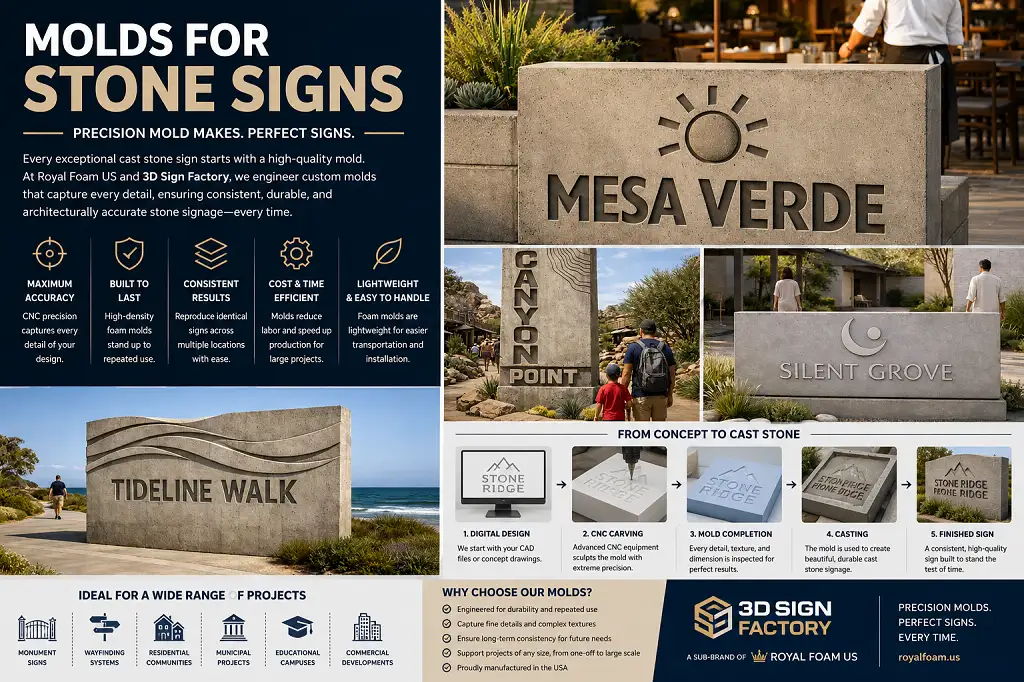
Molds for Stone Signs: The Foundation Behind Consistent Architectural Signage
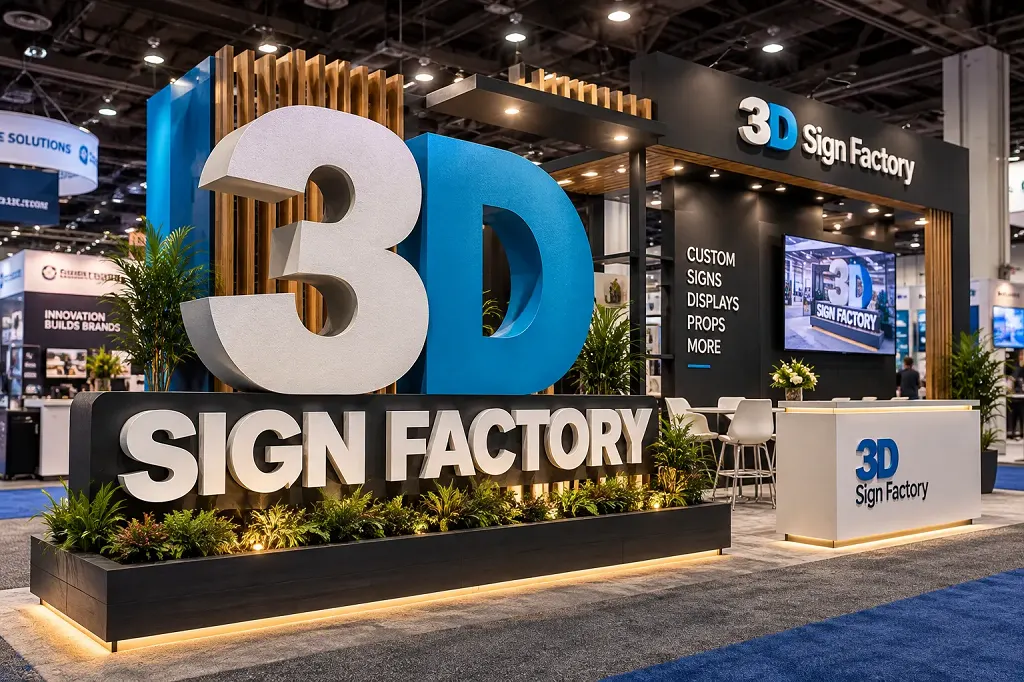
Beyond the Booth: How Custom 3D Displays Make Brands Stand Out at Expos and Events
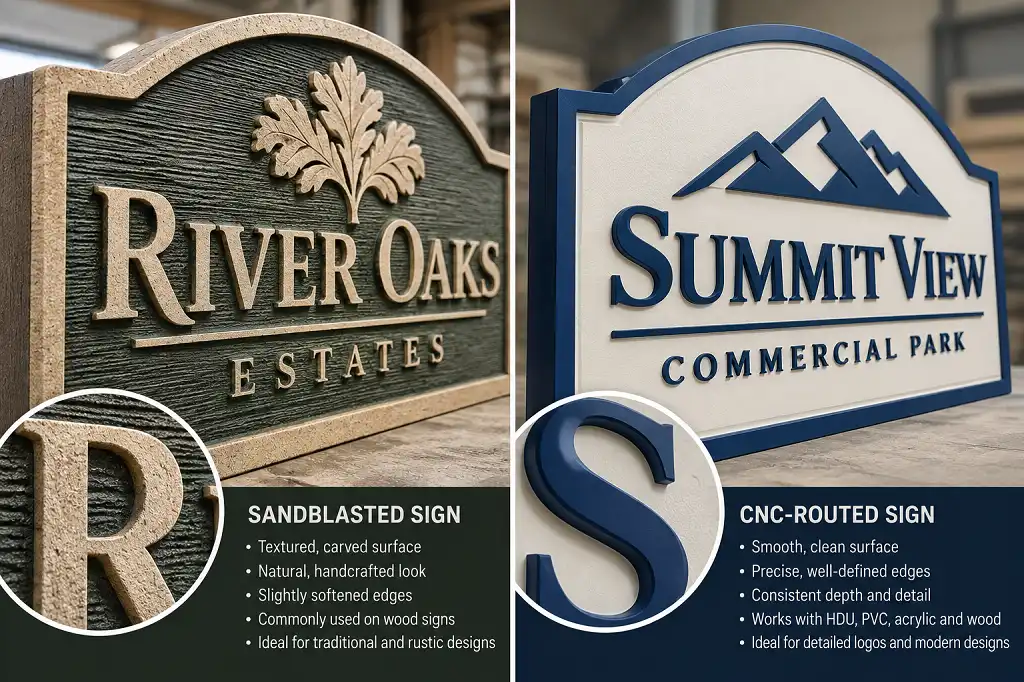
Sandblasted vs. Routed Signs: Which Is Right for Your Project?
Our customer reviews
Read more reviewsRead more reviews