Hotel and Hospitality Signs: How to Create a Professional Guest Experience Through Signage
A hotel general manager recently described an incident that captured, for her, exactly what hospitality signage is supposed to prevent. A wedding party of 40 guests had booked an entire floor of her property for a weekend event. On the morning of the wedding, nine guests from the party ended up on the wrong floor — misreading the elevator bank signage — and arrived at the wrong suite for pre-ceremony preparations, causing confusion and a 20-minute delay that cascaded through the entire morning timeline. The floor signage was code-compliant, clearly printed, and had passed multiple internal reviews. What it wasn’t was intuitive: it required guests to read four lines of text under stress, in unfamiliar surroundings, while carrying items and attending to the social demands of a wedding morning. After that incident, the manager commissioned a complete wayfinding signage redesign. Hotel signage that requires guests to work to navigate isn’t doing its job — the goal is a guest experience where wayfinding is invisible because the signs are doing all the work. This guide covers how to achieve that.
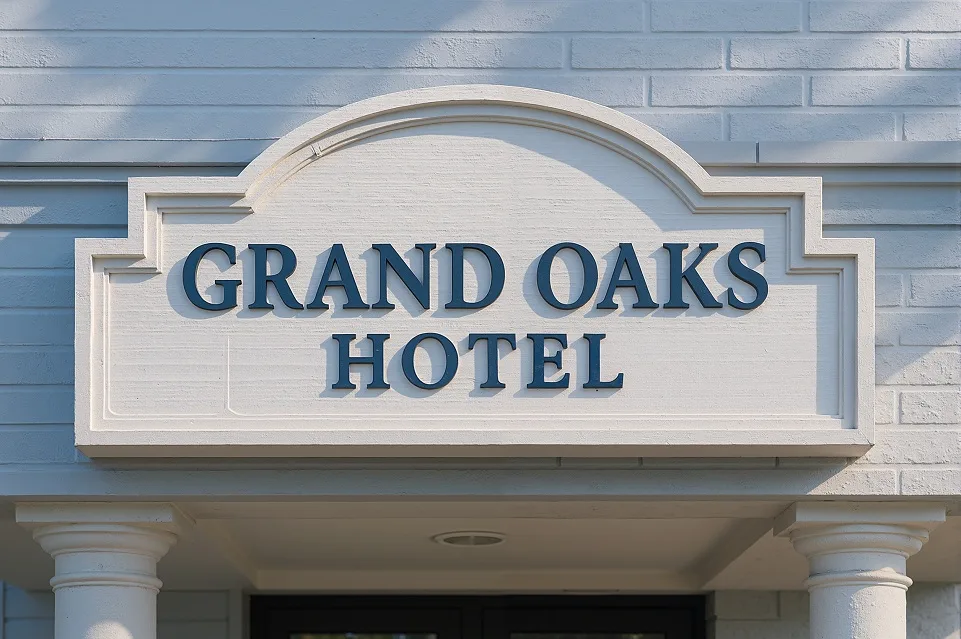
Why Hotel Signage Is a Guest Experience Issue, Not Just a Design Decision
Hospitality brands invest significantly in physical environment design — architecture, interior design, amenity quality — specifically because the physical environment communicates brand quality and shapes the guest’s experience of the brand. Hotel signage is part of this physical environment, and its quality or lack of quality contributes to the brand experience in ways that are easy to overlook precisely because good signage is invisible: guests who navigate easily don’t think about the signs.
Hotel signs that fail create friction in the guest experience — the low-grade stress of not knowing where you are, where you’re going, or how to get there. This friction accumulates across a stay and affects how guests perceive the property, even if they can’t articulate why the experience felt effortful. Review data from hospitality properties consistently shows that wayfinding and navigation are among the most common sources of guest friction in otherwise well-rated properties, and among the most easily correctable.
Hotel signage encompasses multiple distinct sign categories that each serve specific guest needs at specific points in the hotel experience. Exterior approach and arrival signs identify the property from the roadway and direct arriving guests to the appropriate entrance. Lobby identification and directory signs orient guests at the point of entry and establish the visual language of the sign system they’ll use throughout the property. Room and floor identification signs provide the navigation information that guests use continuously throughout their stay. Amenity signs identify the property’s facilities — restaurant, pool, fitness center, meeting rooms — with enough specificity and directionality to allow guests to find them without asking for directions. Regulatory signs (emergency exit, ADA required room identification) satisfy code requirements while remaining visually coherent with the rest of the sign system.
Lobby Signs: The First Interior Brand Impression
The lobby sign — typically the property’s name or brand mark displayed as a dimensional sign on the primary reception wall — is the first interior brand impression a guest receives and sets the visual quality standard for everything that follows in the sign program and the broader physical environment.
Hotel lobby sign installations almost universally use dimensional signage rather than flat printed graphics, because the physical presence, depth, and material quality of a dimensional sign communicates brand substance in a way that flat graphics do not. A hotel brand’s logo rendered in brushed aluminum dimensional letters, halo-lit against a feature wall material, creates a lobby presence that signals brand investment and quality at the moment of greatest guest receptivity — arrival, when impressions are freshest and most lasting.
Sign lobby quality also signals what guests can expect from the rest of the property. A lobby with a precisely fabricated, well-lit dimensional sign in quality materials establishes an expectation of similar quality throughout the property; a lobby with an imprecisely produced, poorly lit, or visually inconsistent sign undercuts the investment made in every other aspect of the physical environment. For renovation and rebranding projects especially, the lobby sign is often the appropriate first investment because its impact on perceived property quality is disproportionate to its cost.
Room Identification and Wayfinding Systems
Hotel room sign design needs to solve a specific problem that many designers approach as a purely aesthetic challenge: guests navigating a corridor while carrying luggage, engaged in conversation, and unfamiliar with the floor layout need to identify room numbers quickly and unambiguously. This requires large enough numerals to read at 10 to 15 feet of corridor distance, sufficient contrast against the door or wall surface for legibility in typical corridor lighting, and a clear spatial indicator of which direction room numbers increase or decrease.
Hotel room signs that meet ADA requirements simultaneously serve as the most legible wayfinding elements in the room identification system, because ADA specifications for room identification signs — raised characters at specified minimum size, sufficient contrast, specific mounting location — are grounded in legibility research that benefits all guests, not just those with visual impairment. Designing the full room identification system to meet ADA specifications rather than the minimum required subset ensures consistent legibility and wayfinding performance across the entire floor.
Elevator lobby and floor identification signs at each floor’s elevator stop are among the most commonly failing elements in hotel wayfinding — the brief moment when elevator doors open and a guest needs to confirm they’re on the correct floor is frequently not supported by a sign directly in the elevator’s line of sight. Positioning a floor identification sign directly opposite the elevator doors, large enough to read from within the elevator before doors fully open, is a simple wayfinding improvement that prevents most wrong-floor-arrival situations like the wedding party incident.
Conclusion
The honest takeaway on hotel and hospitality signage is that its quality is measured by invisibility: guests who navigate the property without friction, find amenities without asking for directions, and arrive at their rooms without confusion have been served by a sign system working correctly, even though they’ll never consciously register the signs themselves. The wedding party navigation failure wasn’t a sign failure — it was a guest experience failure that a sign created. The manager’s signage redesign wasn’t an aesthetic improvement — it was an operational fix to a friction source that was affecting guest experience scores and, through them, return business rates. That’s the ROI of hospitality signage done correctly: invisible performance that contributes measurably to the guest experience outcomes that drive business results.
Frequently Asked Questions
What types of signs do hotels need?
Hotels need exterior approach and property identification signs, lobby dimensional signs for brand identification, elevator lobby and floor identification signs, room number signs meeting ADA requirements, amenity directional signs for food and beverage, fitness, pool, and meeting facilities, emergency egress signs meeting fire code requirements, and regulatory signs including ADA-required room identification for all permanent spaces. A complete hotel sign program covers all of these categories as a coordinated visual system rather than as independently specified elements.
What materials are typically used for hotel lobby signs?
Premium hotel lobby signs use dimensional letters in brushed or anodized aluminum, stainless steel, or cast acrylic, typically with halo lighting (LED illumination from behind the letters, creating a glow around each letter’s silhouette against the wall). These materials communicate brand quality and permanence at the close viewing distances of lobby environments where material authenticity is visible to guests. Mid-market properties may use dimensional foam letters finished to simulate metal, achieving comparable visual impact at lower material cost.
How important is ADA compliance for hotel signs?
ADA-compliant signage is legally required for all permanent room and space identification signs in commercial hospitality facilities — this includes all guest room identification, all public space and amenity identification, and all accessible route and emergency information signage. Non-compliance creates legal exposure and can result in expensive remediation. ADA-compliant signs also consistently outperform non-compliant alternatives in wayfinding effectiveness, since the legibility specifications that ADA requires reflect genuine guest need rather than arbitrary regulatory preference.
How long does a hotel signage program take to develop and install?
A complete hotel signage program — from design concept through final sign installation — typically requires four to eight months for full-service hotel properties, depending on the number of signs, design complexity, coordination with broader renovation timelines, and permitting requirements for exterior elements. Lobby and public area signs typically come first in the installation sequence; guest floor wayfinding and room signs are typically installed during the final punch-list phase of a renovation. Planning the sign program in parallel with other renovation disciplines, rather than as an afterthought at the end, consistently produces better-integrated results and avoids the schedule compression that produces quality compromises.

Read more

The Importance of Hard Coating in Outdoor Signage: How Polyurea Coating Transforms Foam Structures into Durable Signage
The Art of Imitation: How Faux Finishes Transform EPS Foam Into Stone, Metal & Wood

Beyond Traditional Materials: Why HDU Foam Is Replacing Wood and Stone in High-End Signage
The Hidden Science Behind High-Quality Foam Lettering & Dimensional Signage
Eco-Friendly Signage Solutions: Is HDU & EPS Foam the Sustainable Choice?

Why Lightweight Foam Monument Signs Are Ideal for Large-Scale Signage

The Importance of Proper Installation for Monument Signs

Foam vs. Metal Signs: Cost, Durability, and Aesthetic Considerations

The Importance of Proper Installation for Monument Signs

From One-Time WOW to Multi-Tour ROI
Recommended Articles
HDU Signs: What High-Density Urethane Foam Is and Why It’s a Premium Sign Choice
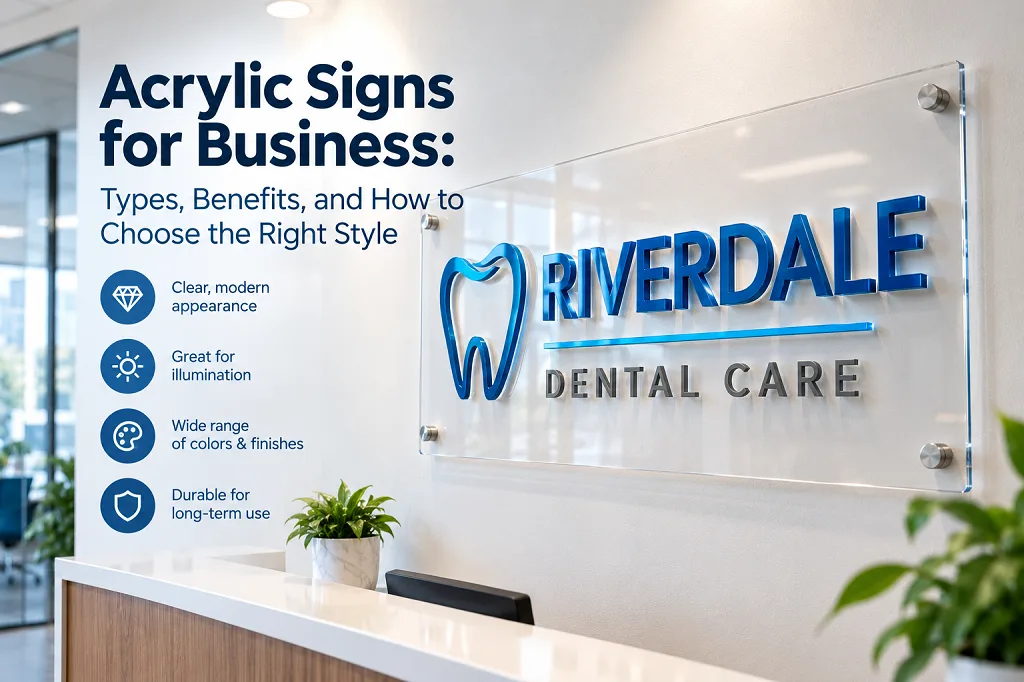
Acrylic Signs for Business: Types, Benefits, and How to Choose the Right Style

Industrial 3D Printing: Large-Scale Foam Prototypes, Models & Manufacturing Solutions
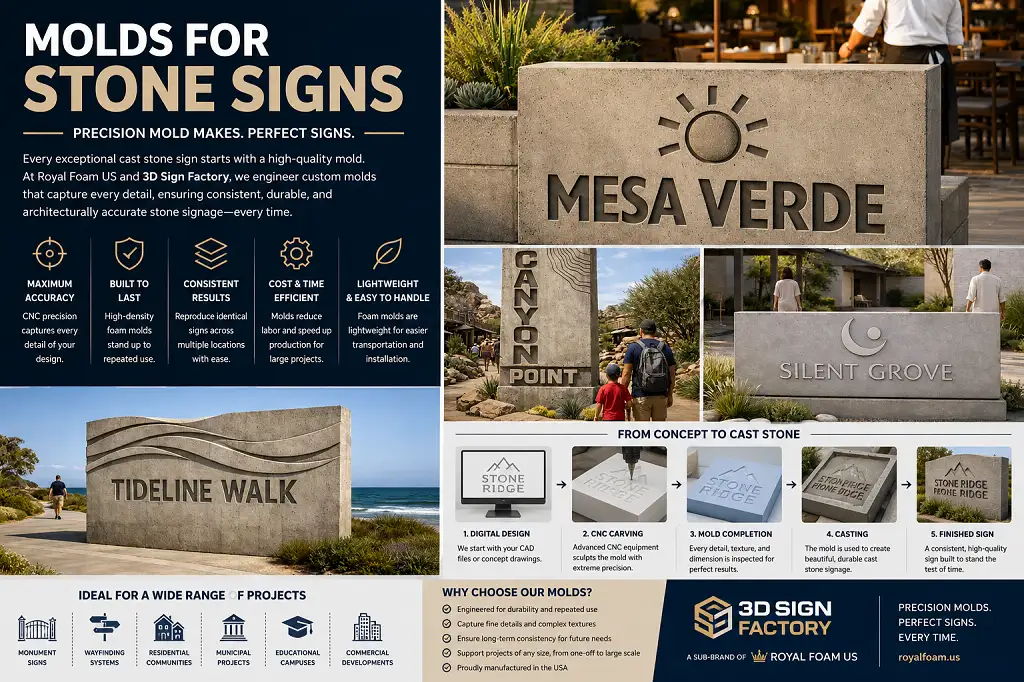
Molds for Stone Signs: The Foundation Behind Consistent Architectural Signage
Beyond the Booth: How Custom 3D Displays Make Brands Stand Out at Expos and Events
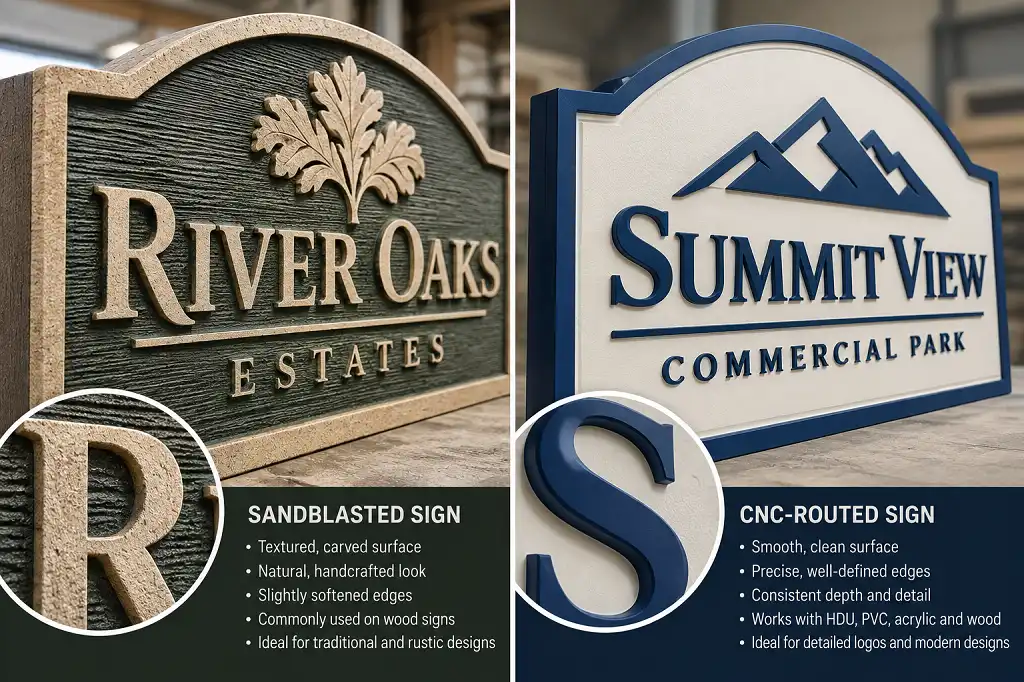
Sandblasted vs. Routed Signs: Which Is Right for Your Project?
Our customer reviews
Read more reviewsRead more reviews