Foam Signs vs Wood, Metal, and Concrete – Cost, Durability, Design, and Outdoor Performance
Imagine you’re opening a new restaurant. The architect wants dimensional lettering above the entrance – bold, carved-looking, impressive from the street. You get quotes back for wood, brushed aluminum, and cast concrete. The numbers are painful. Then someone mentions foam signs, and your first instinct is probably skepticism. Foam? For a permanent exterior installation?
That skepticism is worth examining, because it’s based on an outdated picture of what foam signage actually is. Modern EPS (expanded polystyrene) and HDU (high-density urethane) foam signs aren’t the flimsy stuff from a craft store. They’re precision-cut, coated, and finished to look like stone, wood, metal, or carved hardwood – and they’re being used on everything from hotel entrances to retail storefronts to monument signs in upscale neighborhoods.
This article breaks down how foam compares to wood, metal, and concrete across four areas that actually matter: cost, durability, design flexibility, and outdoor performance. No hype, just an honest look at where foam wins, where it doesn’t, and how to figure out which material makes sense for your specific situation.
Cost: What You Actually Pay Across the Full Project
The sticker price on any sign material is only part of the story. What you’re really paying for is the material itself, the fabrication labor, the installation, and the long-term maintenance. Foam changes the math on almost every one of those.
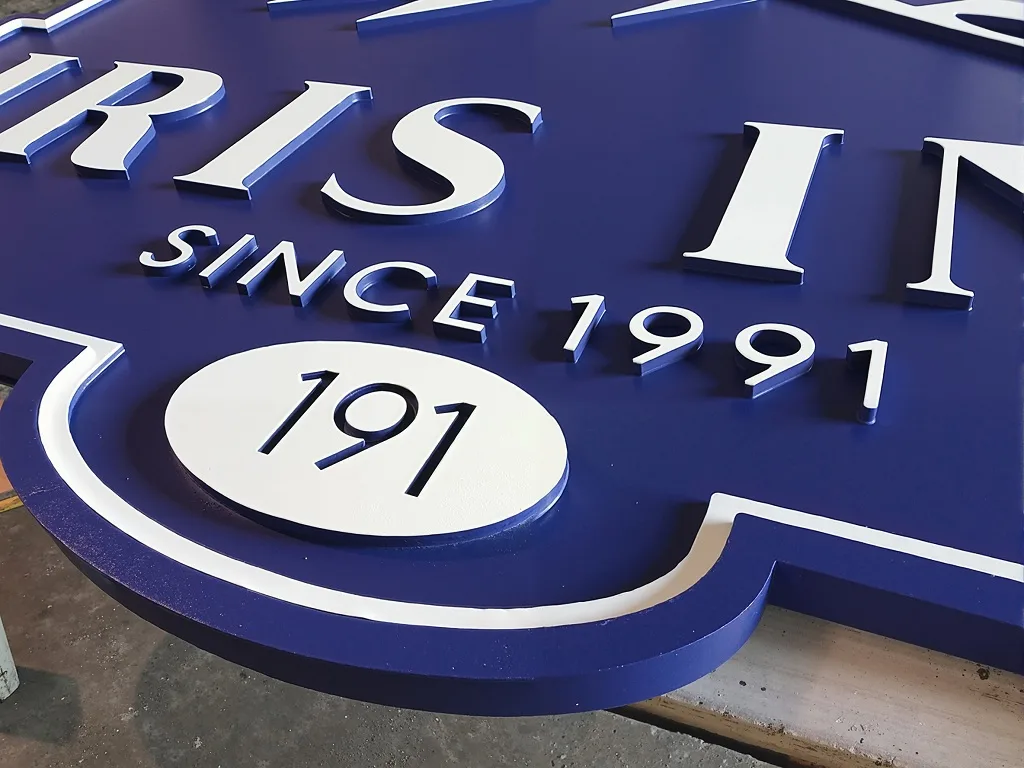
Raw material cost is where foam’s advantage is most obvious. EPS foam is inexpensive to produce, and HDU foam – the denser, more durable type used for exterior signs – costs more but still lands well below aluminum sheet, solid hardwood, or precast concrete. A dimensional letter set in 2-inch HDU foam might cost 40 to 60 percent less in raw materials than the equivalent in aluminum or carved wood. That gap widens when you factor in fabrication time, because foam is fast to cut. CNC routers move through foam quickly and cleanly, which means less shop time per sign.
Wood requires more careful machining, finishing, and sealing at every stage. Metal fabrication – welding, bending, powder coating – is skilled work that commands skilled-trade hourly rates. Concrete or cast stone signs involve mold-making, curing time, and heavy equipment for installation. None of that is cheap.
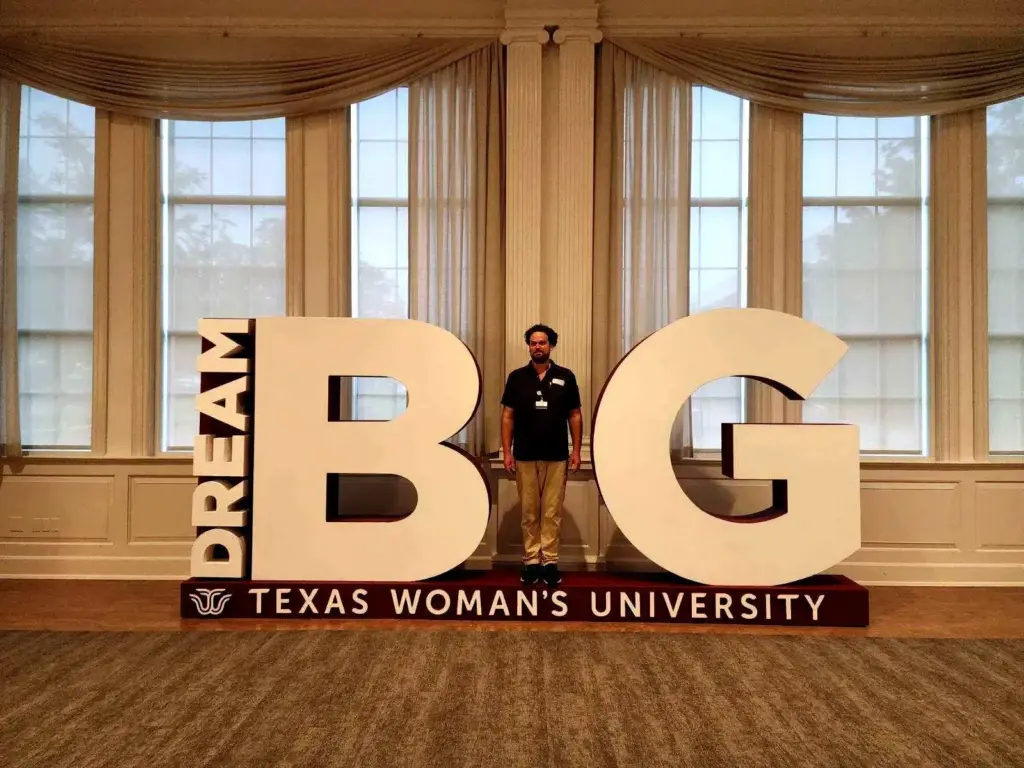
Then there’s the weight factor, and it hits the budget in ways people don’t always anticipate. A concrete monument sign face can weigh several hundred pounds. Moving it, mounting it, and engineering the structure to hold it costs real money. A foam replica of the same sign face might weigh 15 to 30 pounds. You’re looking at a two-person installation instead of a crane. That alone can save thousands on larger projects.
Maintenance costs over time also favor foam, particularly when it’s been properly coated. Wood rots, warps, and needs repainting every few years – especially in humid climates. Metal can corrode at edges and fastener points, and repainting powder-coated aluminum is not a simple weekend job. Coated foam, by contrast, doesn’t absorb moisture and doesn’t rust. Touch-up painting is straightforward, and the material itself doesn’t degrade the way organic materials do.
The honest caveat here: foam isn’t always cheaper when you need something truly massive, structural, or load-bearing. If the sign needs to support electrical components, withstand serious physical impact, or serve a structural purpose, the engineering requirements can offset the material savings. But for decorative dimensional signage – letters, logos, shaped panels, carved-look elements – foam consistently delivers a lower total project cost.
Durability: How Long Foam Actually Lasts Outside
This is the question that makes most people pause. Wood feels solid. Metal feels permanent. Concrete feels like it’ll outlast everything. Foam feels like it might blow away in a stiff wind. But that intuition doesn’t hold up when you look at what’s actually happening to each material over 5, 10, or 20 years of outdoor exposure.
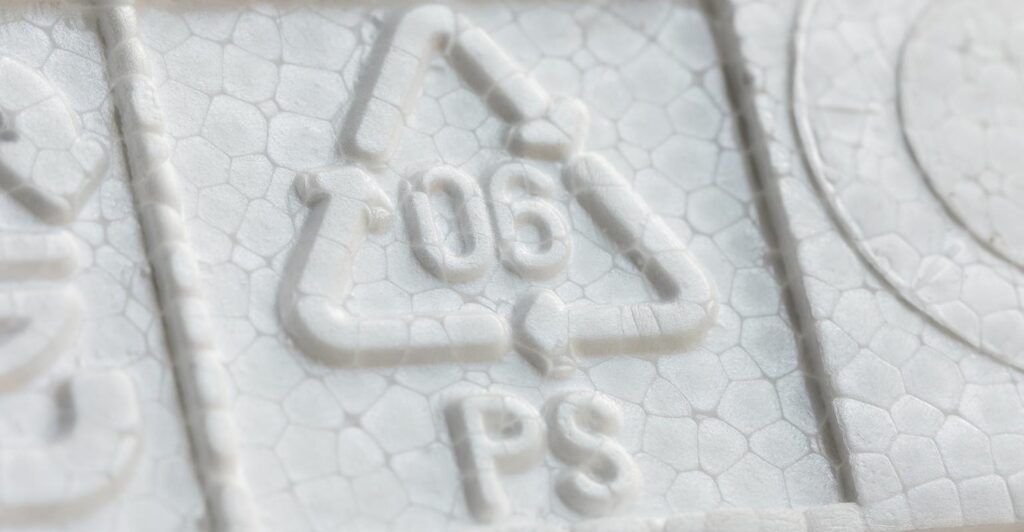
Bare EPS foam is not durable outdoors. That’s just true. UV light breaks it down, moisture can work into it over time, and physical impact will damage it. But nobody installs bare EPS foam on the exterior of a building. Properly finished foam signs are coated with a hard shell – typically a combination of fiberglass mat, epoxy, polyurea, or elastomeric coatings – that completely changes the material’s behavior. That coating is what the weather sees, not the foam underneath. And those coatings are genuinely tough.
HDU foam is even more inherently stable. It’s a closed-cell material, which means it doesn’t absorb water the way open-cell foams do. It doesn’t rot, it doesn’t swell, and it doesn’t support mold growth. Properly coated HDU signs have documented service lives of 10 to 20 years in outdoor environments, which puts them in the same conversation as painted wood and powder-coated metal.
Wood, despite its reputation, is actually one of the more maintenance-intensive sign materials for exterior use. It moves – expanding and contracting with moisture and temperature – and that movement eventually cracks paint, opens joints, and lets water in. Cedar and redwood hold up better than pine, but even quality hardwood signs need refinishing every 3 to 5 years in most climates. In coastal or humid environments, that cycle shortens.
Metal is durable in a different way. Steel rusts unless it’s galvanized or powder-coated, and those protective layers eventually fail, especially at cut edges and drilled holes. Aluminum doesn’t rust but it oxidizes and can pit in salty air. The metal itself lasts, but the finish requires attention. And when a metal sign gets dented or bent, repair is difficult – you’re often looking at replacement.
Concrete and cast stone are genuinely long-lasting, but they’re also brittle. Freeze-thaw cycles crack them. They’re heavy enough that seismic movement or settling foundations can cause structural failures. And they’re nearly impossible to repair invisibly when damage does occur.
Foam’s real durability vulnerability is impact. A sharp edge, a vehicle, a piece of flying debris in a serious storm – foam will show damage more readily than metal. For ground-level signs in high-traffic areas, that’s worth thinking about. But for elevated signage, monument sign faces, building-mounted letters, and decorative architectural elements, impact risk is low, and foam performs reliably.

Design Flexibility: What Foam Can Do That Other Materials Can’t
This is where foam genuinely separates itself. The design possibilities with CNC-routed and hand-carved foam are broader than with almost any other sign material, and the reason is simple: foam is easy to shape in three dimensions without the cost and complexity that 3D work adds to wood, metal, or concrete.
With metal, dimensional work means fabricating hollow letters or shapes, welding seams, grinding them smooth, and finishing everything consistently. Complex curves are expensive. Undercuts are difficult. Organic shapes – a carved eagle, a vine motif, a realistic stone texture – are either impossible or prohibitively expensive in sheet metal.
Wood can be carved beautifully, but skilled hand-carving is slow and expensive. CNC routing in wood works well for simpler profiles but struggles with very fine detail because wood grain limits how crisp the edges stay. And once you’ve carved it, you still need to seal and finish it carefully, which can soften detail if multiple coats build up.
Concrete can be cast into almost any shape, but you need a mold for every unique form. Mold-making is expensive, and the casting process introduces its own limitations – undercuts require complex molds, very fine details don’t always reproduce cleanly, and you can’t easily make one-off custom pieces without significant upfront cost.
Foam changes all of this. A CNC router can cut foam to almost any profile, and the material holds extremely fine detail. Letters can have sharp serifs, deep bevels, intricate carved borders. Organic shapes – leaves, animals, architectural ornaments – come out crisp and clean. And because foam is so easy to work, hand-finishing and hand-carving are practical options even on commercial projects, something that’s economically realistic in foam but rarely so in wood or stone.
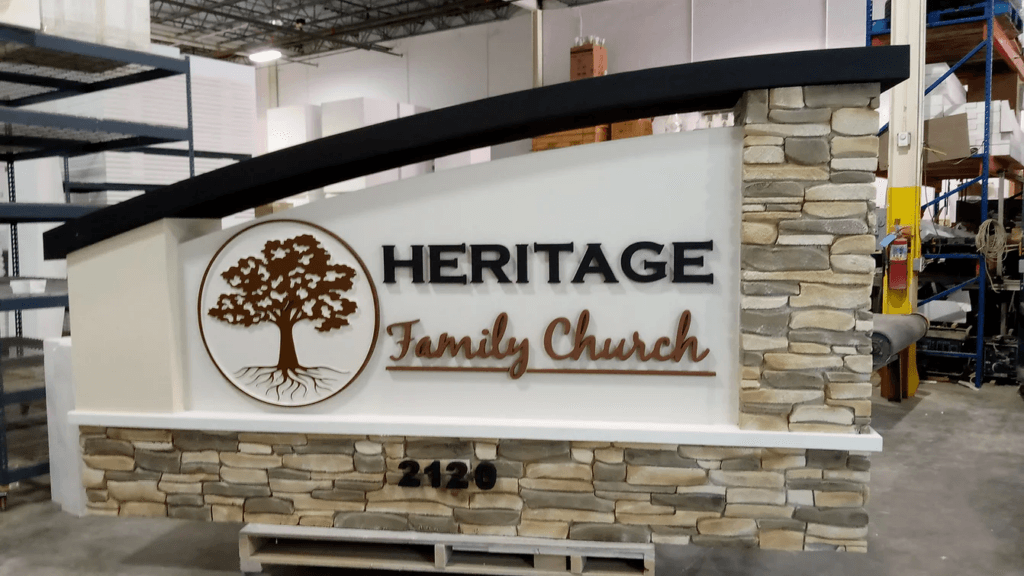
The finishing options are equally broad. Foam can be textured to look like rough-hewn stone, smooth marble, weathered wood, aged bronze, or painted metal. A skilled finisher can make an EPS or HDU foam panel genuinely difficult to distinguish from carved limestone at normal viewing distances. That’s not an exaggeration – it’s why foam is used extensively in theme parks, film sets, and high-end retail environments where the visual result matters enormously.
Custom foam signs also scale well. Need the same logo reproduced in three different sizes for different locations? The CNC file is the same, just scaled. With cast concrete, you’d need three different molds. With fabricated metal, three separate fabrication runs. Foam keeps the per-unit cost low even for small production runs.
The one design limitation worth being honest about is translucency. Foam can’t be backlit the way acrylic or polycarbonate channel letters can. If your design requires illuminated letters with a glowing face, foam isn’t the right material for that element. It can be used alongside illuminated components, but it can’t replace them for lit applications.
Outdoor Performance: Temperature, Moisture, UV, and Wind
Outdoor signage lives in a genuinely hostile environment. Temperature swings, rain, UV exposure, wind load – every material responds to these stresses differently, and understanding those responses helps you make a smarter choice.
Temperature is where foam’s closed-cell structure matters most. Unlike wood, foam doesn’t absorb moisture and then expand when it freezes. There’s no freeze-thaw cracking the way you see in concrete or masonry. HDU foam is dimensionally stable across a wide temperature range – it doesn’t warp in summer heat or become brittle in winter cold the way some plastics do. EPS foam is slightly less stable under sustained high heat, which is why it’s not ideal for applications near heat sources or in extremely hot climates without appropriate coatings.
Moisture resistance depends almost entirely on the coating system. Bare foam absorbs almost no moisture – EPS and HDU are both low-absorption materials – but the coating seals the surface completely and prevents any water intrusion at cut edges or fastener holes. A properly installed foam sign with sealed edges and stainless or coated fasteners will not show moisture damage over years of outdoor exposure. This is genuinely better than wood, which will always have some moisture movement, and comparable to well-maintained metal.
UV exposure is the coating’s job, not the foam’s. The foam underneath doesn’t degrade in UV if the coating is intact. High-quality exterior coatings with UV inhibitors maintain color and surface integrity for years. The practical recommendation is to use exterior-grade paint systems – the same ones used on metal or concrete – rather than interior paints, which will chalk and fade within a season or two.
Wind load is where foam’s light weight becomes a structural consideration rather than just a convenience. Because foam signs are so light, the fastening system carries much less load than it would for a concrete or metal sign. But foam panels also have less mass to resist movement, so in high-wind areas, the mounting design needs to account for uplift and lateral forces. This isn’t a disqualifier – it’s just an engineering consideration that any competent sign installer will address. Properly mounted foam signs handle wind well; the risk comes from inadequate mounting, not from the material itself.
One practical note on insects and pests: EPS foam can be attractive to certain insects, particularly in ground-contact applications. Wasps sometimes nest in gaps around foam panels, and in some regions, certain beetles have been known to tunnel into uncoated foam. HDU is more resistant to this because of its density, and proper coating eliminates the issue for both materials. It’s not a common problem, but it’s worth knowing about if you’re in a region with aggressive insect activity.
FAQ
Are foam signs durable?
Yes, with the right coating system they are. Bare foam isn’t meant for outdoor use, but coated EPS and HDU foam signs are weather-resistant, UV-stable, and long-lasting. Properly finished foam signs regularly achieve 10 to 20 years of outdoor service life, which is comparable to painted wood and well-maintained metal.
Why choose foam over wood or metal?
The main reasons are cost, weight, and design flexibility. Foam costs less to fabricate, weighs a fraction of what wood or metal does at the same size, and can be shaped into complex three-dimensional forms that would be expensive or impractical in other materials. For decorative dimensional signage, it’s hard to beat on a value-per-visual-impact basis.
Do foam signs look premium?
They can, yes. Skilled finishing makes foam signs genuinely difficult to distinguish from carved stone, wood, or metal at normal viewing distances. That’s why they’re used in high-end retail, hospitality, and architectural applications where appearance matters as much as anything else.
Are foam signs suitable for outdoor use?
Absolutely. Exterior foam signs are standard practice in the sign industry. The key is using the right foam type – HDU for most applications, coated EPS for larger or more budget-sensitive projects – and ensuring the coating system and mounting hardware are appropriate for the climate and exposure conditions.
The honest takeaway is this: foam signs aren’t a compromise. For dimensional, decorative, and architectural signage, they’re often the smartest material choice – lighter, more affordable, and more design-flexible than the alternatives, with outdoor durability that holds up when the installation is done right. The skepticism is understandable, but it belongs to a version of foam that modern sign materials left behind a long time ago.

Read more

The Importance of Hard Coating in Outdoor Signage: How Polyurea Coating Transforms Foam Structures into Durable Signage
The Art of Imitation: How Faux Finishes Transform EPS Foam Into Stone, Metal & Wood

Beyond Traditional Materials: Why HDU Foam Is Replacing Wood and Stone in High-End Signage
The Hidden Science Behind High-Quality Foam Lettering & Dimensional Signage
Eco-Friendly Signage Solutions: Is HDU & EPS Foam the Sustainable Choice?

Why Lightweight Foam Monument Signs Are Ideal for Large-Scale Signage

The Importance of Proper Installation for Monument Signs

Foam vs. Metal Signs: Cost, Durability, and Aesthetic Considerations

The Importance of Proper Installation for Monument Signs

From One-Time WOW to Multi-Tour ROI
Recommended Articles
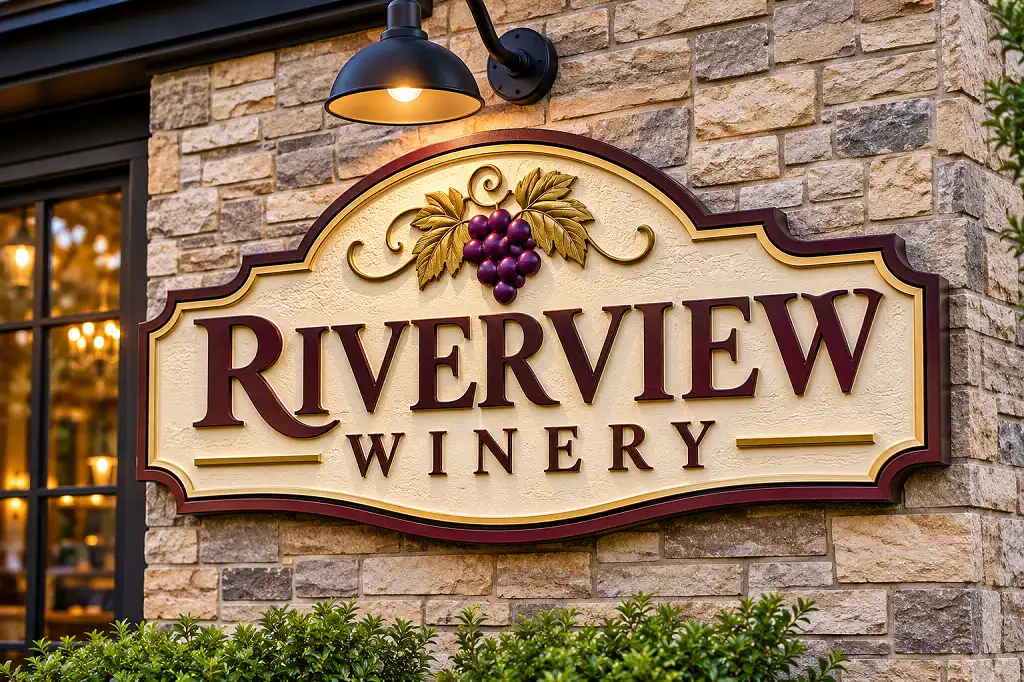
HDU Signs: What High-Density Urethane Foam Is and Why It’s a Premium Sign Choice
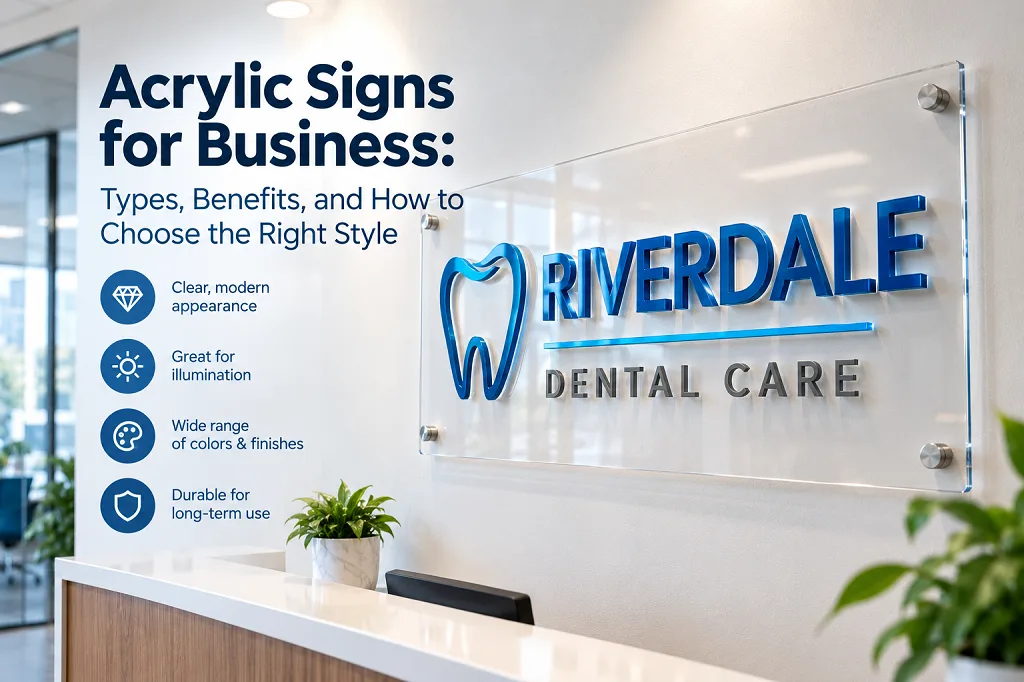
Acrylic Signs for Business: Types, Benefits, and How to Choose the Right Style
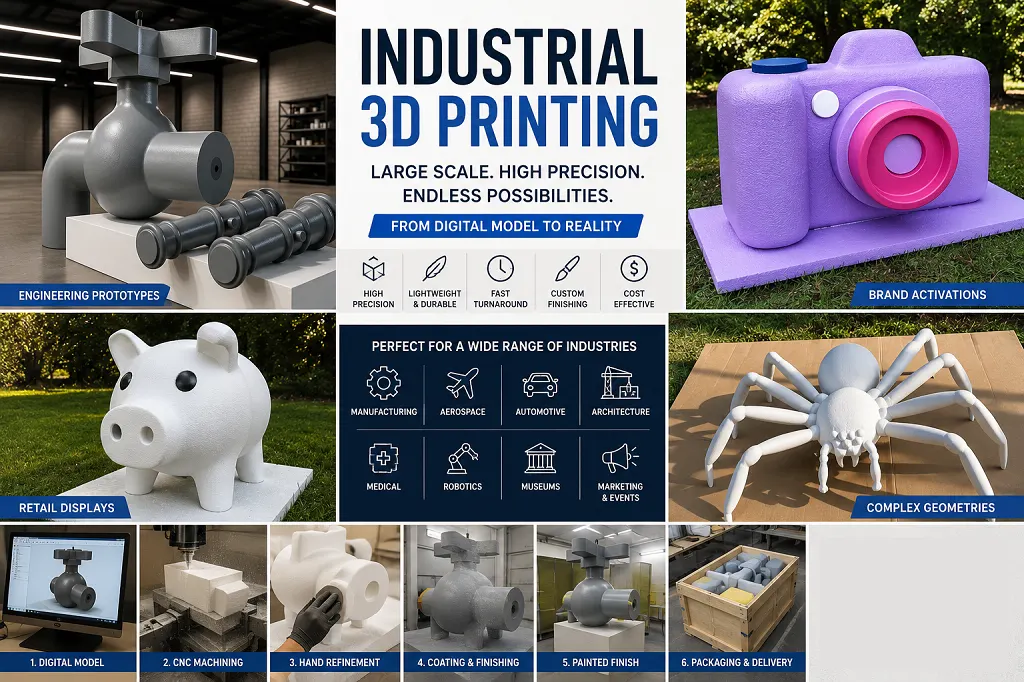
Industrial 3D Printing: Large-Scale Foam Prototypes, Models & Manufacturing Solutions
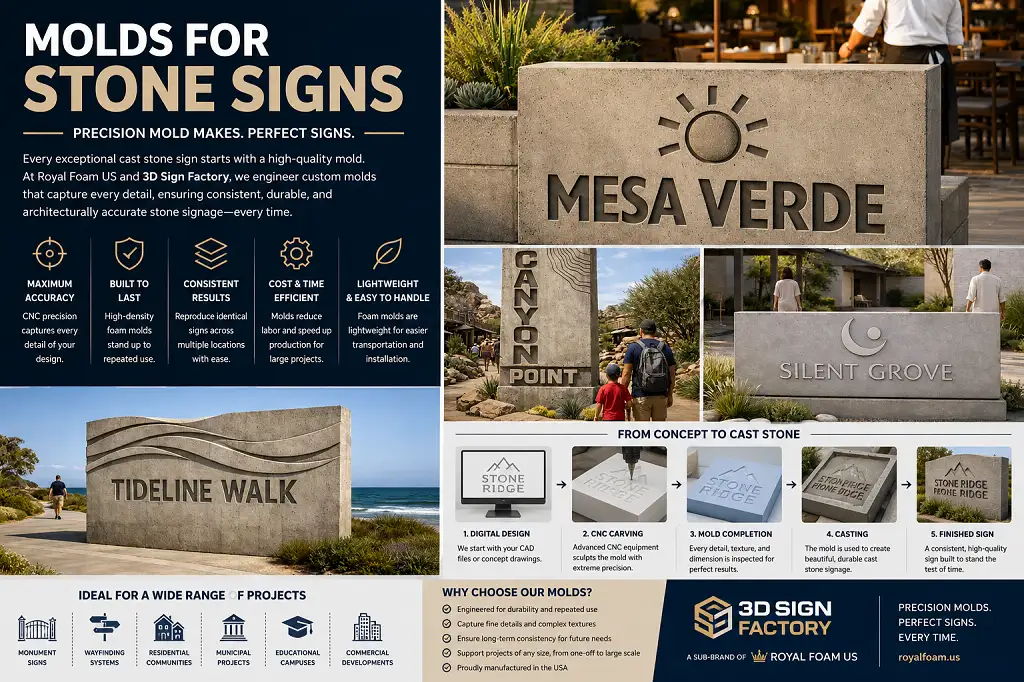
Molds for Stone Signs: The Foundation Behind Consistent Architectural Signage
Beyond the Booth: How Custom 3D Displays Make Brands Stand Out at Expos and Events
Sandblasted vs. Routed Signs: Which Is Right for Your Project?
Our customer reviews
Read more reviewsRead more reviews