Custom 3D Props and Sculptures for Events and Retail – Materials, Large-Scale Production, and Applications
Picture this: a trade show floor packed with hundreds of booths, all competing for the same attention. Most of them have banners, backlit panels, maybe a branded tablecloth. Then there’s one booth with a six-foot foam sculpture of their product sitting front and center, painted to look exactly like the real thing. People stop. They take photos. They remember the brand two weeks later. That’s what custom 3D props do that flat graphics simply can’t. Whether you’re planning a retail activation, a stage build, or an advertising installation, the physical presence of large 3D props changes how people experience a space – and how long they remember it.

What Materials Go Into Custom 3D Props and Why It Matters
The material choice isn’t just a production detail. It determines weight, durability, finish quality, cost, and whether your prop survives one event or twenty. Most people outside the fabrication industry assume props are made from wood or fiberglass, and while those materials have their place, foam has become the dominant choice for a good reason.
Expanded polystyrene – EPS foam – is the workhorse of prop fabrication. It’s lightweight, easy to cut with CNC routers and hot wire tools, and can be carved into almost any shape without the structural complexity that wood or metal requires. A foam sculpture that would weigh 800 pounds in wood might come in under 60 pounds in EPS. That matters enormously when you’re shipping props across the country, setting them up with a small crew, or hanging them from a ceiling rigging system.
Polyurethane foam is denser and harder than EPS. It’s often used for props that need fine surface detail – think product replicas with tight tolerances, or sculptures where the texture needs to hold up under close inspection. It machines well and takes paint and coating systems more predictably than EPS. The trade-off is cost. Polyurethane foam runs significantly more expensive per cubic foot, so fabricators often use it selectively, sometimes combining it with EPS for the bulk structure and polyurethane for detail sections.
Once the foam core is shaped, it needs a hard coat to protect it. The most common approach is a polyurea or polyurea-polyurethane hybrid coating, sprayed on in layers and then sanded. This creates a shell that resists dents, minor impacts, and moisture. After coating, the prop gets primed and painted – usually with automotive-grade or industrial paints that hold color under UV exposure and handling. Some props get a final clear coat for gloss or a texture finish for realism.
Fiberglass is still used when extreme durability is the priority. It’s heavier than foam, more expensive to fabricate, and harder to modify after production – but a fiberglass prop can take serious abuse and still look good years later. For permanent retail installations or outdoor advertising sculptures that will stay in place for a full season, fiberglass often makes more sense than foam even with the added cost.
The honest answer about materials is that there’s no single best option. A prop for a one-day pop-up event has completely different requirements than a prop that’s going to anchor a retail display for six months. Good fabricators ask about the use case before they recommend a material, and you should be skeptical of any shop that quotes foam for everything without asking how the prop will be used.
How Large-Scale Production Actually Works
Scaling up to large 3D props isn’t just a matter of cutting bigger pieces of foam. The production process changes substantially once you’re working at sizes above six or eight feet, and understanding that process helps you plan timelines and budgets more realistically.
It starts with a 3D model. Most professional prop fabricators work from digital files – either files the client provides or models built in-house from reference images, product specs, or creative briefs. The model gets broken down into sections that fit within the cutting limits of the CNC router, which is typically a 4×8 or 5×10 foot bed. A twelve-foot sculpture might be produced in eight or ten separate foam sections that get glued and assembled on-site or in the shop before finishing.
CNC routing handles the rough shape. The machine carves the foam down close to the final form, but it leaves a stepped surface that needs to be hand-finished. Skilled fabricators use rasps, grinders, and hand tools to blend those steps into smooth curves – and that hand-finishing work is where a lot of the labor cost lives. A complex organic shape like a human figure or an animal sculpture requires significantly more hand work than a geometric form like a giant cube or cylinder.
After shaping, the sections get assembled with construction adhesive and sometimes internal armatures – steel rod or tube frames that run through the foam to keep large pieces from sagging or separating over time. An eight-foot prop probably doesn’t need internal structure. A twenty-foot prop almost certainly does, and that armature needs to be engineered to handle the prop’s own weight plus any wind load if it’s going outdoors.
Finishing happens after assembly. The hard coat gets applied, sanded, and built up in multiple passes. Then paint. Then any specialty finishes – chrome effect, metallic, aged or distressed looks, photorealistic textures. Some fabricators offer digital printing on flexible substrates that get adhered to the prop surface, which is useful for logos, labels, or photographic detail that would be difficult to achieve with paint alone.
Lead times for large custom foam sculptures typically run four to eight weeks from approved design to delivery, depending on complexity and shop capacity. Rush jobs are possible but they cost more and carry more risk of quality issues. If you’re planning a major retail activation or trade show installation, building in eight to ten weeks of production time is the safer approach.
Where These Props Actually Get Used
The applications for custom 3D props are broader than most people initially think. Events and retail are the obvious categories, but the specific use cases within those categories tell a more interesting story.
Trade show props are probably the highest-volume application. Companies invest in custom foam sculptures and oversized product replicas because the return on attention is measurable – a distinctive three-dimensional display gets photographed and shared in ways that banner walls don’t. A pharmaceutical company might commission a giant pill bottle. A food brand might build an oversized version of their packaging. Tech companies often go for abstract sculptural forms that express brand identity without literally depicting a product. The prop becomes a landmark on the show floor.
Retail display props serve a different function. Here the goal isn’t just attention – it’s reinforcing the shopping environment and supporting the merchandising story. A sporting goods retailer might install a large foam mountain climber in the outdoor gear section. A cosmetics brand might use oversized lipstick sculptures as display fixtures. Visual merchandising props like these create context for the products around them, and research consistently shows that immersive retail environments increase dwell time and purchase rates. A customer who spends four minutes in a well-designed display area buys more than one who spends ninety seconds.
Event 3D props cover everything from concert stage builds to themed corporate parties to museum installations. Stage props need to be visually striking from a distance, which means bold shapes and high contrast finishes matter more than fine detail. Corporate event props often need to incorporate branding elements – logos, taglines, color systems – into sculptural forms. Museum and experiential installations sometimes require interactive elements, internal lighting, or structural engineering that goes beyond standard prop fabrication.
Advertising and marketing installations are a growing category. Oversized props placed in public spaces – a giant sneaker in a city plaza, a massive food product outside a grocery chain – generate organic social media coverage that amplifies the campaign well beyond the physical location. The prop becomes content. Brands have figured out that a well-placed, genuinely impressive three-dimensional installation can generate more social impressions than a paid digital campaign at a fraction of the cost per impression.
Window displays use 3D props differently than interior retail environments. Here the prop has to read clearly through glass, often from a distance, and compete with everything else happening on a busy street. Scale and silhouette matter more than surface detail. A simple, bold sculptural form in a window display outperforms a complex, detailed one almost every time.

Reusability, Storage, and the Real Cost of Custom Props
The upfront cost of custom 3D props surprises people who haven’t bought them before. A well-fabricated six-foot foam sculpture with a hard coat finish and professional paint job might run anywhere from $1,500 to $6,000 depending on complexity. A large-scale installation piece at fifteen or twenty feet could cost $15,000 to $50,000 or more. Those numbers make more sense when you factor in reusability – and most props, if handled correctly, can be used across multiple campaigns and events.
The key variable is how the prop is built. A prop that’s going to be reused needs to be engineered for it from the start. That means a more durable hard coat, a more robust armature, and a design that breaks down into manageable sections for transport and storage. Props built for a single use can cut corners on those elements. The fabricator needs to know your intentions before production starts, not after you’ve already used the prop twice and it’s starting to show wear.
Storage is a real consideration that often gets overlooked in the budget. Foam props are lightweight but they’re not compact. A set of trade show props that fills a 20×20 booth might require a full storage unit when it’s not in use. Climate matters too – extreme heat can warp EPS foam, and humidity can affect adhesive bonds over time. A climate-controlled storage facility is worth the cost for props you’re planning to use for two or three years.
Refurbishment is also part of the equation. After several uses, props typically need touch-up paint, minor repairs to the hard coat, and sometimes structural fixes to joints that have taken stress during transport. A good fabricator will offer refurbishment services, and budgeting for periodic maintenance extends the useful life of the prop significantly. A well-maintained foam sculpture can realistically serve a brand for three to five years across dozens of activations.
Shipping logistics for large props require planning. Oversized pieces need custom crating, and freight costs for large wooden crates can rival the cost of the props themselves on long hauls. Some fabricators build props in sections specifically to reduce shipping dimensions, with connection systems that allow quick on-site assembly. If your events are spread across multiple cities, it’s worth discussing modular construction with your fabricator before the design is finalized.
The total cost of ownership calculation for custom props – fabrication plus storage plus refurbishment plus shipping over the life of the prop – often compares favorably to renting generic props or buying cheaper alternatives that need replacing after one or two uses. The math works out differently for every situation, but it’s worth doing the calculation rather than reacting to the sticker price alone.
FAQ
What are 3D props used for?
Custom 3D props show up in trade shows, retail environments, advertising campaigns, events, stage productions, and window displays. The common thread is that they create physical presence and visual impact that flat graphics can’t match. Brands use them to attract attention, reinforce identity, and create environments that people remember and photograph.
Can props be made in large sizes?
Yes, large-scale production is standard in professional prop fabrication shops. Props regularly get built at heights of ten, fifteen, even twenty-plus feet. The production approach changes at larger scales – internal armatures become necessary, sections need to be engineered for assembly and transport, and structural considerations like wind load come into play for outdoor installations.
What materials are used for props?
EPS foam is the most common base material because it’s lightweight, easy to shape with CNC and hand tools, and cost-effective at large volumes. Polyurethane foam handles fine detail work better. Both get finished with hard coat systems, primer, and paint to create durable surfaces. Fiberglass is used when maximum durability is the priority, particularly for permanent or outdoor installations.
Are custom props reusable?
Yes, and most professional props are built with reuse in mind. A prop that’s engineered for multiple uses – with a more durable finish, a solid armature, and a modular design for transport – can serve a brand across dozens of events over several years. The key is communicating your reuse intentions to the fabricator before production starts, so those requirements get built into the design from the beginning.
The honest takeaway here is straightforward. Custom 3D props and foam sculptures are a real investment, and they’re not the right tool for every situation. But for brands that need to create genuine physical impact – at a trade show, in a retail environment, at a live event – there’s nothing that does what a well-fabricated large-scale prop does. Flat graphics get looked past. A six-foot sculpture of your product gets photographed and shared. If the math on reuse works for your campaign calendar, the investment usually justifies itself faster than most marketing budgets expect.

Read more

The Importance of Hard Coating in Outdoor Signage: How Polyurea Coating Transforms Foam Structures into Durable Signage
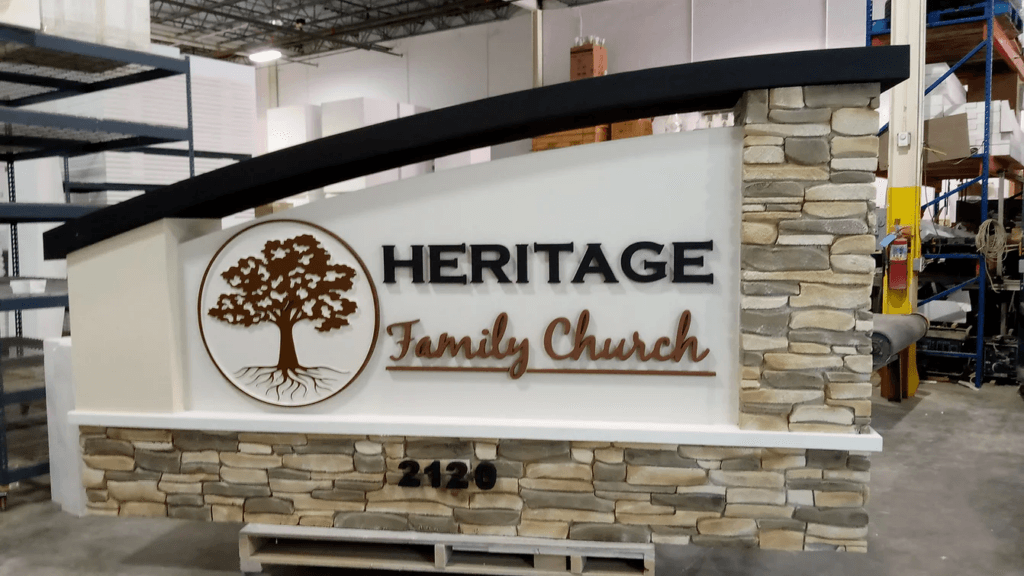
The Art of Imitation: How Faux Finishes Transform EPS Foam Into Stone, Metal & Wood

Beyond Traditional Materials: Why HDU Foam Is Replacing Wood and Stone in High-End Signage

The Hidden Science Behind High-Quality Foam Lettering & Dimensional Signage
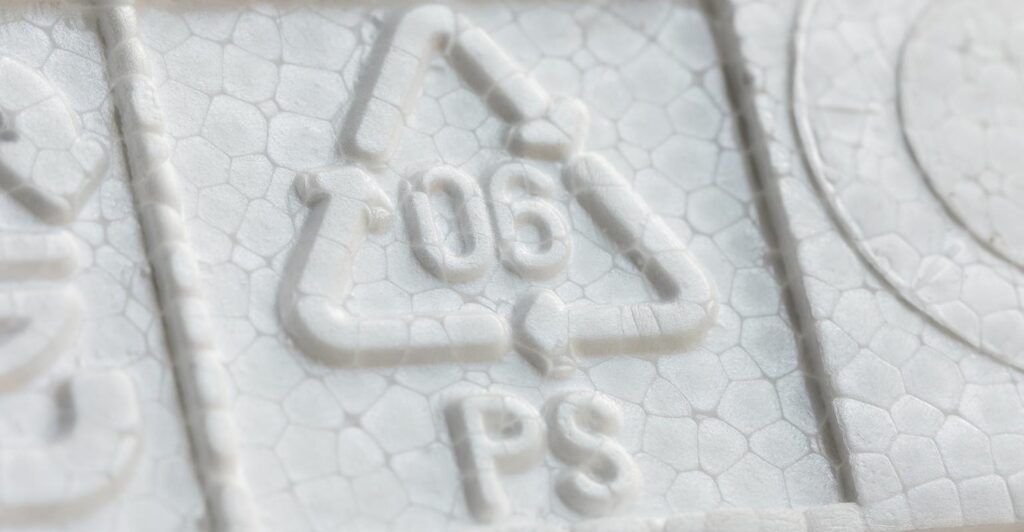
Eco-Friendly Signage Solutions: Is HDU & EPS Foam the Sustainable Choice?

Why Lightweight Foam Monument Signs Are Ideal for Large-Scale Signage

The Importance of Proper Installation for Monument Signs

Foam vs. Metal Signs: Cost, Durability, and Aesthetic Considerations

The Importance of Proper Installation for Monument Signs

From One-Time WOW to Multi-Tour ROI
Recommended Articles
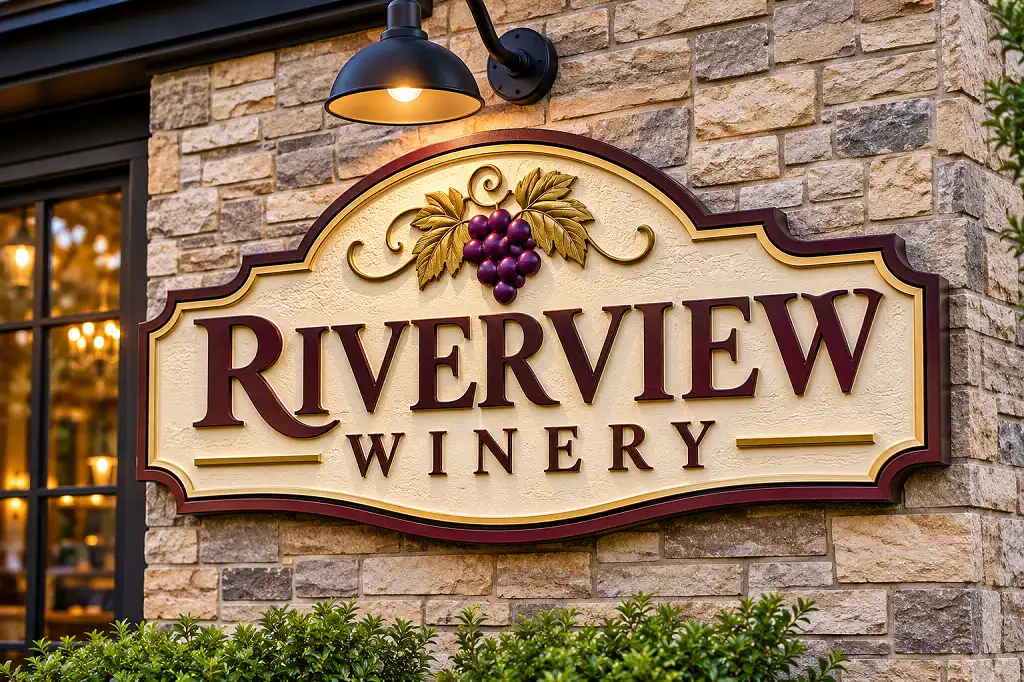
HDU Signs: What High-Density Urethane Foam Is and Why It’s a Premium Sign Choice
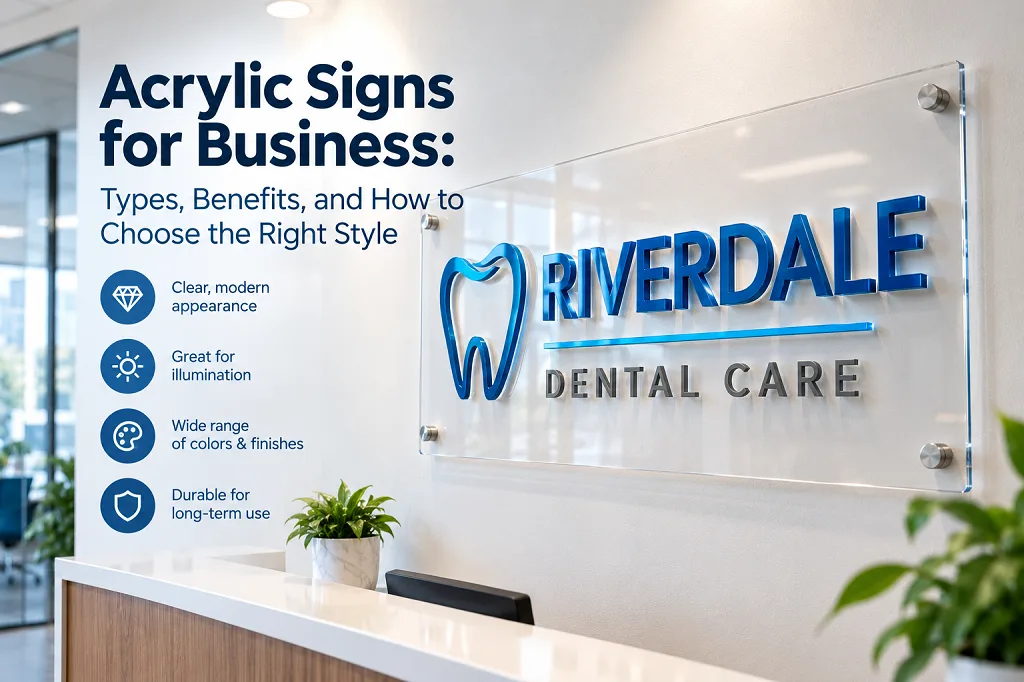
Acrylic Signs for Business: Types, Benefits, and How to Choose the Right Style
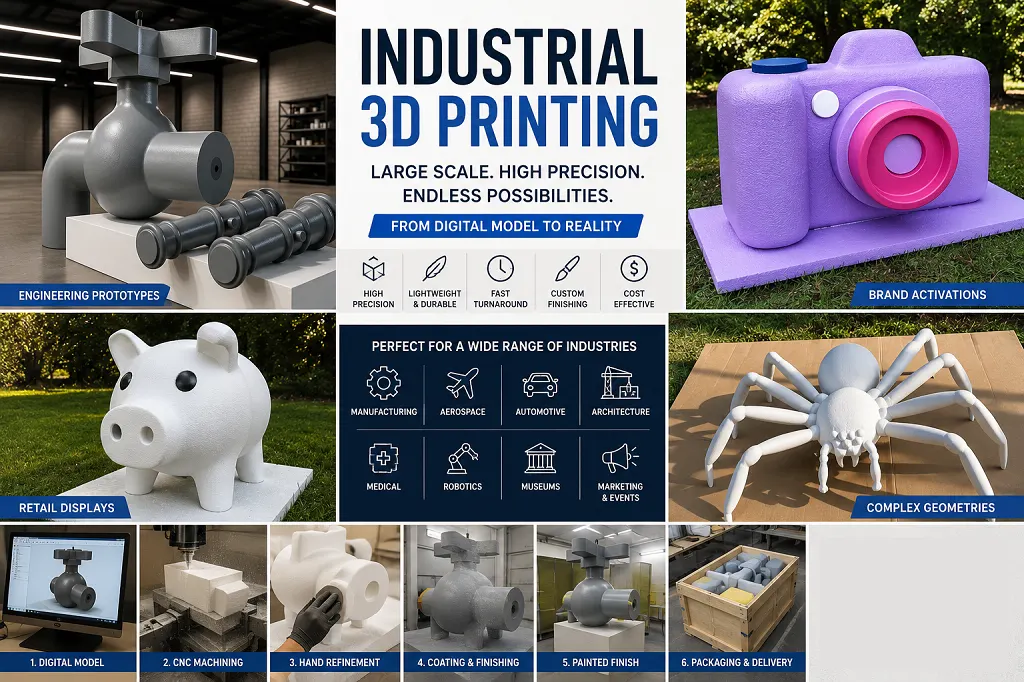
Industrial 3D Printing: Large-Scale Foam Prototypes, Models & Manufacturing Solutions
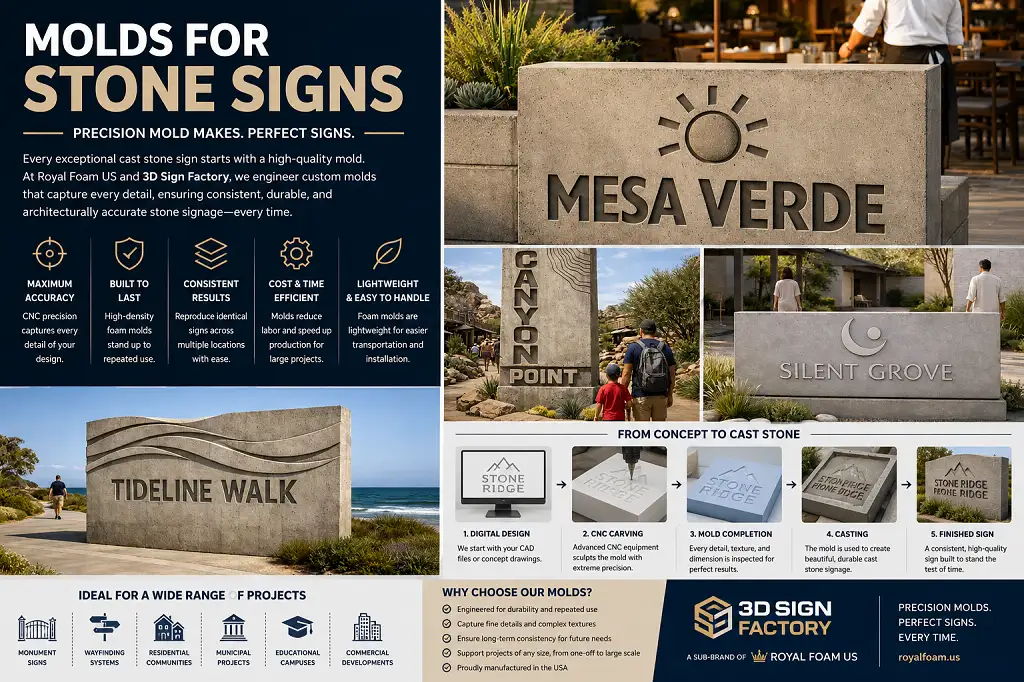
Molds for Stone Signs: The Foundation Behind Consistent Architectural Signage
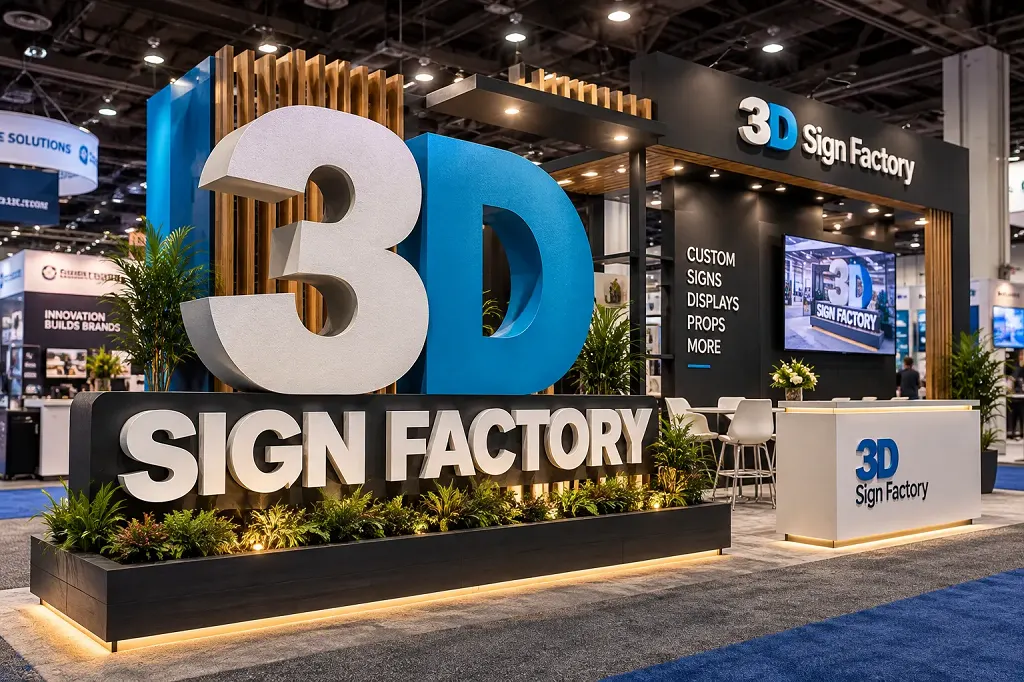
Beyond the Booth: How Custom 3D Displays Make Brands Stand Out at Expos and Events
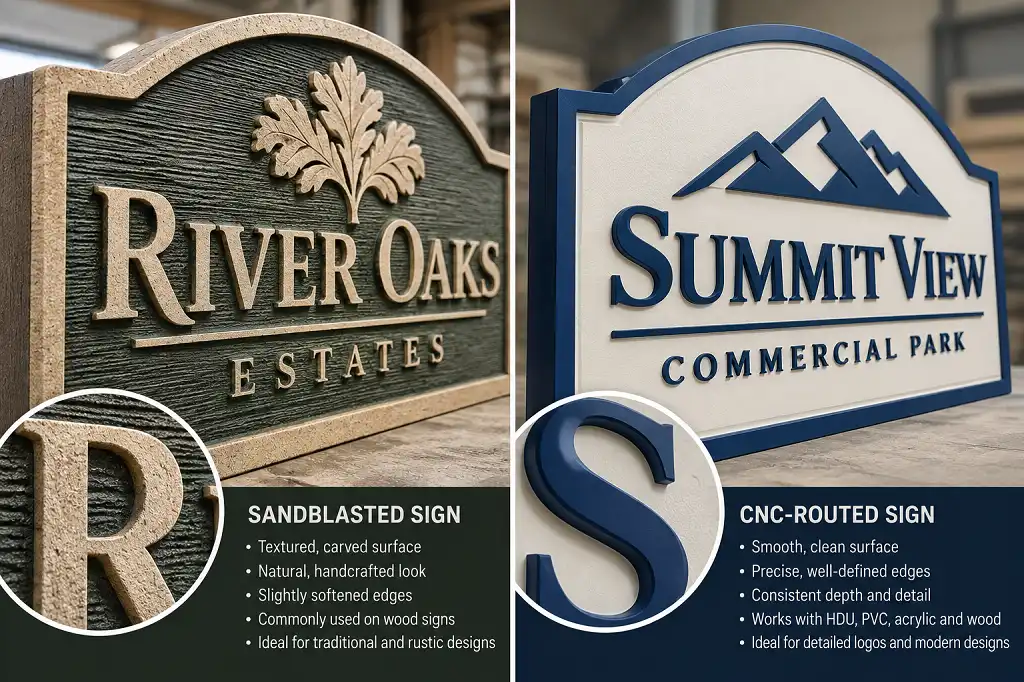
Sandblasted vs. Routed Signs: Which Is Right for Your Project?
Our customer reviews
Read more reviewsRead more reviews