Sandblasted vs. Routed Signs: Which Is Right for Your Project?
Quick Navigation
When choosing a carved or dimensional sign, the manufacturing method affects more than appearance. Sandblasted signs and routed signs can both create dimensional lettering, logos and graphics, but they achieve those results in different ways.
The right choice depends on the look you want, the material being used, the level of detail in the design, the desired depth and the environment where the sign will be installed.
This guide explains the key differences between sandblasted and routed signs so you can determine which fabrication method makes sense for your project.
What Is a Sandblasted Sign?
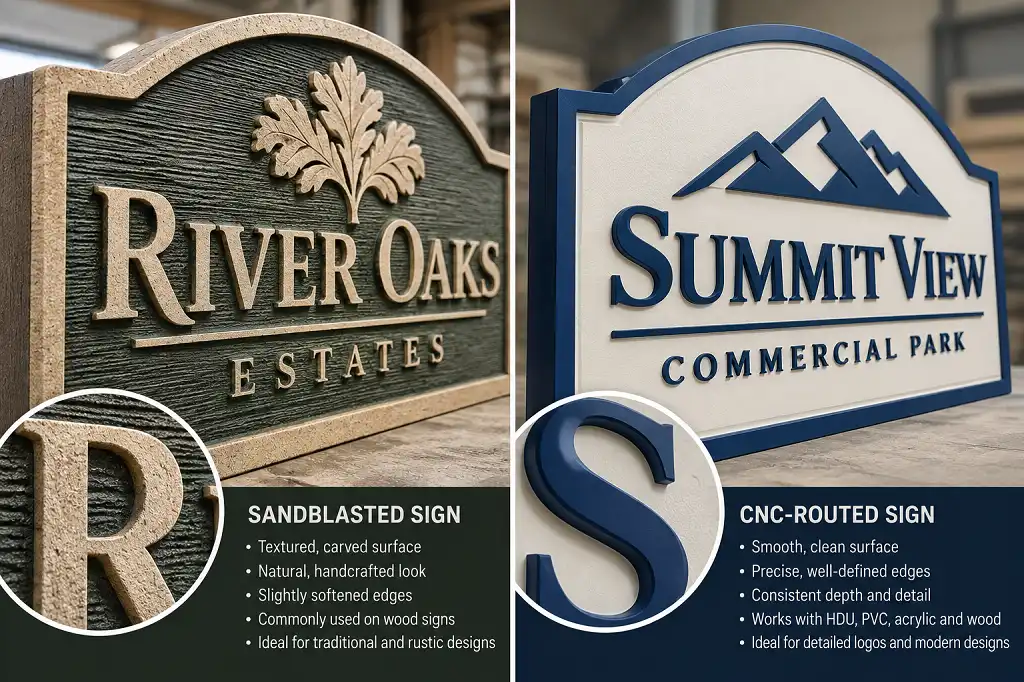
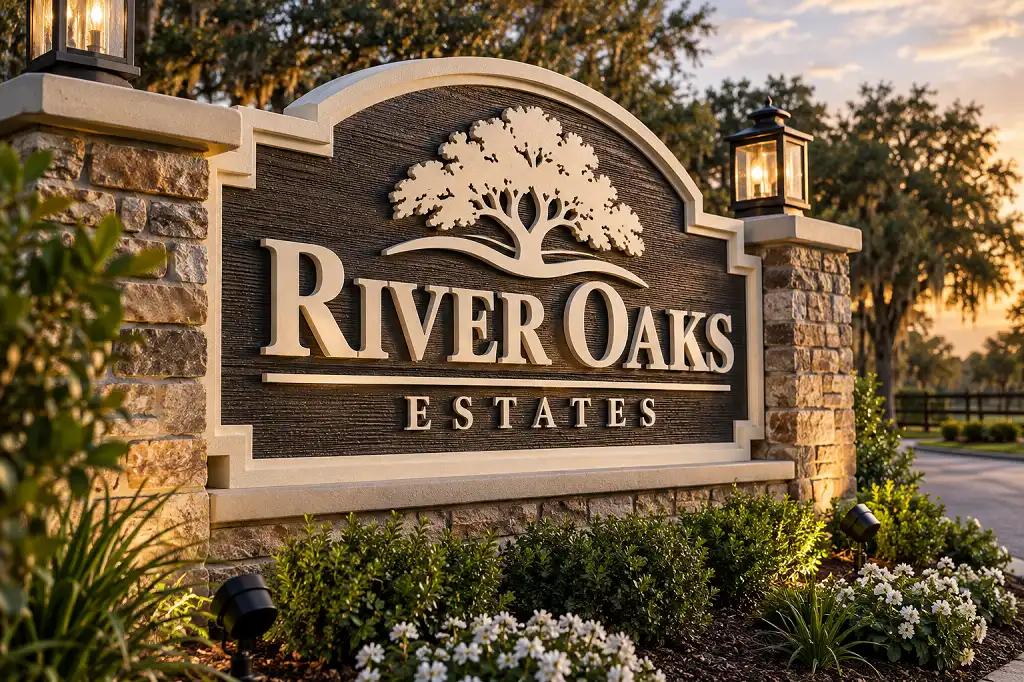
A sandblasted sign is created by using abrasive media to remove material from selected areas of a sign substrate. The process produces a carved, textured surface and can create raised lettering, borders, backgrounds and other decorative elements.
Sandblasting is particularly associated with carved wood signs, although similar techniques can be used with other suitable materials.
The result is often a handcrafted architectural appearance. Lettering can have softened edges or a naturally carved character, while the recessed areas provide visual contrast and depth.
Sandblasted signs are commonly used for:
- Monument signs
- Residential and community entrance signs
- Parks and recreation signage
- Directional signs
- Lodge and resort signage
- Architectural identification signs
- Rustic or traditional business signage
What Is a Routed Sign?
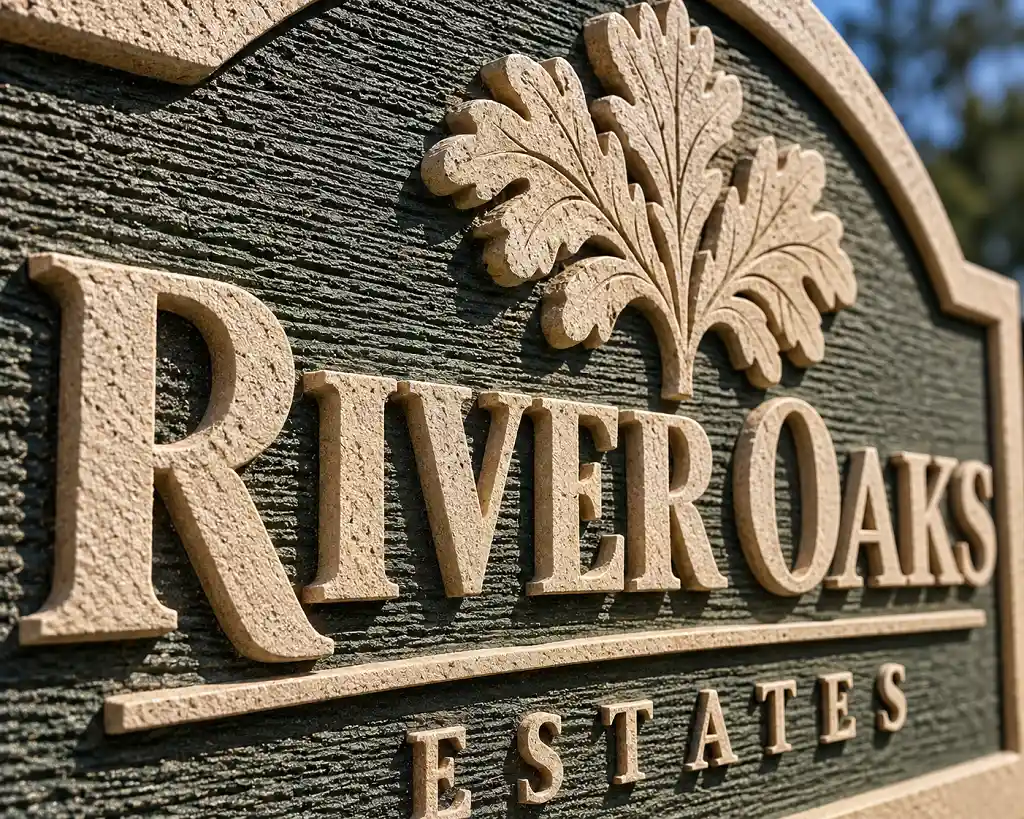
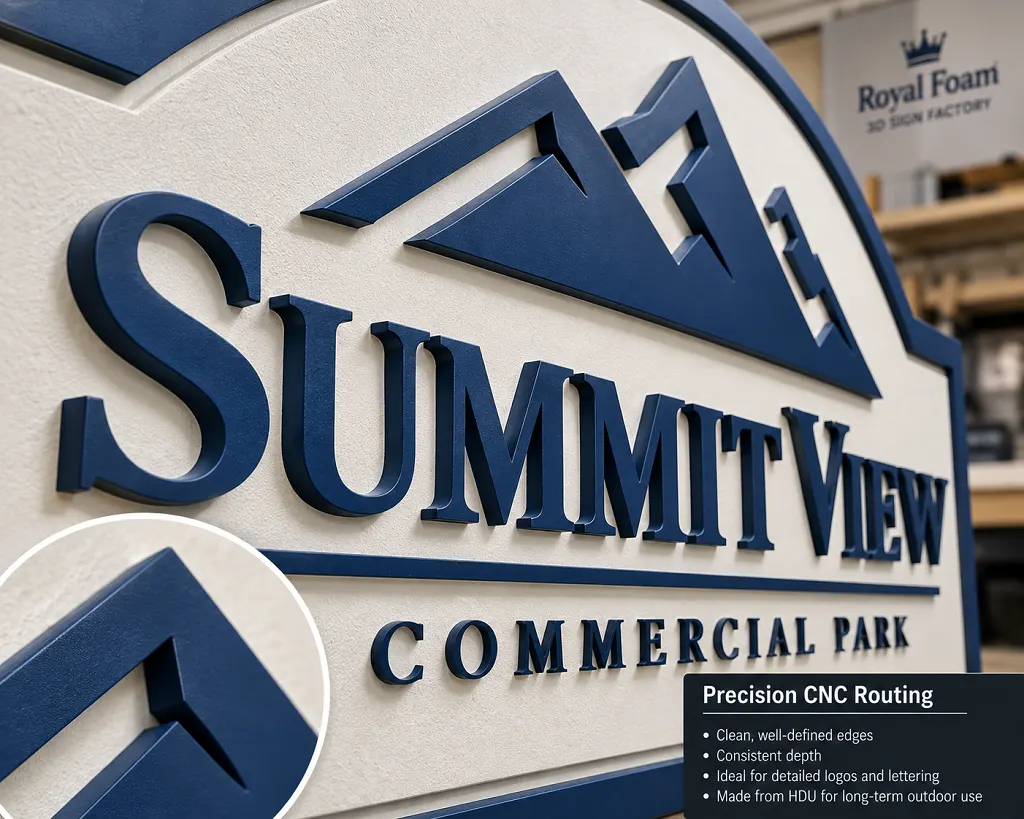
A routed sign is produced using a CNC router, which removes material according to a digital design file. This allows the manufacturer to control the location, depth and shape of the cut with a high degree of consistency.
CNC routing is well suited to signs requiring clean lettering, logos, geometric shapes, recessed graphics or precisely defined edges.
Depending on the material and design, routing can be used to create:
- Routed-in lettering and graphics
- Routed-out lettering
- Recessed panels
- Dimensional backgrounds
- Custom logos
- Architectural elements
- Layered sign components
The process can also be combined with painting, coating, dimensional lettering and other fabrication techniques.
Sandblasted vs. Routed Signs: The Main Differences
The biggest difference is how material is removed.
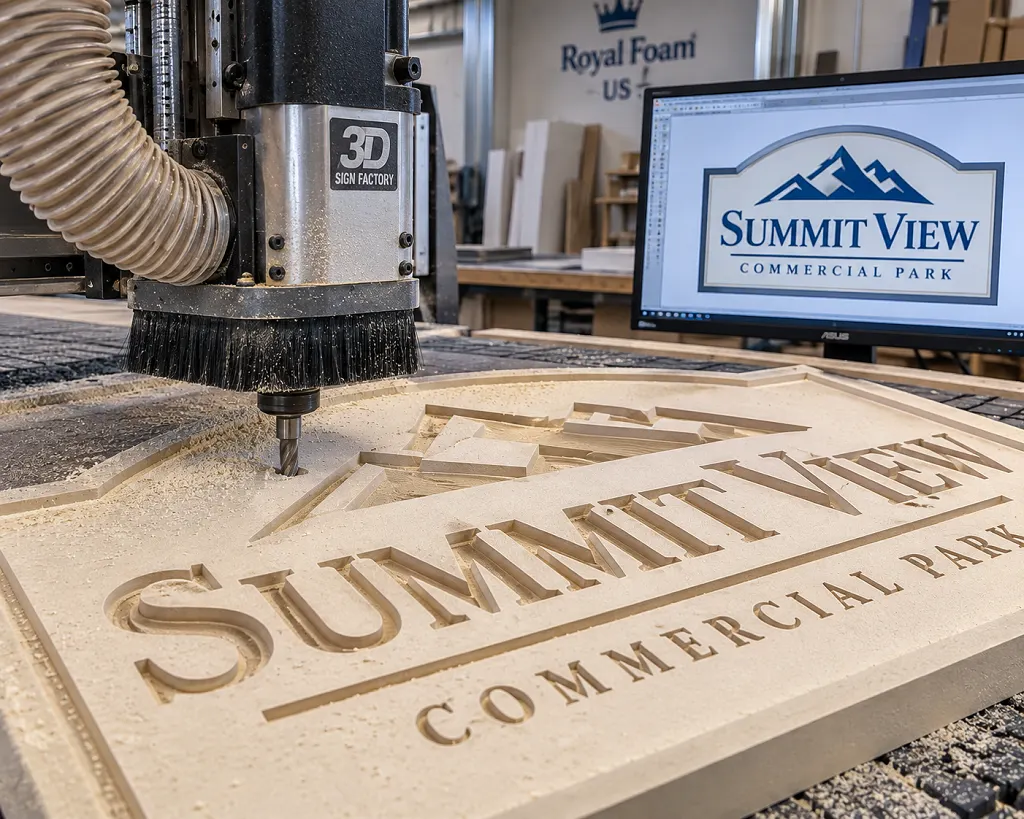
Sandblasting uses abrasive media to carve and texture the surface. CNC routing uses a cutting tool controlled by a digital file to create specific shapes and depths.
That difference affects the appearance, level of precision and design possibilities of the finished sign.
Appearance. Sandblasting generally produces a more traditional carved appearance. The texture created by the abrasive process can contribute to a handcrafted or architectural aesthetic. Routed signs tend to have cleaner, more controlled cuts. They are particularly effective when the design depends on precise geometry, sharp lettering or detailed logos. Neither appearance is inherently better. The appropriate choice depends on the visual language of the project.
Detail and precision. CNC routing is useful when a sign contains detailed logos, precise lettering or repeatable geometric elements. Because the router follows a digital design, the same dimensions and shapes can be reproduced consistently across multiple components. Sandblasting can also produce detailed work, but the technique is generally selected when the carved texture and traditional appearance are part of the design rather than when extremely precise CNC-style geometry is the primary objective.
Which Materials Work With Each Process?
Material selection is an important part of the decision.
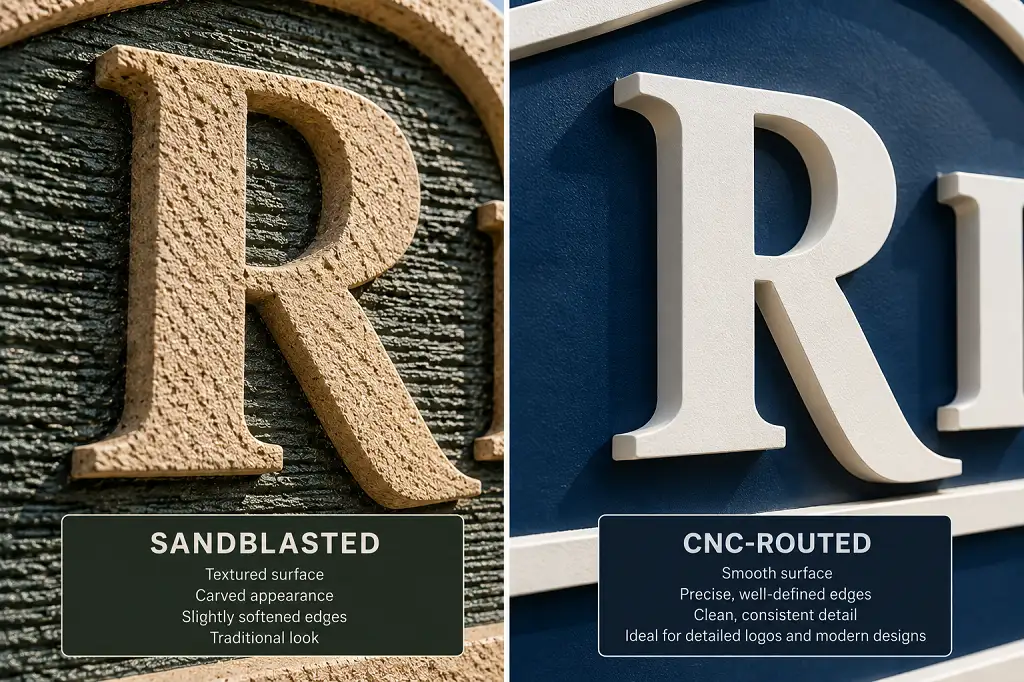
Sandblasting is traditionally associated with substrates that can be effectively carved and textured using abrasive media. Wood is a classic example.
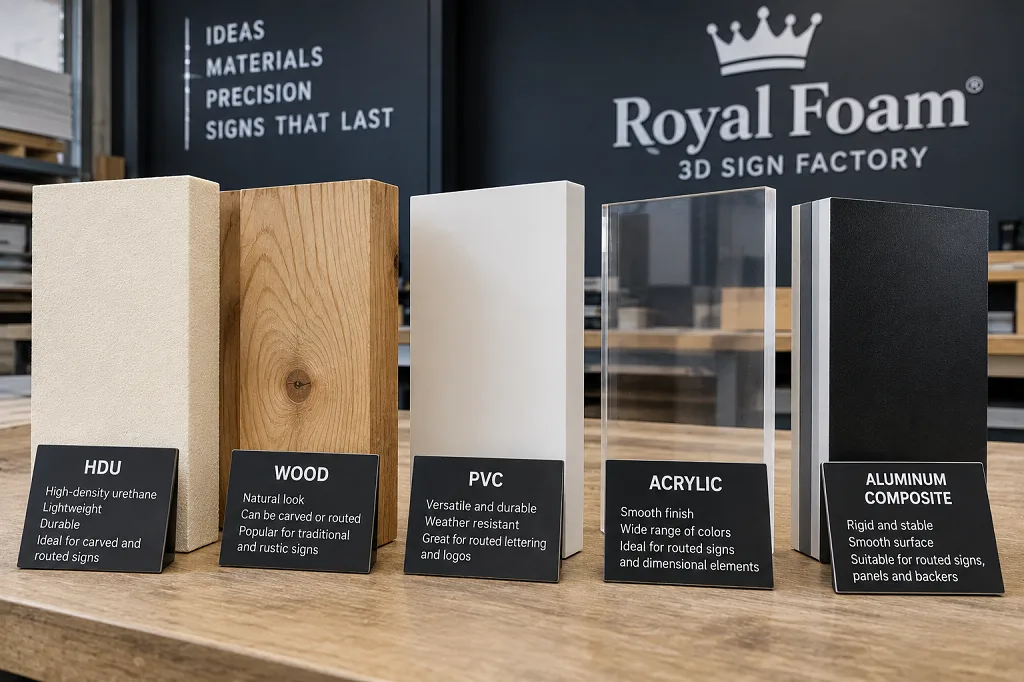
CNC routing provides a broader range of fabrication possibilities because different router bits, cutting depths and toolpaths can be selected for different materials. Depending on the project, routed signage can incorporate materials such as HDU, PVC, acrylic, wood and other suitable sign substrates.
For commercial and architectural applications, HDU is particularly useful when a project calls for carved or routed dimensional signage without the weight and limitations associated with some traditional materials.
When Should You Choose a Sandblasted Sign?
A sandblasted sign can be a strong choice when the character of the carving is an important part of the design.
Consider sandblasting when you want:
- A traditional carved-sign appearance
- A textured background
- A rustic or natural aesthetic
- Architectural or wayfinding signage with a handcrafted feel
- Raised lettering combined with carved backgrounds
- A sign that visually complements wood or other traditional materials
For example, an entrance sign for a residential development, campground or nature-oriented property may benefit from the visual character of a carved and textured surface.
When Should You Choose a Routed Sign?
Routed signage may be more appropriate when precision and repeatability are central to the design.
Consider CNC routing when you need:
- Precise lettering or logos
- Consistent dimensions across multiple signs
- Recessed panels or graphics
- Geometric designs
- Complex digital artwork
- Controlled routing depths
- Integration with dimensional letters or other fabricated elements
CNC routing can also be useful when a sign is part of a larger branded environment and the same logo or graphic needs to be reproduced across multiple locations.
Can a Sign Use Both Techniques?
Yes. Sandblasting and routing do not necessarily have to be treated as competing methods.
A project can combine different fabrication techniques when the design calls for multiple types of relief, texture or dimensional detail.
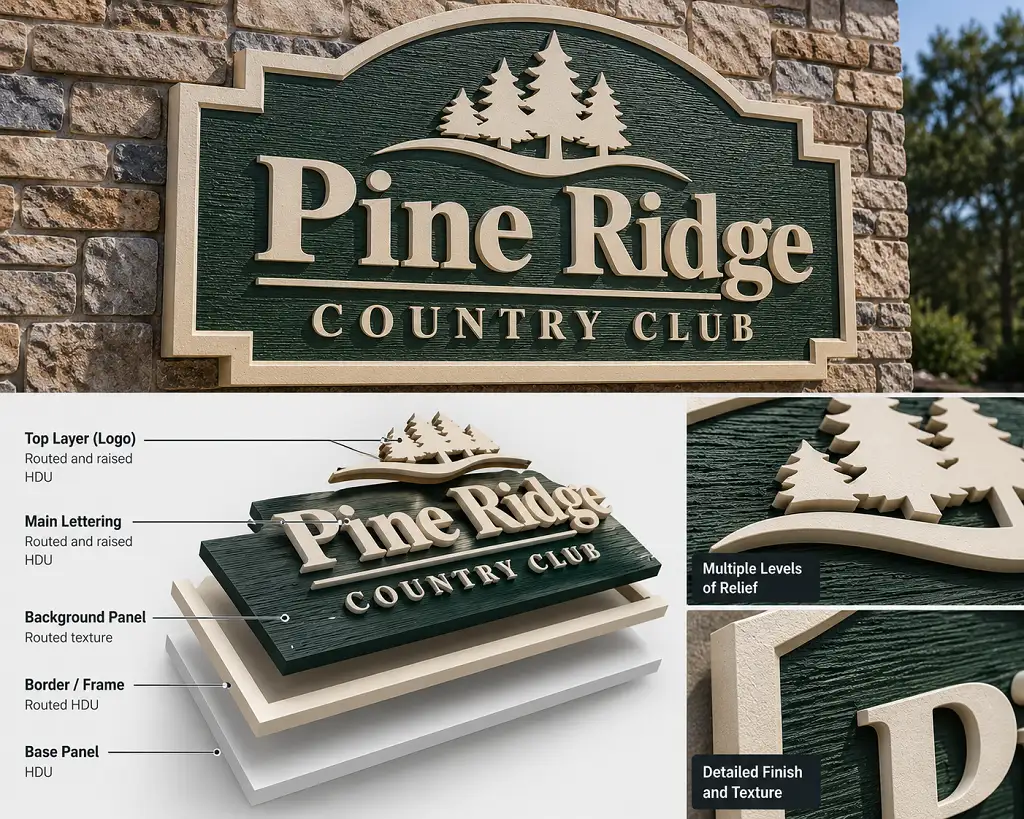
For example, a sign could use a routed border or precisely cut lettering while incorporating a carved or textured background. Additional dimensional letters, painted areas or layered components can then be added during fabrication.
The most appropriate process is determined by the complete design rather than by choosing a manufacturing method in isolation.
Sandblasted vs. Routed Signs for Custom Logos
Logos are one area where the distinction becomes especially important.
A logo with clean geometric shapes, fine lettering or multiple precisely positioned elements may be well suited to CNC routing. The digital artwork can be translated into controlled toolpaths while maintaining consistent proportions.
A simpler logo intended to have a carved, architectural appearance may work well with sandblasting.
In either case, the original artwork matters. Fine details, minimum line widths, letter spacing and the intended depth of the design should be reviewed before fabrication.
What About Dimensional Depth?
Both methods can create visual depth, but they communicate it differently.
Sandblasting creates depth through carved and textured areas, often producing a softer transition between the raised and recessed portions of a sign.
CNC routing provides controlled cuts that can create clearly defined levels within the sign. This makes routing particularly useful for designs where several dimensional layers need to work together.
The desired depth should therefore be considered alongside the material, lettering style and overall sign design.
Which One Is More Durable?
Durability is not determined by the manufacturing process alone.
The substrate, coatings, paint system, installation environment, exposure to weather and overall construction all influence how a finished sign performs outdoors.
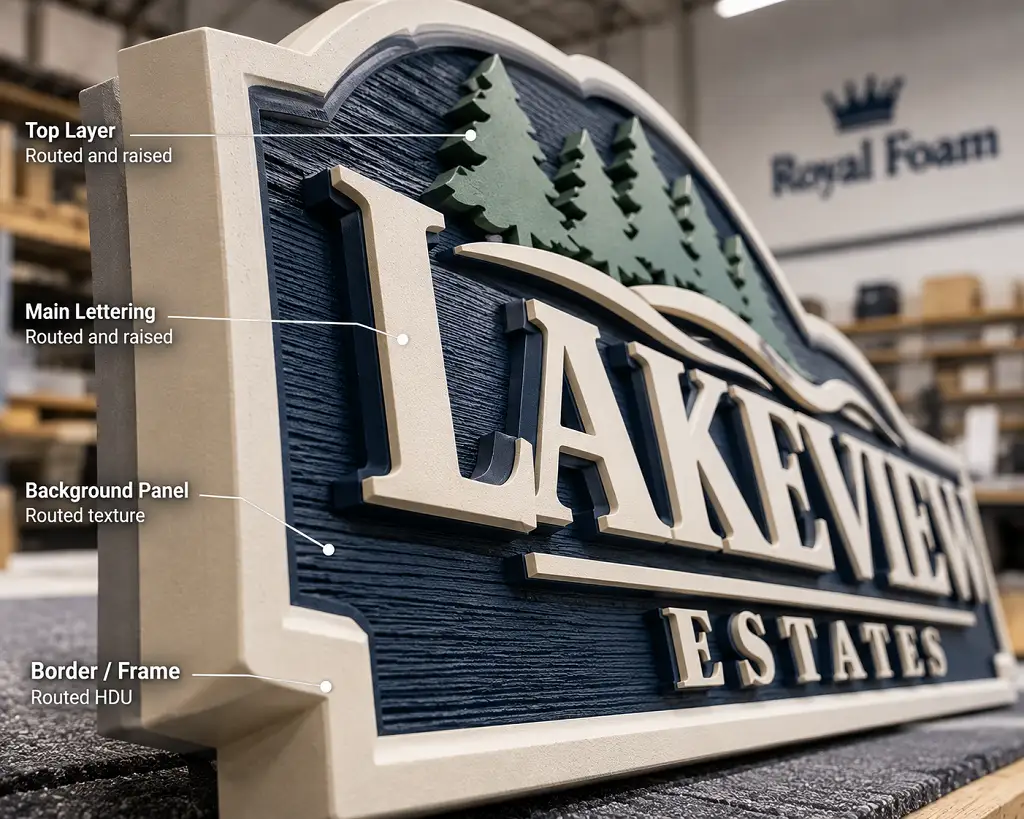
A properly designed and fabricated routed sign can be suitable for exterior applications, just as an appropriately constructed carved or sandblasted sign can be used outdoors.
Rather than choosing a process based only on durability, it is better to evaluate the complete sign system, including material selection, finishing and installation requirements.
Which Sign-Making Method Is Right for Your Project?
There is no universal winner between sandblasting and routing.
A useful starting point is the visual result you want:
Choose sandblasting when the goal is a traditional, carved and textured appearance.
Choose CNC routing when the project calls for precision, repeatability, controlled depth or detailed digital artwork.
If the design combines characteristics of both, a hybrid fabrication approach may be possible.
At 3D Sign Factory, custom sign projects can be evaluated based on the artwork, dimensions, material, dimensional requirements and intended application. The fabrication method can then be selected to achieve the desired appearance and construction.
Final Considerations Before Fabrication
Before deciding between sandblasting and routing, consider five things:
- What should the finished sign look like? Traditional and textured, or clean and precisely defined?
- How detailed is the artwork? Fine logos and geometric graphics may benefit from CNC routing.
- What material is being used? The substrate can influence which fabrication processes are appropriate.
- How much dimensional relief is required? Multiple controlled levels may favor CNC routing.
- What is the sign’s application? Location, exposure and installation requirements should be considered as part of the complete specification.
The best manufacturing method is ultimately the one that translates the design intent into a practical finished product. For custom signage, that decision should happen before fabrication begins, when the artwork, material and dimensional requirements can still be adjusted if necessary.
Frequently Asked Questions
What is the fundamental difference between a sandblasted sign and a routed sign?
The main difference lies in how material is removed from the substrate. Sandblasting uses high-pressure abrasive media to erode material and create a soft, handcrafted, textured surface, whereas CNC routing uses a computer-guided mechanical bit to execute precise, razor-sharp cuts at controlled depths.
When should a business choose sandblasting over CNC routing?
Sandblasting is ideal when a project demands a traditional, rustic, or architectural aesthetic with a carved, organic background texture. It is frequently selected for residential community entrances, parks, resorts, lodges, and historic commercial properties where a handcrafted feel enhances the environment.
Which fabrication method is better suited for complex logos and fine typography?
CNC routing is the superior choice for intricate logos, sharp geometric angles, and fine typography. Because the router follows digital CAD files, it maintains exact proportions, tight tolerances, and consistent depth across single or multiple sign production runs.
What materials are typically used for sandblasted and routed dimensional signage?
While traditional sandblasting was built around natural woods, modern commercial applications heavily utilize High-Density Urethane (HDU) board for both processes. CNC routing can also process a broader array of materials, including HDU, PVC, acrylic, wood, aluminum composite panels, and density-engineered plastics.
Can sandblasting and CNC routing be combined on a single sign project?
Yes, fabricators frequently use a hybrid approach to capture the benefits of both techniques. For example, a sign can feature a sandblasted, stone-textured background combined with crisp, CNC-routed raised lettering or precision-cut dimensional logo overlays.
Is a sandblasted sign more durable outdoors than a CNC-routed sign?
Neither process inherently dictates outdoor longevity; long-term durability depends primarily on the sign’s substrate, protective hard coats, paint quality, and weatherproofing finishes. Both routed and sandblasted signs built from outdoor-grade materials like HDU will perform exceptionally well in harsh exterior environments.

Read more

The Importance of Hard Coating in Outdoor Signage: How Polyurea Coating Transforms Foam Structures into Durable Signage
The Art of Imitation: How Faux Finishes Transform EPS Foam Into Stone, Metal & Wood

Beyond Traditional Materials: Why HDU Foam Is Replacing Wood and Stone in High-End Signage
The Hidden Science Behind High-Quality Foam Lettering & Dimensional Signage
Eco-Friendly Signage Solutions: Is HDU & EPS Foam the Sustainable Choice?

Why Lightweight Foam Monument Signs Are Ideal for Large-Scale Signage

The Importance of Proper Installation for Monument Signs

Foam vs. Metal Signs: Cost, Durability, and Aesthetic Considerations

The Importance of Proper Installation for Monument Signs

From One-Time WOW to Multi-Tour ROI
Recommended Articles
HDU Signs: What High-Density Urethane Foam Is and Why It’s a Premium Sign Choice
Acrylic Signs for Business: Types, Benefits, and How to Choose the Right Style
Industrial 3D Printing: Large-Scale Foam Prototypes, Models & Manufacturing Solutions
Molds for Stone Signs: The Foundation Behind Consistent Architectural Signage
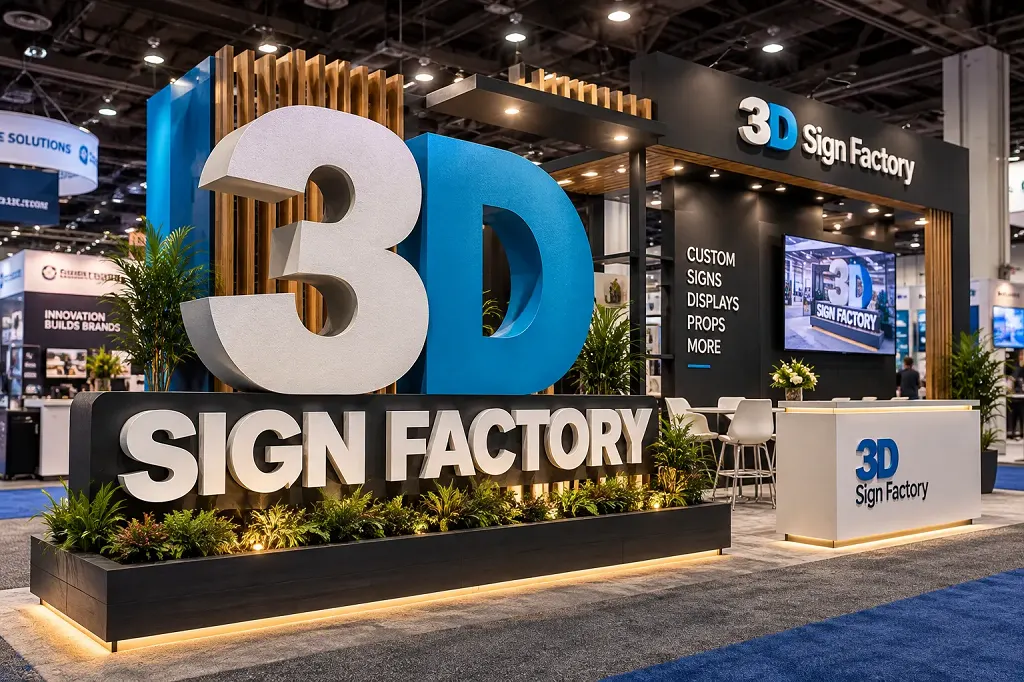
Beyond the Booth: How Custom 3D Displays Make Brands Stand Out at Expos and Events

Letter Signs: How Dimensional Letter Signage Works for Every Business Type
Our customer reviews
Read more reviewsRead more reviews