Letter Signs: How Dimensional Letter Signage Works for Every Business Type
A commercial real estate broker who had listed hundreds of retail spaces over twenty years recently shared her observation about which tenant improvements consistently produced the strongest rental rates and fastest lease-up timelines. Interior improvements mattered, she said — flooring, lighting, finishes. But the single exterior improvement that most reliably moved the needle was the tenant’s sign: specifically, whether the sign used dimensional letter signs or flat graphics. Spaces with dimensional letter signage — individually fabricated letters mounted to the facade — consistently commanded higher asking rents and attracted stronger tenants than comparable spaces with flat printed sign panels, even when the flat panels were professionally produced and visually strong. Dimensional letter signs communicated something that flat panels couldn’t: permanence, investment, and the kind of brand confidence that successful businesses project. This guide covers how letter signs work, the formats available, and how to choose the right approach for your specific business.

What Letter Signs Are and Why They Work
Letter signs — sometimes called dimensional letters, sign letters, or individual letter signs — are independently fabricated letterform elements mounted directly to a building surface, a raceway, or a sign structure to spell out a business name or message. Unlike sign panels where all graphic elements are applied to a single flat substrate, letter signs create each character as a distinct physical object with its own depth, surface, and lighting characteristics.
The dimensional quality of letter signs produces visual advantages that flat sign panels can’t replicate. Each letter casts its own shadow on the mounting surface, creating a depth effect that changes as the angle of ambient light changes throughout the day. This changing shadow quality gives letter signs a visual dynamism that flat signs don’t have — they look different at different times of day, catching light differently in morning versus afternoon, and creating stronger or softer shadow definition under overcast versus direct sun conditions. This visual interest is part of what makes dimensional letter signage more memorable and more brand-communicating than flat alternatives.
Sign letters also communicate brand investment more directly than flat signs, because the fabrication of individual dimensional letters is visibly more labor-intensive and material-intensive than printing a panel. A visitor or customer approaching a business with professionally fabricated dimensional letters infers — correctly — that this business has invested in its physical brand presence. This inference is one of the factors the commercial real estate broker was observing: tenants willing to invest in quality dimensional letter signage are, on average, the tenants who take similar care with every other aspect of their business operation.
Types of Letter Signs: Format and Illumination Options
Outdoor signs in letter format are available in several distinct types based on how they’re illuminated and how the letters relate to their mounting surface.
Non-illuminated dimensional letters — fabricated in aluminum, stainless steel, acrylic, or foam with appropriate exterior coating — provide strong daytime visibility through their dimensional quality and are appropriate for businesses with primarily daytime visibility requirements or in locations where external architectural lighting provides adequate evening illumination of the sign. These are often the preferred format for professional services firms, corporate environments, and businesses where the brand positioning calls for understated quality rather than high-visibility illumination.
Front-lit (illuminated face) channel letters illuminate from within, projecting light through a translucent acrylic face for even, consistent illumination in the letter’s brand color. Front-lit letters are the most common illuminated format for retail, restaurant, and commercial storefront applications requiring strong evening visibility. As covered in the dedicated channel letter guide for this site, the internal LED illumination, aluminum return construction, and translucent acrylic face combine to produce the glowing letter appearance that’s the standard expectation for illuminated retail signage.
Halo-lit (back-lit) letters mount on standoffs that create a gap between the letter back and the mounting wall, projecting LED illumination from behind each letter to create a glowing halo or outline effect around the letter’s silhouette. Halo-lit letters have a more sophisticated, upscale visual character than front-lit alternatives, and are widely used in premium retail, corporate lobbies, hospitality environments, and any application where brand positioning calls for refined visual quality over maximum illuminated brightness.
Combination (front and halo) letters illuminate both the face and the back simultaneously, producing the maximum visual impact of the letter sign format at the highest fabrication cost. This format is used for flagship locations, brand applications where maximum visual presence is the priority, and installations where the combination effect — bright illuminated face plus halo glow — creates the specific visual character the brand is pursuing.
Signs outdoor in letter format also include individual character signs for outdoor address identification, wayfinding applications, and any outdoor context where the letter-by-letter fabrication and mounting approach is the appropriate technical solution.
Choosing Letter Height, Font, and Finish
Signage outside in letter format should be specified with letter height calculated from actual viewing distance, following the same principle that governs all commercial sign sizing: letter height should produce comfortable legibility at the primary viewing distance. For pedestrian-scale applications, letter heights of 4 to 8 inches are typical; for vehicle-speed roadway viewing at typical commercial distances, 12 to 24 inches or larger may be necessary. Reviewing the sign specification against the actual viewing distance — not just how the letters look in isolation — is the step that most letter sign projects would benefit from completing before finalizing dimensions.
Typeface selection for signs outdoor should prioritize legibility over distinctive character. Typefaces with adequate stroke width, clear differentiation between similar characters (I, l, 1; C, G, O), and consistent proportion at sign scale perform better in outdoor signage than condensed, decorative, or thin-weight alternatives that may look distinctive in print applications but lose legibility at sign scale and distance.
Letter finish should be selected for the specific material and application: powder-coated aluminum for exterior applications requiring durable, maintenance-free color; painted foam with exterior-grade UV-stabilized topcoats for large-scale letters where aluminum fabrication weight would be a mounting challenge; polished or brushed stainless for premium applications where authentic metal appearance and indefinite durability are the priorities.
Letter Sign Installation
Installation of letter signs requires accurate positioning planning before any fastener is set, since errors in letter spacing and alignment are visible immediately and expensive to correct after letters are mounted. The standard installation approach uses a paper or vinyl template of the full letter arrangement — produced by the sign fabricator — that is temporarily positioned on the mounting surface to mark drilling locations for each letter’s mounting points. Letters are then mounted following the template positions, ensuring correct spacing and alignment without having to rely on visual judgment during installation.
Fastener selection for exterior letter sign installation should be stainless steel or hot-dip galvanized throughout — the rust staining that standard zinc-plated fasteners produce on building facades below each letter is one of the most common and most preventable exterior sign maintenance problems, and using corrosion-resistant hardware from the initial installation eliminates this problem entirely.
Frequently Asked Questions
What are letter signs and how are they different from panel signs?
Letter signs are independently fabricated individual letter elements mounted directly to a building surface or sign structure, each letter a separate dimensional object. Panel signs apply all graphic elements — letters, logos, background — to a single flat or backlit surface. Letter signs provide dimensional quality, shadow play, and brand presence that panel signs can’t replicate; panel signs accommodate complex graphic compositions, full-color printing, and lower fabrication cost for multi-element designs. Most commercial sign programs use both formats for different applications.
What materials are used for dimensional letter signs?
Common materials are aluminum (standard for channel letters, corrosion-resistant, accepts powder coat and paint), stainless steel (premium material for long-term exterior use with minimal maintenance), acrylic (standard for channel letter faces, available in translucent colors for illumination), and coated foam (for large-scale letters where aluminum fabrication weight would create mounting challenges). Material selection should match the application’s durability requirements, budget, and desired visual character.
Can letter signs be installed on any type of building surface?
Letter signs can be installed on most exterior building surfaces — drywall, brick, stucco, metal panels, EIFS, and glass — with appropriate fastening and anchoring methods for each surface type. The mounting hardware needs to penetrate to structural framing members in the case of hollow-wall surfaces, and the fasteners must be appropriate for the surface material to prevent pull-out failure under wind load. A sign installer familiar with the specific building type and wall construction method will specify and install appropriate mounting hardware.
How are illuminated letter signs powered?
Illuminated letter signs require a dedicated electrical circuit to the sign location, typically routed through the building facade (behind a raceway or through individual conduit penetrations for each letter) to the LED modules and driver components within the letters. Electrical connections are made by a licensed electrician, and the sign company provides the sign’s electrical specifications (voltage, amperage, power supply requirements) to the electrician before installation begins. Most municipalities require an electrical permit as part of the overall sign permit for illuminated installations.
Conclusion
The honest takeaway on letter signs is that the commercial real estate broker’s observation — dimensional letters communicating business quality in ways that flat signs don’t — reflects something genuinely true about how physical brand investment reads to customers, tenants, and passersby. A flat panel sign says “we needed a sign.” Dimensional letters, fabricated in quality materials and correctly installed, say “we’ve built something here that we expect to last.” That communication happens before anyone reads the sign’s content, and it happens every time someone sees the sign. For businesses that understand their physical brand environment as a long-term investment rather than a one-time expense, dimensional letter signage is the format that most reliably delivers that communication across the full life of the installation.

Read more

The Importance of Hard Coating in Outdoor Signage: How Polyurea Coating Transforms Foam Structures into Durable Signage
The Art of Imitation: How Faux Finishes Transform EPS Foam Into Stone, Metal & Wood

Beyond Traditional Materials: Why HDU Foam Is Replacing Wood and Stone in High-End Signage
The Hidden Science Behind High-Quality Foam Lettering & Dimensional Signage
Eco-Friendly Signage Solutions: Is HDU & EPS Foam the Sustainable Choice?

Why Lightweight Foam Monument Signs Are Ideal for Large-Scale Signage

The Importance of Proper Installation for Monument Signs

Foam vs. Metal Signs: Cost, Durability, and Aesthetic Considerations

The Importance of Proper Installation for Monument Signs

From One-Time WOW to Multi-Tour ROI
Recommended Articles
HDU Signs: What High-Density Urethane Foam Is and Why It’s a Premium Sign Choice
Acrylic Signs for Business: Types, Benefits, and How to Choose the Right Style
Industrial 3D Printing: Large-Scale Foam Prototypes, Models & Manufacturing Solutions
Molds for Stone Signs: The Foundation Behind Consistent Architectural Signage
Beyond the Booth: How Custom 3D Displays Make Brands Stand Out at Expos and Events
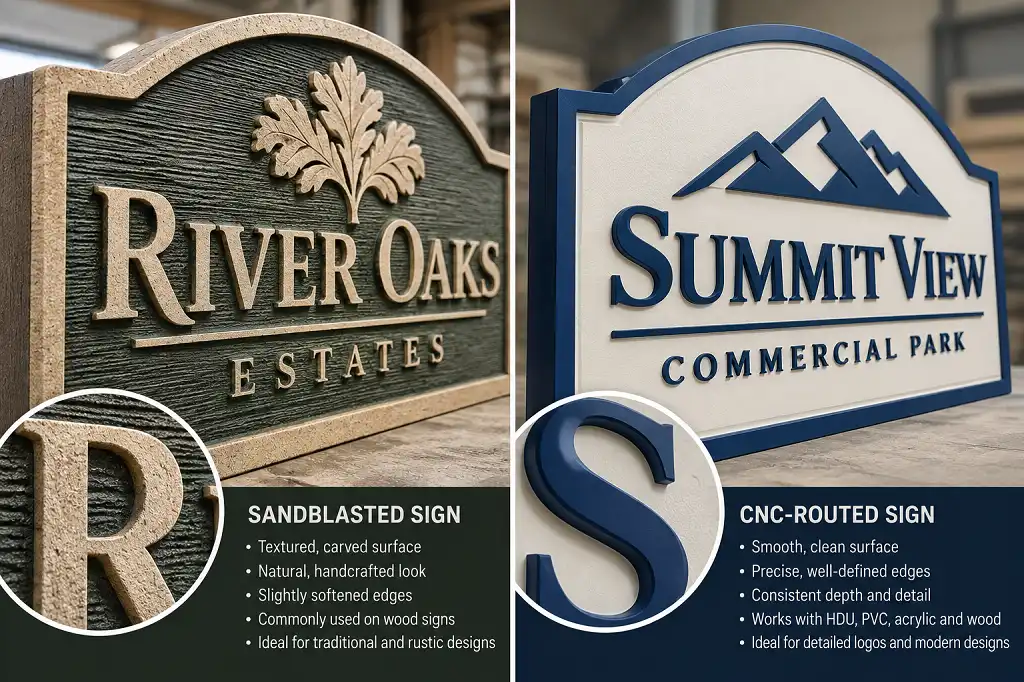
Sandblasted vs. Routed Signs: Which Is Right for Your Project?
Our customer reviews
Read more reviewsRead more reviews