How to Design Monument Signs for Business – Materials, Installation, and Cost Guide
A mid-sized medical office complex housing six independent practices recently struggled with a problem that had nothing to do with patient care: nearly a third of new patient calls each week were people who had driven past the building, missed the turn, or pulled into the wrong entrance of the shared parking lot. The complex had wall-mounted signage on the building itself, but from the roadway – particularly at the speed most drivers were traveling – nothing identified the property clearly enough, soon enough, for drivers to react and turn in time. The property management group commissioned a single monument sign at the main entrance, listing all six practices with individually lit panels, positioned where it was visible well before the turn lane began. Within two months, missed-turn complaints dropped to nearly zero, and several practices reported a noticeable increase in new patients who specifically mentioned seeing the sign from the road. Monument signs solve exactly this kind of visibility and wayfinding problem, and this guide covers what you need to know to design, specify, and budget for one correctly.

What Monument Signs Are and Why They Matter for Business Visibility
A monument sign is a freestanding, ground-level sign structure – typically built low and wide rather than tall and narrow – positioned at a property entrance, near a roadway, or along a parking lot approach to identify a business or commercial development before visitors reach the building itself. Unlike pole signs, which are elevated on a single support and visible from greater distances but read as more utilitarian, monument signs sit close to grade, often integrated with landscaping or a masonry base, and are generally regarded as a more architecturally substantial, premium signage format.
The core function of a monument sign is solving a visibility and wayfinding problem that wall-mounted building signage cannot fully address. Building-mounted signs are only visible once a vehicle or pedestrian is close enough to see the building facade clearly – by which point, on a roadway with any meaningful traffic speed, a driver may not have enough time to recognize the business and safely make a turn. A monument sign placed earlier along the approach, often right at the property line or driveway entrance, gives approaching traffic the visual cue and lead time needed to identify the business and react appropriately. This is precisely why business monument signs are so commonly used by office complexes, medical and professional buildings, shopping centers, and any commercial development set back from the main roadway.
Beyond pure wayfinding, monument signage business value extends into brand presentation and property identity. A well-designed monument sign functions as a kind of architectural handshake – it’s frequently the first physical element of a property a visitor or customer actually encounters, and it sets expectations about the quality and professionalism of what they’ll find once they arrive. For multi-tenant developments – office parks, medical complexes, retail centers – a shared monument sign listing multiple businesses also serves a practical tenant identification function, helping visitors locate a specific suite or practice among several sharing the same property entrance.
Monument signs are particularly valuable for properties with specific physical or regulatory constraints. Some municipalities restrict or prohibit tall pole signage in certain zoning districts, particularly in areas with design standards intended to maintain a more controlled streetscape aesthetic, making low-profile monument signage the only permitted freestanding sign format. In these cases, designing an effective monument sign that maximizes visibility within the permitted size and height constraints becomes a particularly important skill for the sign designer and fabricator involved.
Materials for Monument Signs: Matching Construction to Budget and Brand
Material selection for custom monument signs affects construction cost, installation complexity, maintenance requirements, and how the finished sign integrates with the surrounding property and architecture. Most monument signs combine multiple materials – a structural base, a face or panel system carrying the branding, and often landscaping or hardscape elements – and understanding the role each material plays helps clarify the decisions involved.
Masonry and stone veneer bases are among the most common foundations for premium monument signage, using brick, stone veneer, or manufactured stone products to construct a solid-looking base structure that anchors the sign visually and architecturally. Masonry construction communicates permanence and quality, and is frequently chosen to match or complement the materials used on the primary building itself, creating visual continuity between the entry sign and the property. The tradeoff is cost and construction time – masonry bases require skilled trade labor and a proper foundation, making them a more significant investment than simpler construction methods.
EIFS (exterior insulation and finish system) and stucco offer a lower-cost alternative to genuine masonry while still producing a solid, finished architectural appearance. EIFS construction builds the sign base from a foam core covered with a reinforced finish coat, allowing complex shapes and architectural detail (cornices, reveals, decorative elements) to be achieved more economically than with genuine masonry, while still presenting a convincing, durable finished surface. This approach has become extremely common for large monument signs where architectural detail matters but budget constraints make full masonry construction impractical.
Aluminum and metal panel systems are frequently used for the sign face itself – the area displaying the actual branding, logo, and business name – mounted onto or integrated with the masonry or EIFS base structure. Aluminum panels accept painted or vinyl-applied graphics well, resist corrosion, and can incorporate routed and backlit lettering or pan-faced letter elements for illumination. For multi-tenant monument signs near entry points of office parks or retail centers, individual removable panels are commonly used so that tenant information can be updated without reconstructing the entire sign structure when a tenant changes.
Acrylic and illuminated panel faces are used when the monument sign incorporates internal illumination – a backlit cabinet section displaying the property or business name, sometimes combined with non-illuminated masonry or stone elements for the surrounding structure. This hybrid approach is extremely common: a solid masonry or EIFS base with an illuminated acrylic panel section provides the visibility benefit of illumination specifically where it matters most (the business name and key branding) while keeping the surrounding structural elements in more cost-effective and durable materials.
Dimensional letters and logos, typically fabricated from aluminum, coated foam, or acrylic, are frequently mounted onto the face of a monument sign’s base structure to add depth, shadow, and visual prominence to the primary branding element rather than relying solely on a flat painted or printed graphic. This is one of the most effective ways to elevate the visual impact of monument signage business installations without significantly increasing overall project cost, since dimensional elements are typically a modest portion of total project cost relative to the base structure itself.
Landscaping and hardscape integration – while not strictly part of the sign structure itself – significantly affects how a monument sign reads in its setting. A sign surrounded by well-maintained planting beds, appropriate lighting, and clean hardscape edging presents far more effectively than an identical sign sitting in an unfinished or poorly maintained surrounding area. Property owners commissioning custom monument signs should budget for this surrounding treatment as part of the overall project, not as a separate afterthought.
Monument Sign Design: Layout, Visibility, and Branding Considerations
Effective monument sign design balances several competing priorities: legibility from the road, architectural integration with the property, brand presentation, and in many cases, accommodation of multiple tenants on a single structure. Working through these systematically produces a sign that performs its practical function while still presenting well architecturally.
Sizing and proportion should be calculated based on actual viewing distance and traffic speed along the adjacent roadway, not aesthetic preference alone. As a general guideline, primary lettering height should increase by roughly one inch for every ten feet of intended viewing distance – meaning a sign meant to be read by drivers approaching at 35 mph on an arterial road needs substantially larger primary lettering than one positioned along a slow residential or campus access road. Many jurisdictions also impose specific height and overall size limits on monument signs through local sign ordinances, so confirming these regulatory constraints early in the design process prevents wasted design work on a concept that ultimately can’t be permitted.
Hierarchy and information organization matters significantly for multi-tenant monument signs near larger developments. The primary property or development name typically occupies the top or most visually prominent position, with individual tenant names organized below in a clear, consistent format – generally ordered by lease priority, alphabetically, or by suite number depending on the property management’s preference. Avoid the common mistake of treating every tenant’s signage request as equally prominent; a monument sign with a dozen equally sized, competing tenant panels becomes difficult to read quickly from a moving vehicle, undermining the wayfinding function the sign exists to serve.
Color contrast and legibility follow the same principles as other commercial signage: strong contrast between lettering and background material is essential for quick legibility, particularly in conditions with reduced shadow definition like overcast days or early dusk. Dark lettering against light stone or EIFS, or light-colored or illuminated lettering against darker masonry, both provide reliable contrast; problems arise when lettering color too closely matches the base material’s tone, an easy mistake to make when selecting materials primarily for their texture or architectural appeal rather than functional contrast.
Architectural integration is what distinguishes a well-designed monument sign from a purely functional one. The best entry monument signs echo specific architectural details from the primary building – matching brick or stone, a complementary roofline or cap detail, consistent color palette – creating a sense that the sign was designed as part of the property rather than added as an afterthought. This integration is particularly valuable for higher-end commercial, medical, and corporate properties where the monument sign functions as an extension of the overall property’s design language and contributes meaningfully to first impressions.
Illumination strategy should be decided early, since it affects material selection and electrical planning. Internally illuminated panel sections provide reliable nighttime visibility for primary branding elements. External ground-mounted accent lighting directed up onto a non-illuminated stone or masonry sign face is a lower-cost alternative that still provides meaningful nighttime presence while preserving a more textured, architectural appearance that internal panel illumination doesn’t always achieve. Many premium monument sign designs combine both approaches – internal illumination for primary lettering, accent lighting for the surrounding structure – to balance strong functional visibility with refined architectural presentation.
Installation, Permitting, and What Drives Monument Sign Cost
Installing a monument sign involves more groundwork – literally and procedurally – than most other commercial sign formats, and understanding what’s involved helps property owners budget accurately and avoid delays.
Site evaluation and foundation work begin the installation process. Monument signs require a proper foundation – typically a poured concrete footing sized appropriately for the sign’s weight, height, and the local frost depth and soil conditions, since an inadequately sized foundation risks the sign settling, tilting, or even structurally failing over time. Before foundation work begins, utility location services should confirm there are no underground utilities (electrical, water, gas, communications lines) in the planned excavation area, since monument sign installations frequently occur in areas near street frontage where utility lines commonly run.
Permitting for outdoor monument signs nearly always involves a formal application process, since these are substantial freestanding structures subject to zoning regulations covering size, height, setback from property lines and roadways, and in many jurisdictions, specific design review for properties in planned developments or historic districts. Permitting timelines for monument signs are often longer than for simpler wall-mounted signage, and in some cases may require survey documentation of the property line and setback distances. Engaging a monument sign company experienced with your specific municipality’s permitting process – ideally one who has completed projects in the same jurisdiction before – can meaningfully reduce delays and avoid costly redesign if an initial concept doesn’t meet local requirements.
Electrical infrastructure needs planning for any illuminated monument sign, since power typically needs to be run from the building or a nearby utility connection point to the sign location, often requiring trenching and conduit installation across a meaningful distance of property. This electrical work should be coordinated with a licensed electrician and planned concurrently with foundation work to avoid having to re-excavate a fully cured concrete area.
What drives monument signs cost breaks down into several major categories: the structural base material (masonry costs more than EIFS, which costs more than simpler panel-based construction), overall size and height, illumination type and complexity (internally lit panels and multiple tenant sections add cost), foundation and site work (more significant excavation, longer utility runs, or challenging soil conditions all increase cost), and permitting complexity (jurisdictions with extensive design review processes add both time and design cost). Large monument signs for major commercial developments with multiple illuminated tenant panels and substantial masonry construction represent a significant capital investment, while a modest single-tenant sign with simpler construction and a smaller illuminated panel section can be achieved at a considerably lower cost.
Searching for a monument sign company near you should prioritize fabricators with direct experience in your specific municipality and with comparable project scale and complexity. Ask to see completed local projects, confirm how they handle the permitting process, and get clear, itemized quotes that separate foundation and site work, the base structure, illuminated panel components, and any landscaping or accent lighting, since this breakdown makes it much easier to compare quotes accurately between different contractors and to identify where cost differences are actually coming from.
Frequently Asked Questions
What is a monument sign?
A monument sign is a ground-level, freestanding sign placed at the entrance of a property or business, typically built low and wide and often integrated with masonry, stone, or landscaping elements. It is designed to display branding and improve visibility from the road, giving approaching traffic enough lead time to recognize the business and react appropriately before reaching the building or making a required turn into the property.
Why are monument signs important for businesses?
Monument signs help attract attention, improve wayfinding, and create a professional, architecturally substantial image for a property or business. They are especially useful for offices, retail centers, medical facilities, and commercial complexes set back from the main roadway, where building-mounted signage alone doesn’t provide enough visibility lead time for approaching traffic, and where a strong first impression at the property entrance meaningfully shapes visitor expectations.
Are monument signs customizable?
Yes, monument signs can be customized extensively in size, materials, colors, illumination type, and overall design. This allows them to match both branding requirements and the architectural style of the surrounding building or development, whether that calls for solid masonry construction echoing the building’s exterior, a more cost-effective EIFS base with dimensional lettering, or an illuminated panel system designed for a multi-tenant commercial property.
How much do monument signs cost?
The cost of monument signs depends on size, base construction material, illumination complexity, foundation and site work requirements, and permitting complexity in the specific jurisdiction. Custom monument signs with masonry construction, multiple illuminated tenant panels, and significant site work are typically more expensive than simpler single-tenant designs, but they offer long-term branding value and durability that generally justifies the investment over the sign’s multi-decade service life.
Conclusion
The honest takeaway on designing monument signs is that the most successful projects start with the practical problem the sign needs to solve – visibility from a specific viewing distance and traffic speed, wayfinding for a specific property layout, identification for a specific number of tenants – rather than starting with an aesthetic concept and working backward. Get the sizing, legibility, and information hierarchy right first, then layer in the architectural materials and branding details that make the sign feel like a genuine extension of your property. A monument sign designed in that order will do its actual job – getting people through the right entrance, confidently and on the first try – for decades to come.

Read more

The Importance of Hard Coating in Outdoor Signage: How Polyurea Coating Transforms Foam Structures into Durable Signage
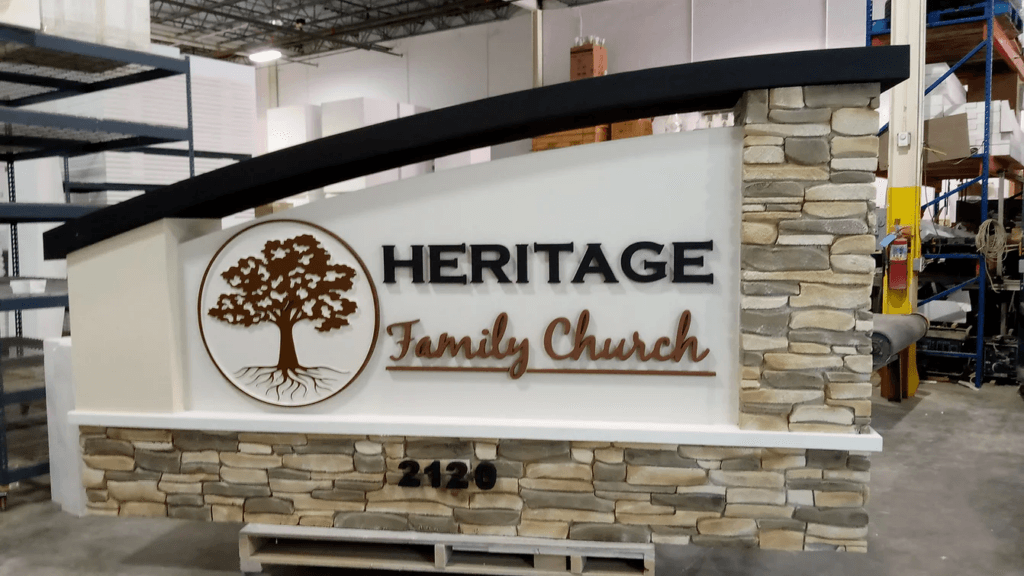
The Art of Imitation: How Faux Finishes Transform EPS Foam Into Stone, Metal & Wood

Beyond Traditional Materials: Why HDU Foam Is Replacing Wood and Stone in High-End Signage

The Hidden Science Behind High-Quality Foam Lettering & Dimensional Signage
Eco-Friendly Signage Solutions: Is HDU & EPS Foam the Sustainable Choice?

Why Lightweight Foam Monument Signs Are Ideal for Large-Scale Signage

The Importance of Proper Installation for Monument Signs

Foam vs. Metal Signs: Cost, Durability, and Aesthetic Considerations

The Importance of Proper Installation for Monument Signs

From One-Time WOW to Multi-Tour ROI
Recommended Articles
HDU Signs: What High-Density Urethane Foam Is and Why It’s a Premium Sign Choice
Acrylic Signs for Business: Types, Benefits, and How to Choose the Right Style
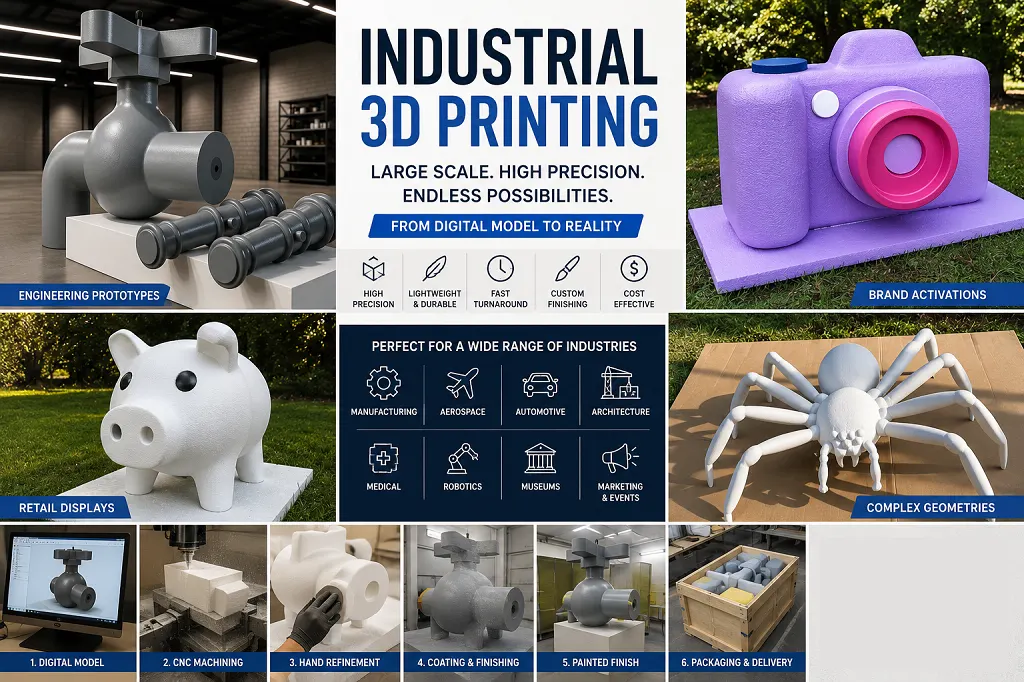
Industrial 3D Printing: Large-Scale Foam Prototypes, Models & Manufacturing Solutions
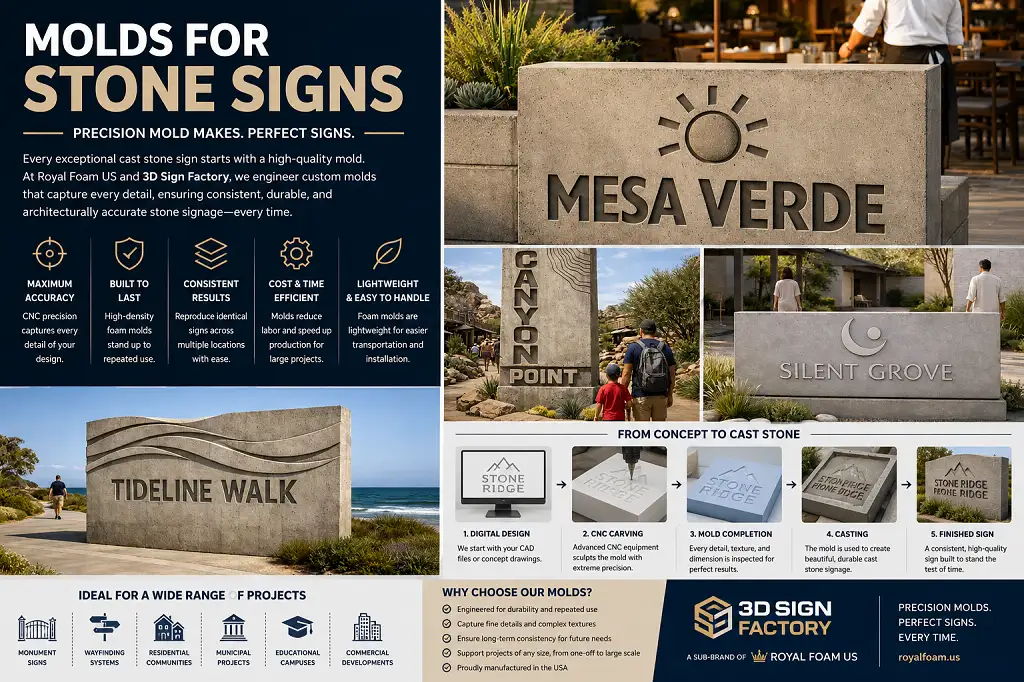
Molds for Stone Signs: The Foundation Behind Consistent Architectural Signage
Beyond the Booth: How Custom 3D Displays Make Brands Stand Out at Expos and Events
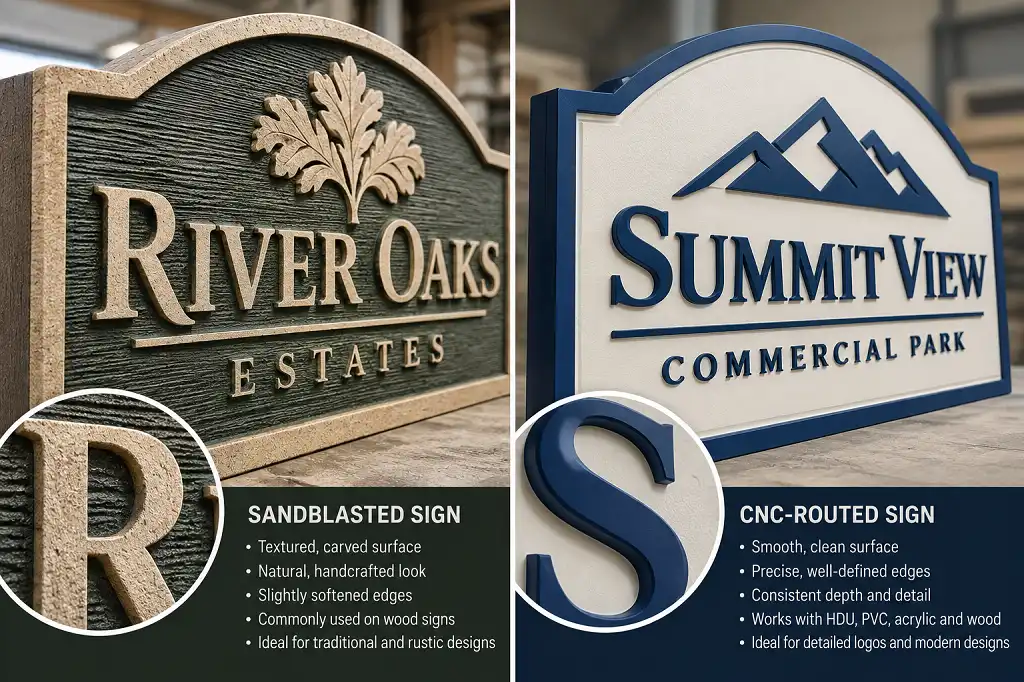
Sandblasted vs. Routed Signs: Which Is Right for Your Project?
Our customer reviews
Read more reviewsRead more reviews